 Owner’s manual
 Error Codes


What is the life expectancy of a JennAir refrigerator?
A Jenn-Air refrigerator typically lasts 10 to 20 years. For your Jenn-Air JFC2089HPR bottom-mount refrigerator, lifespan depends most on routine care like cleaning condenser coils, keeping door gaskets sealing, and maintaining good airflow; see the maintenance schedule in the owner's manual.
Typical lifespan and what affects it
Most refrigerators reach their full service life when heat is managed and the sealed system is not overworked.
- Clean condenser coils regularly (a dirty coil makes the compressor run hotter and longer)
- Keep door gaskets clean so the doors seal tightly
- Avoid overcrowding shelves; blocked airflow forces longer run times
- Let hot foods cool before loading; warm loads slow cooling and increase run time
- Level the refrigerator so doors close securely
Maintenance checklist for longer life
These are the highest-impact habits we recommend for the JFC2089HPR.
| Task | How often | Why it matters |
|---|---|---|
| Clean condenser coils | About every 3 months | Improves cooling performance and reduces compressor strain |
| Clean door gaskets | About every 3 months | Helps prevent air leaks and temperature swings |
| Organize to reduce door-open time | Ongoing | Cuts humidity and reduces frost and run time |
| Replace water filter (if used) | At least every 12 months | Helps maintain water flow and reduces dispenser issues |
Signs your refrigerator is nearing end of life
If you see these patterns repeatedly, repairs can become more frequent.
- Temperatures drift even after adjusting controls
- Compressor runs almost constantly or is unusually loud
- Frost buildup or warm spots caused by airflow problems
- Water leaks or recurring puddles under the unit
- Ice maker or dispenser performance drops (slow fill, hollow cubes)
Why it matters
A refrigerator that is clean, level, and sealing properly runs fewer hours per day. That reduces wear on the compressor, fans, and defrost system, which are the components that most often determine whether you get closer to 10 years or closer to 20.
Last updated: February 2026
What are common problems with JennAir refrigerators?
Common problems on the Jenn-Air JFC2089HPR bottom-mount refrigerator include warm temperatures from dirty condenser coils or blocked airflow, doors not sealing or closing correctly, water droplets (condensation) from high humidity or frequent door openings, and water leaks from drain issues. Many fixes start with cleaning, leveling, and control adjustments.
Most common symptoms and what to check first
- Not cooling or too warm: clean condenser coils; make sure the rear air grille is not blocked; reduce long door openings.
- Runs too often: dirty coils, warm room conditions, frequent door openings, or a door not closing properly.
- Food too cold: controls set too high (too cold) or a door not closing properly.
- Condensation (water droplets): check door gaskets for a good seal; humidity can cause droplets inside or outside.
- Drawers stick or won’t close: items may be obstructing the drawer; confirm the drawer is seated correctly; level the refrigerator.
Quick troubleshooting table
| Problem you notice | Most likely cause | What we recommend |
|---|---|---|
| Refrigerator section warm | Dirty coils, blocked airflow, controls need adjustment | Clean coils, clear vents/grille, adjust controls per the owner's manual |
| Water droplets inside/outside | High humidity, frequent openings, gasket not sealing | Inspect/clean gasket, limit openings, confirm doors close fully |
| Unit seems loud | Normal operating sounds (compressor hum, defrost sizzling) | Compare to “operating sounds” section in the owner's manual |
| Water leak/puddles | Drain system issue or water supply component problem | Check for drain-related puddles; if water supply is involved, test the refrigerator water inlet valve assembly WP67006531 |
Why it matters
These issues often overlap. For example, a door that does not seal can cause warm temperatures, excess run time, and condensation. Starting with airflow, coil cleaning, and door sealing prevents unnecessary part replacement.
When a part is commonly involved
If you have no ice or no water dispensing (or intermittent filling), a failing inlet valve is a common cause. For this model, the refrigerator water inlet valve assembly WP67006531 is one of the key water-supply parts to check after confirming the household water supply is on and the water line is not kinked.
Last updated: February 2026
Is JennAir considered high end?
Yes. Jenn-Air is widely considered a high-end (luxury) appliance brand, and your Jenn-Air JFC2089HPR bottom-mount refrigerator fits that premium category with design-forward styling and higher-tier features compared to mainstream refrigerator lines.
What “high end” means in practical terms
High-end refrigerators typically stand out in a few consistent ways:
- More premium exterior finishes and interior fit and finish
- Quieter operation and better sound management (fans, airflow, insulation)
- More precise temperature control and food-preservation features
- Higher parts and repair costs compared to value brands
- More emphasis on built-in look, door alignment, and overall aesthetics
For model-specific feature details and care guidance, use the JFC2089HPR owner's manual.
How this affects parts, maintenance, and repairs
Even on premium brands, the most common service needs are still the basics: water supply components, door hardware, and drawer/rail hardware.
Common examples for the JFC2089HPR include:
- Water and ice issues tied to the inlet valve or supply connections
- Door sagging or alignment issues tied to hinge and pivot hardware
- Freezer drawer tracking issues tied to gears, brackets, or slide components
If you are troubleshooting water flow to the dispenser or ice maker, we often start by checking the refrigerator water inlet valve assembly WP67006531 and the household water supply.
Quick comparison: premium vs mainstream refrigerators
| Category | High-end (Jenn-Air) | Mainstream brands |
|---|---|---|
| Fit and finish | Premium materials, tighter tolerances | More basic materials |
| Noise control | Typically quieter | Varies widely |
| Repair cost | Often higher | Often lower |
| Parts availability | Model-specific components are common | More universal parts |
Why it matters
Knowing Jenn-Air is high end helps set expectations: you usually get better aesthetics and refinement, but you also want to stay on top of maintenance (especially water filtration and door sealing) to protect performance and avoid costly leaks or cooling problems.
Last updated: February 2026
What are the disadvantages of a bottom freezer refrigerator?
A bottom-freezer refrigerator like the Jenn-Air JFC2089HPR keeps fresh food at eye level, but it can be less convenient if you use frozen foods often. The freezer drawer sits low, can feel heavy when fully loaded, and the drawer hardware can wear faster with frequent use.
Common drawbacks you may notice
- You have to bend or squat to reach frozen items, especially those in the bottom of the drawer.
- Freezer access can be slower because you pull out a large drawer instead of opening a simple door.
- A fully stocked freezer drawer can be heavy; that extra load can stress slide rails, gears, and brackets over time.
- Freezer organization can be harder; items can stack and get buried.
- Temperature swings can be more noticeable if the freezer drawer is opened frequently.
How to reduce the downsides (practical tips)
We recommend these habits to keep performance steady and reduce wear:
- Keep the freezer about two-thirds full for efficient operation (not packed tight).
- Leave space between packages so cold air can circulate.
- Avoid loading a lot of warm food at once; it slows freezing and can raise temperatures.
- Store hard-to-freeze items (like ice cream) in the freezer interior, not on the door area.
- Organize to minimize door-open time; it helps temperatures recover faster.
Parts that commonly take wear in bottom-freezer drawers
If the drawer starts sticking, sagging, or feeling rough, these are common wear points on bottom-mount designs:
| Symptom | Often involved area | Example part for this model |
|---|---|---|
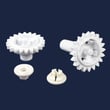
| Drawer feels rough or “clicks” | Drawer gear/track hardware | Refrigerator gear 12002497 |
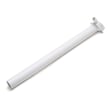
| Drawer does not glide smoothly | Slide shaft/rail components | Shaft rack W11028221 |
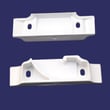
| Drawer looks out of square | Drawer support brackets | Bracket, dra WPW10330993 |
Why it matters
Bottom-freezer designs are great for everyday refrigerated foods, but the freezer drawer is a high-use, high-load system. Keeping the drawer aligned, not overloaded, and organized helps prevent premature wear and helps the refrigerator maintain stable temperatures.
For model-specific use and care guidance (including loading and energy tips), follow the owner's manual.
Last updated: February 2026





