Owner’s manual
 Error Codes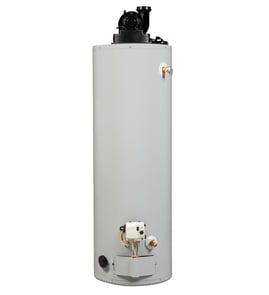


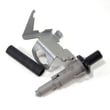
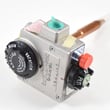

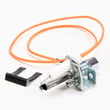

Can you replace parts on a water heater?
Yes. On the American BFG6140T403NOV gas water heater, many service parts can be replaced to restore operation and extend the heater’s life, as long as the tank itself is not leaking. We recommend following the safety steps and procedures in the BFG6140T403NOV use & care manual before attempting any repair.
Parts you can commonly replace on this model
The manual for BFG6140T403NOV includes a repair parts list for key gas-water-heater components. Typical replaceable items include:
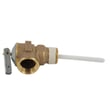
- Temperature and pressure relief valve (T&P)
- Drain valve
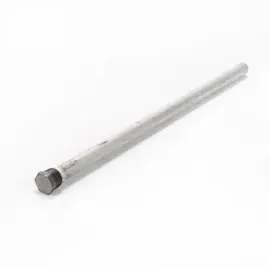
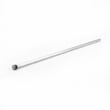
- Anode rod
- Pilot/ignition components (pilot assembly, thermocouple, igniter)
- Gas valve/thermostat
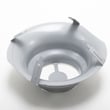
- Draft hood and venting-related components
If your symptom points to a specific component, matching the part by model number helps avoid fit and safety issues.
When we recommend a technician
Some repairs involve gas piping, combustion safety, or sealed combustion-chamber components. For BFG6140T403NOV, we recommend using a qualified technician when:
- You smell gas, the pilot will not stay lit, or the burner flame looks abnormal
- You suspect a gas valve/thermostat issue
- You need to open the manifold door or service Flame Lock safety system components
- You are not comfortable leak-testing gas connections after reassembly
Quick examples of model-matched parts
These are examples of parts listed for this model that customers often replace during maintenance or troubleshooting:
| What it affects | Example part for this model | What it does |
|---|---|---|
| Pressure safety | T&p valve 100108279 | Opens to relieve excess temperature/pressure |
| Corrosion protection | Anode rod 100108260 | Sacrificial rod that helps protect the tank |
| Pilot ignition | Water heater pilot igniter 100110927 | Helps ignite/maintain the pilot flame |
Why it matters
Replacing the right part can fix no-hot-water problems, pilot issues, leaks at service valves, and odor/corrosion concerns without replacing the entire water heater. But if the tank is leaking from the body of the heater, replacement is typically the practical fix.
Last updated: January 2026
Is it cheaper to repair or replace a water heater?
For an American gas water heater model BFG6140T403NOV, it’s usually cheaper to repair when the issue is a single, serviceable component and the tank is not leaking. It’s usually cheaper to replace when the tank is leaking, badly corroded, or repairs are stacking up.
How we decide for BFG6140T403NOV
Start with the safety and service guidance in the BFG6140T403NOV use & care manual. Then use these practical decision points:
- Repair if the problem is isolated (pilot won’t stay lit, valve dripping, slow recovery) and the tank is sound.
- Replace if you see water under the tank or a confirmed tank leak (tank leaks are not repairable).
- Replace if the unit has repeated shutdowns tied to combustion air or venting problems that require major rework.
- Repair if the fix is a common wear part and access is straightforward.
- Replace if repair cost is approaching 50% or more of the installed cost of a new heater.
Typical repair vs replace examples (parts you may actually use)
If your BFG6140T403NOV is otherwise in good shape, these are common “repair-first” items:
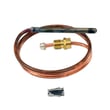
- Water heater thermocouple 100108267 (pilot sensing, Flame Lock safety system)
- Water heater pilot igniter 100110927 (pilot ignition issues)
- T&p valve 100108279 (dripping or leaking relief valve)
- Drain valve 100109106 (leaks at the drain valve)
Quick comparison table
| Situation | Usually cheaper | Why |
|---|---|---|
| Pilot won’t stay lit, no tank leak | Repair | Often a thermocouple/pilot component issue |
| T&P valve dripping due to a bad valve | Repair | Part replacement is typically limited labor |
| Water pooling from tank seam or rusted tank | Replace | Tank failure is not a parts repair |
| Multiple repairs in a short time | Replace | Reliability and downtime become the bigger cost |
Why it matters
A gas water heater can have repairable issues (pilot, thermocouple, relief valve), but once the tank is compromised, replacement prevents ongoing water damage risk and repeated service calls.
Last updated: January 2026
What is the average labor cost to install a 50-gallon gas water heater?
For American Water Heaters model BFG6140T403NOV, the model number indicates this is a 40-gallon gas water heater (not a 50-gallon). If you are pricing a typical 50-gallon atmospheric-vent gas water heater installation, average labor commonly runs about $600 to $2,500, depending on venting, gas-line work, and local code requirements.
What affects labor cost most
Even for a straightforward replacement, installers often need to update safety items to meet current code.
- Venting condition and changes (draft hood, vent connector, chimney or vent sizing)
- Gas piping updates (manual shut-off valve, drip leg, union, leak test)
- Water piping changes (new shut-off valve, unions, dielectric fittings)
- Closed-system protection (thermal expansion tank or pressure control)
- Drain pan and drain routing (especially above finished areas)
- Permits and inspection fees
Typical labor scenarios (comparison)
| Scenario | What usually changes | Typical labor range |
|---|---|---|
| Like-for-like swap | Basic reconnect, startup, safety checks | $600 to $1,200 |
| Swap plus code updates | Venting or gas piping revisions | $1,200 to $2,000 |
| Complex install | Significant vent reroute, difficult access | $2,000 to $2,500 |
Model-specific notes for BFG6140T403NOV
We recommend following the safety and installation requirements in the BFG6140T403NOV installation instructions and use & care guide. It covers items that can add labor time, such as combustion air requirements, vent connector rules, gas leak testing, and safe temperature setting.
Why it matters
Gas water heater installation is not just plumbing; correct venting and gas safety checks help prevent poor draft, nuisance shutdowns, and unsafe combustion conditions.
Last updated: January 2026
What is the most common problem with gas water heaters?
The most common problem we see on gas water heaters like American model BFG6140T403NOV is the pilot light going out or not staying lit, often tied to the pilot/thermocouple safety circuit. Sediment buildup in the tank is another very common issue because it reduces heating efficiency and can cause popping or rumbling noises (see the BFG6140T403NOV use & care manual).
Most common issues (and what they usually look like)
- Pilot will not stay lit: burner will not ignite, or you keep relighting the pilot.
- Sediment in the tank: popping, sizzling, or reduced hot water recovery.
- Draft or combustion air problems: lazy yellow burner flame, soot, or combustion odors.
- Thermostat/gas valve problems: water too hot, not hot enough, or burner cycling oddly.
- T&P relief valve dripping: water in the drain pan or discharge pipe.
Quick checks you can do safely
- Confirm the gas shut-off valve is fully open.
- Make sure the outer door is installed and the burner area is not obstructed.
- Look through the viewport for a soft blue flame when running.
- If you smell gas: stop and follow the safety instructions in the manual.
Parts that commonly solve the “pilot won’t stay lit” complaint
If troubleshooting points to the flame-sensing safety circuit, these are the most common service parts for this model:
| Symptom | Likely part area | Example compatible part for this model |
|---|---|---|
| Pilot lights but goes out when you release the button | Thermocouple | Nat gas th 100108267 |
| No spark or inconsistent ignition | Pilot/igniter assembly | Water heater pilot igniter 100110927 |
| Temperature control issues or shutdowns | Gas valve/thermostat | Water heater natural gas valve 100093794 |
Why it matters
A pilot outage is not just an inconvenience; it stops hot water entirely and can indicate combustion-air, venting, or safety-system issues. Sediment buildup quietly drives up operating cost and can shorten tank life if it is not flushed periodically.
Last updated: January 2026
What is the typical lifespan of a gas hot water heater?
A typical gas water heater like the American BFG6140T403NOV lasts 8 to 12 years. Regular maintenance (especially flushing sediment and checking the anode rod) helps you reach the upper end of that range and can reduce premature tank failure.
What affects lifespan the most
- Water quality and sediment: hard water and heavy sediment shorten tank life
- Anode rod condition: a depleted anode rod speeds up tank corrosion
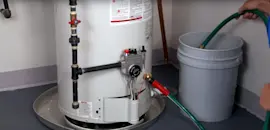
- Maintenance frequency: periodic draining and flushing helps prevent sediment buildup
- Operating temperature: higher thermostat settings increase stress and scaling
- Installation environment: corrosive atmospheres and poor combustion air can contribute to problems
Maintenance schedule we recommend for longer life
Use the BFG6140T403NOV use & care manual for model-specific procedures and safety steps.
| Task | Typical interval | Why it matters |
|---|---|---|
| Drain and flush the tank | Every 6 months | Reduces sediment that can cause noise and early failure |
| Visual inspection (burner, venting, piping) | Every 3 months | Catches soot, venting issues, and leaks early |
| Check the anode rod | Every 3 years | Protects the tank from corrosion |
When replacement is usually the better call
- The tank is 10+ years old and you are seeing recurring issues
- You have water in the drain pan and fittings are dry (possible tank leak)
- Hot water is inconsistent even after basic maintenance
- The unit has heavy sediment noise and recovery is slow
Parts that commonly support longer service life
These are model-matched examples that often come up during maintenance:
- Anode rod 100108260 (helps protect the tank from corrosion)
- Drain valve 100109106 (helps with draining and flushing)
- T&p valve 100108279 (critical safety valve if leaking or not operating correctly)
Why it matters
Most gas water heater failures are tank-related and corrosion-driven; staying ahead of sediment and anode wear is the most practical way to get a full 8 to 12 years from the BFG6140T403NOV.
Last updated: January 2026