


Where is the model number on a Craftsman tiller?
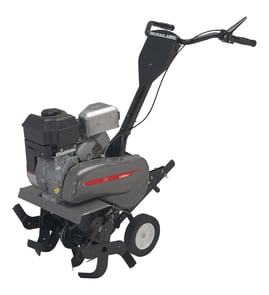
On a Craftsman tiller, the model number is printed on a product ID label (a sticker or metal tag). For Craftsman model 917295352, you will most often find that label on the tine shield/guard area or on the engine area near the fuel tank; on some units it can also be on the front of the frame.
Common places to check first
- Tine shield (tine guard) near the rotating tines
- Frame rail near the engine mounting area
- Engine area near the fuel tank
- Front of the tiller frame (especially on larger frames)
- Handle support or crossbar area
What the label looks like (and what to copy)
The label usually includes several numbers. For ordering parts, we recommend copying these exactly:
| What you see on the label | Why it matters |
|---|---|
| Model number (example: 917295352) | Matches the correct parts diagrams and parts list |
| Product number or serial number | Helps confirm production run and compatible parts |
| Engine model (if listed separately) | Helps when you need engine-specific parts |
Tips if the label is hard to read
- Wipe dirt and oil off with a rag and mild cleaner; avoid soaking the label.
- Use a flashlight at a low angle to make faint printing easier to see.
- Take a close-up photo and zoom in to read worn characters.
- If the sticker is missing, check for small rivet holes or adhesive outline where it used to be.
Why it matters
The model number is the fastest way to match the right Craftsman tiller parts (belts, pulleys, hardware, and drive components) to your exact machine so you do not waste time on look-alike parts.
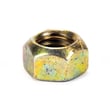
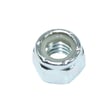
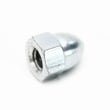
If you are replacing common hardware while you are working, parts like the lock nut 596322601 are examples of model-matched items you can confirm once you have the model number.
Last updated: February 2026
What are common tiller problems?
Common problems on the Craftsman 917295352 front-tine tiller include hard starting, surging or hunting at idle, stalling when you engage the tines, weak tine drive, and excessive vibration. Most issues trace back to fuel quality, carburetor adjustment/clogging, belt and pulley wear, or loose hardware.
Quick symptom checklist (and what it usually points to)
- Engine surges at idle: stale fuel, dirty carburetor passages, air leak, or misadjusted idle mixture
- Engine stalls when engaging tines: belt too tight/loose, binding tines, or a drive/pulley issue
- Tines do not turn or slip under load: worn belt, worn sheave/pulley surfaces, or incorrect belt tension
- Excessive vibration or rattling: loose fasteners, damaged tines, or missing retainers
- Poor tilling depth or control: depth stake set incorrectly or worn depth stake hardware
What we recommend checking first (fast, high-impact steps)
- Fuel and air: Drain old fuel, refill with fresh fuel, and confirm the air filter is clean.
- Throttle and choke linkage: Make sure the linkage moves freely and returns smoothly.
- Tine area: With the engine off and spark plug wire disconnected, clear debris and confirm tines spin freely by hand.
- Drive hardware: Inspect for loose nuts/bolts and re-tighten as needed.
- Belt drive components: Look for glazing, cracking, or oil contamination on the belt and check pulley alignment.
Parts that commonly relate to these problems
If you find looseness, missing retainers, or drive slippage, these model-matched parts are often involved:
| Problem you see | Parts to inspect on this model | Why it matters |
|---|---|---|
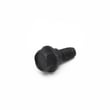
| Rattling, looseness | Lock nut 596322601, bolt 872140405 | Loose hardware can cause vibration and misalignment |
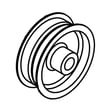
| Tines slip or stop | Sheave transmission 532151223, pulley 592642101 | Worn sheaves/pulleys reduce belt grip and drive power |
| Poor depth control | Depth stake 532446066 | Depth setting affects load on the engine and tine performance |
Why it matters
A tiller that surges, stalls, or slips under load usually gets worse quickly because vibration and belt slip accelerate wear on the transmission sheave, pulley surfaces, and fasteners. Catching the root cause early helps protect the drive system and keeps tilling performance consistent.
Last updated: February 2026
Can a front tine tiller break new ground?
Yes, a front-tine tiller like the Craftsman 917295352 can break new ground, but it is slower and more physically demanding than using a rear-tine tiller. In hard, unbroken soil, front-tine models often ride up and “bounce” instead of pulling themselves down into the dirt.
Best way to break new ground with a front-tine tiller
We recommend treating it like a multi-pass job and letting the machine work gradually.
- Mow or cut tall weeds first so the tines can contact soil
- Start shallow; use the depth stake to limit bite on the first pass
- Make 2 to 4 passes, increasing depth a little each time
- Work in a crosshatch pattern (second set of passes at 90 degrees)
- If it hops, reduce depth and slow your forward push
- Remove rocks, roots, wire, and debris as you go
If your depth control hardware is bent or won’t hold position, replacing the depth stake 532446066 restores consistent depth settings.
What to expect: front-tine vs rear-tine
| Task | Front-tine tiller (like 917295352) | Rear-tine tiller |
|---|---|---|
| Breaking sod / compacted soil | Possible, but takes multiple shallow passes | Best choice; digs in with less effort |
| Control and stability | More bouncing in hard ground | More stable, self-propelled feel |
| Best use | Existing beds, lighter soil, seasonal mixing | New ground, heavy clay, large areas |
Quick checks if the tiller “jumps” or won’t dig
These issues make new-ground work much harder.
- Depth stake set too deep for the first pass
- Tines dull, damaged, or wrapped with roots/grass
- Drive system slipping (belt/pulley issues)
- Loose hardware letting the depth stake or linkage shift
For example, a worn or damaged drive pulley can contribute to slipping under load; the pulley 592642101 is one of the model-matched parts we list for this tiller.
Why it matters
Breaking new ground is the highest-load job a tiller does. Starting shallow reduces bouncing, protects the transmission and drive components, and helps you get a deeper, cleaner till without fighting the machine.
Last updated: February 2026
What would cause a tiller to not start?
A Craftsman front-tine tiller model 917295352 usually will not start because it is missing spark, fuel, or air, or because a safety or control setting is preventing ignition. We recommend a quick spark test first, then confirm fresh fuel delivery and clean airflow before replacing parts.
Quick checks (fastest wins first)
- Confirm the engine stop switch is in RUN/ON and the throttle is set to START or FAST.
- Set the choke correctly (full choke for cold starts; reduce choke as it fires).
- Verify fresh fuel (old fuel is the most common no-start cause); refill with fresh gasoline.
- Check the spark plug condition and gap; replace if fouled or fuel-soaked.
- Inspect the air filter; clean or replace if dirty or oil-saturated.
Test spark, then fuel
1) Spark test
- Remove the spark plug wire and use an inline spark tester.
- Crank the engine; you should see a strong, consistent spark.
- If spark is weak or absent, common causes include a bad ignition coil, damaged plug wire, or a grounded kill switch wire.
2) Fuel delivery check
- Make sure fuel flows freely from the tank through the fuel line to the carburetor.
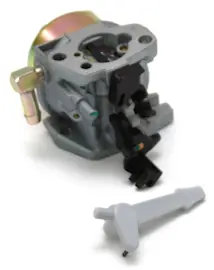
- If it starts briefly on a small amount of fuel in the carb throat but dies, the carburetor is not delivering fuel (varnish, stuck float/needle, clogged jet).
Mechanical and drive-related items to inspect
Even though these parts do not create spark, loose or mispositioned hardware can cause control or belt issues that keep the tiller from operating normally after it starts.
- Check belt and pulley alignment; inspect the pulley 592642101 for damage or wobble.
- Verify the transmission drive components move freely; inspect the sheave transmission 532151223 for binding.
- Tighten loose fasteners and linkage hardware; replace missing retainers such as the retainer ring 812000028.
Symptoms and likely causes
| Symptom | Most likely cause | What to do next |
|---|---|---|
| No pop, no fire at all | No spark | Test spark, inspect coil and kill circuit |
| Fires once, then dies | Fuel delivery issue | Drain old fuel, clean carb, check fuel flow |
| Starts only with choke, dies when opened | Lean condition | Clean carb, check air leaks, clean filter |
| Strong fuel smell, wet plug | Flooding | Open throttle, reduce choke, dry/replace plug |
Why it matters
A no-start diagnosis is fastest when we separate spark from fuel. That prevents unnecessary parts replacement and gets your Craftsman 917295352 tiller back to reliable starting with fewer repeat issues.
Last updated: February 2026