Owner’s manual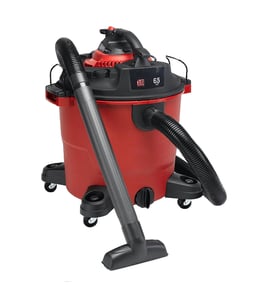

Where to find model number on Craftsman Wet Dry Vac?
On the Craftsman wet/dry vacuum model 113177810, the model and serial numbers are printed on a label on the back of the motor cover. We recommend writing both numbers down and keeping them with your paperwork for ordering parts and service.
Check these common spots in this order:
- Back of the motor cover (primary location for model 113177810)
- Around the lid or powerhead housing near the handle
- Near the switch area or cord wrap
- On the underside of the lid (if a second label is present)
For the exact label location and how it is referenced in the documentation, use the 113177810 owner's manual.
Model and serial labels can be easy to misread. Use these tips:
- Copy the model number exactly as shown (for this unit: 113.177810 may appear with a dot)
- Record the serial number too; it helps match the correct version of parts
- Take a clear photo of the label before it wears or gets dirty
- Keep the numbers in the same place you store filters, hoses, and accessories
| Item | What it’s used for | Example for this vacuum |
|---|---|---|
| Model number | Identifies the design and correct parts list | 113177810 (may print as 113.177810) |
| Serial number | Identifies the production run/version | Varies by unit |
Using the correct model number prevents ordering the wrong wet pickup parts, filter, switch, cord, or motor-cover components. Even small differences between similar Craftsman wet/dry vacs can change which repair parts fit.
If you are shopping for replacement parts, start with the parts list for model 113177810, or search by model number on Sears PartsDirect.
Last updated: February 2026
Can I use my Craftsman shop vac without a filter?
Yes, but only in limited situations. For the Craftsman 113177810 6-gallon wet/dry vacuum, we use it with the filter installed for all dry pickup; we run it without the filter only when vacuuming large amounts of liquid, as described in the owner's manual.
- OK: Picking up large amounts of liquid; remove the dry filter to prevent it from saturating and blowing mist out the exhaust.
- Usually OK: Picking up small amounts of liquid; the manual says the filter may be left in place.
- Not OK: Vacuuming dry debris or fine dust with no filter; dust can pass through, reduce airflow, and damage the motor and blower wheel.
- Not OK: Using a torn filter; even small holes can let a lot of dust escape.
- Unplug the vacuum before changing the filter.
- Confirm the filter is seated correctly for dry pickup (to prevent leaks).
- For large liquid pickup, remove the filter; empty the drum before the float shuts off suction.
- After any wet pickup, dry the filter completely before storing or switching back to dry debris.
| Task | Filter installed? | Why |
|---|---|---|
| Dry pickup (dust, sawdust, drywall dust) | Yes | Prevents leaks and protects the motor from fine particles |
| Small liquid pickup | Yes (allowed) | Convenient for small spills |
| Large liquid pickup | No (recommended) | Prevents saturation and exhaust misting |
| After wet pickup | Dry before reuse | Helps prevent mildew and filter damage |
Running without a filter during dry pickup turns the vacuum into a dust blower. Keeping the correct filter setup protects suction performance, indoor air quality, and the life of the motor.
If you need to look up the correct filter handling steps or drying guidance for model 113177810, we follow the procedures in the owner's manual. For replacement parts and accessories by model number, we also use Sears PartsDirect.
Last updated: February 2026
How to clean a wet and dry vacuum cleaner?
To clean your Craftsman 113177810 6-gallon wet/dry vacuum, we remove and clean the filter correctly for the type of pickup (dry dust vs. liquids), then wash and dry the drum. This restores airflow, prevents clogs, and helps avoid mildew after wet pickup. See the 113177810 owner's manual for filter assembly details.
- Unplug the power cord before changing or cleaning the filter.
- Turn the vacuum OFF before unplugging.
- Do not use the vacuum with a torn filter.
- Store the vacuum indoors; do not expose it to rain.
- Keep ventilation openings clear of dust and debris.
For dry debris and dust, we clean the filter in stages:
- With the vacuum OFF, slap your hand on top of the power assembly to knock loose some dust.
- Remove the filter and gently tap it against the inside wall of the drum; debris will fall off.
- For fine dust (no chunks), rinse water through the filter (use gentle water pressure).
- Let the filter dry completely before reinstalling and storing the vacuum.
| What you picked up | Filter in place? | What to do after | Why |
|---|---|---|---|
| Very fine dry dust | Yes | Empty drum and clean filter more often | Maintains peak suction |
| Small amounts of liquid | Can stay in | Dry the filter afterward | Prevents mildew and filter damage |
| Large amounts of liquid | Remove recommended | Dry filter before next dry use | Reduces exhaust misting and clogging |
- Dump debris out of the drum.
- Wash the drum thoroughly with warm water and mild soap.
- Wipe the drum dry with a clean cloth.
- Wipe the outside with a cloth dampened with warm water and mild soap.
A clean, fully dry filter keeps airflow high (better suction) and prevents a wet filter from clogging quickly when you switch back to dry pickup. Drying also helps prevent mildew odors after vacuuming liquids.
Last updated: February 2026
What is the list of vacuum cleaner parts?
For the Craftsman 113177810 6-gallon wet/dry vacuum, the parts list focuses on the power assembly (motor), drum (tank), filter, hose and nozzles, and the electrical and mobility items (switch, cord, wheels/casters). Together, these parts create suction, capture debris, and make the vac easy to move.
- Motor (power assembly)
- Cover motor (motor cover)
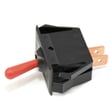
- Switch toggle (ON/OFF switch)
- Cord with plug
- Drum (collection tank)
- Latches (release the power assembly from the drum)
- Hose and utility nozzle (attachments)
- Wheels/casters and spacers (mobility parts)
| Part or assembly | What it does | Common symptom when it fails |
|---|---|---|
| Motor (power assembly) | Creates suction and airflow | No suction, unusual noise, overheating smell |
| Filter | Captures dust and protects the motor | Weak suction, dust blowing out, clogging |
| Drum (tank) | Holds debris and liquid pickup | Leaks, poor sealing, messy emptying |
| Hose and nozzles | Direct airflow to pickup point | Low pickup, air leaks, poor reach |
| Switch toggle | Turns the vac ON/OFF | Won’t start, intermittent power |
When suction drops on a wet/dry vac, the most common causes are a clogged or wet filter, an air leak at the hose or drum seal, or blocked ventilation. The owner's manual also emphasizes keeping vents clear and keeping the filter correctly positioned to prevent leaks and possible damage.
- Unplug the cord before emptying the drum.
- Release the power assembly by pulling the latches outward, then lift it off the drum.
- Do not pick up hot ashes, flammable/combustible liquids, or explosive dust.
Use model number 113177810 to match the correct configuration; you can also search by model on Sears PartsDirect.
Last updated: February 2026
Why did shop vac stop working?
Your Craftsman 113177810 6-gallon wet/dry vacuum usually stops working because of a power issue (outlet, cord, switch), an airflow shutoff from a full drum or raised float after liquid pickup, or a clogged filter or hose. Use the steps below and the 113177810 owner's manual to pinpoint the cause.
- Verify the outlet works by plugging in a lamp or another tool.
- Inspect the power cord and plug for cuts, melted spots, or looseness.
- Unplug the vac for 1 minute, then plug it back in.
- Remove the hose and check the inlet port and nozzle for a blockage.
- Check the drum; if it is packed or full of liquid, empty it.
Suction loss on a wet/dry vac is almost always restricted airflow.
| Symptom | Most likely cause | What to do first |
|---|---|---|
| Motor runs, weak/none suction | Clogged filter or hose | Clear hose; clean or replace filter |
| Airflow stops after liquid pickup | Float raised (high liquid level) | Turn off, unplug, empty drum |
| Exhaust misting | Filter saturated | Dry the filter fully |
- Use a known-good outlet; avoid long, undersized extension cords.
- If the cord or plug is damaged, stop using the vac until it is repaired.
- If the vac was dropped, left outdoors, or got wet, inspect for obvious damage before reuse.
This vacuum relies on airflow for performance and motor cooling. A clogged filter, blocked hose, or a raised float can make it seem “dead” and can overheat the motor.
For replacement parts and accessories, search by model number on Sears PartsDirect.
Last updated: February 2026