
How to replace a snowblower pin?
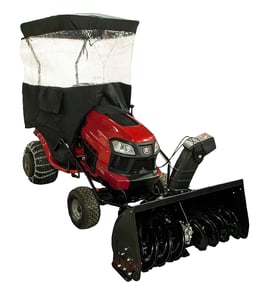
On the Craftsman 842240562 snowblower attachment, you replace a shear pin by lining up the auger and shaft holes, removing the damaged pin, then installing a new shear pin and securing it so the auger can drive safely without damaging the gearbox. Use only the correct shear pin type for this attachment.
Before you start
- Shut the engine off and remove the ignition key (or disconnect the spark plug wire if equipped).
- Wait for all moving parts to stop; clear packed snow and ice from the auger area.
- Wear gloves; shear-pin holes and auger edges can be sharp.
- Keep a spare shear pin and nut with the attachment so you can restore operation quickly.
Steps to replace the shear pin
- Access the auger hub where the shear pin passes through the auger and auger shaft.
- Remove the old pin:
- If it is broken, push or tap the remaining pieces out of the holes.
- If it is intact and uses a locknut, hold the bolt head and loosen the nut (a 10 mm wrench is common on many units).
- Align the holes by rotating the auger by hand until the auger hole lines up with the shaft hole.
- Install the new shear pin through both holes.
- Secure it with the correct nut or retainer; tighten snugly but do not overtighten.
Quick checks after installation
- Engage the auger briefly and confirm the auger turns smoothly with no wobble.
- Verify the pin is fully seated and the nut is secure.
- If the new pin breaks immediately, inspect for a jammed auger, bent auger flighting, or a seized bearing.
Shear pin basics (what to use and why)
| Item | Purpose | What to look for |
|---|---|---|
| Shear pin | Sacrificial fastener that breaks to protect the auger drive | Correct diameter and length for the auger hub |
| Locknut/retainer | Keeps the pin from backing out | Threads smoothly; holds tight |
| Spares | Minimizes downtime | Keep 2 to 4 on hand |
Why it matters
A shear pin is designed to fail first when the auger hits ice, gravel, or a hidden object. Replacing it correctly restores snow-throwing performance and helps prevent expensive damage to the auger drive components.
For diagrams and replacement parts that fit this attachment, use the parts list for model 842240562, or search by model number on Sears PartsDirect.
Last updated: February 2026
Can you put a snow blower on a lawn tractor?
Yes. You can put a snowblower attachment on a lawn tractor if the tractor is designed to accept a front-mounted snowblower and has the correct mounting hardware and drive system. For the Craftsman 842240562 snowblower attachment, compatibility depends on your tractor’s frame and attachment points, plus the correct belt or PTO drive setup.
What you typically need to make it work
- A compatible tractor or garden tractor with the correct front attachment mount
- A lift system (manual lift lever or electric lift) to raise and lower the attachment
- A drive method (belt-driven or PTO-driven, depending on the tractor platform)
- Traction upgrades such as tire chains and rear wheel weights
- Proper clearance after removing the mower deck (on most setups)
Basic installation overview (high level)
- Remove the mower deck (common requirement for front snowblower setups).
- Install the front hanger or subframe mount for the snowblower.
- Route and tension the drive belt (or connect PTO driveline if your tractor uses PTO).
- Connect the lift linkage and verify full up/down travel.
- Test engagement at low throttle first; then increase to operating speed.
For a visual walkthrough of common steps like mounting and linkage setup, use our DIY guide: how to assemble a snowblower video.
Compatibility checklist (quick comparison)
| Item to check | What “compatible” looks like | What causes problems |
|---|---|---|
| Tractor frame/mount | Matching front mount points for the attachment subframe | No mount kit available for your tractor model |
| Drive system | Correct belt path or PTO connection | Wrong pulley sizes, missing idlers, belt misalignment |
| Lift mechanism | Lift linkage reaches full range smoothly | Binding, limited lift height, poor float |
| Traction | Chains and weights fit your tire size | Spinning tires, poor steering control |
Why it matters
A snowblower attachment puts a heavy load on the tractor’s drive system and steering. When the mount, belt routing, and traction setup are correct, you get better throwing performance and less belt slip, vibration, and premature wear.
Getting the right parts
We recommend using the parts list for the Craftsman 842240562 attachment to match hardware and wear items to your exact setup. If you are searching by tractor model to confirm fitment, we also support model-based lookup on Sears PartsDirect.
Last updated: February 2026
How to tell if a snowblower auger belt is bad?
A bad auger belt on your Craftsman 842240562 snowblower attachment usually shows up as weak snow throwing or augers that stop under load, even though the engine and drive system seem fine. Most failures come from belt wear (stretching, glazing, cracking) that causes slipping when you engage the auger.
Quick symptoms you can spot
- Auger turns slowly, pulses, or stops when it hits heavier snow
- Snow discharge is weak even at normal engine speed
- Squealing when you engage the auger (belt slipping on the pulley)
- Burning rubber smell after a short time blowing
- Belt dust or black residue near the belt cover area
- Auger engagement lever feels normal, but performance is poor
What to look for during a belt inspection
Shut the equipment off, remove the key, and wait for all moving parts to stop before checking anything near the auger or pulleys.
- Cracks across the ribs or on the belt’s inner surface
- Fraying on the edges (cords showing or fuzzy edges)
- Glazing (shiny, hardened belt surface)
- Missing chunks or uneven wear spots
- Stretching (belt looks “long,” rides low in the pulley, or seems slack when engaged)
Belt condition guide
| What you see | What it usually means | What to do next |
|---|---|---|
| Shiny/glazed belt | Slipping and overheating | Replace belt; check pulley alignment and tension |
| Cracks/fraying | Age and wear | Replace belt |
| Belt dust/burning smell | Severe slip or seized component | Replace belt; inspect idler, pulleys, auger for binding |
| Looks OK but slips in snow | Stretched belt or weak tension | Check adjustment; replace if still slipping |
Why it matters
A slipping auger belt reduces throwing distance and can overheat, which accelerates belt failure and can also stress idler pulleys and bearings. Fixing it early helps your Craftsman attachment clear snow consistently and protects the auger drive system.
Helpful DIY guidance
- Use our parts list for the Craftsman 842240562 to match the correct auger belt by model.
- For step-by-step visuals, follow how to replace a snowblower belt video.
- If the belt keeps failing, also check auger shaft lubrication and binding; how to lubricate a snowblower auger shaft video helps prevent drag that makes belts slip.
To order the correct replacement belt and related hardware by model number, use the parts list for this Craftsman 842240562 attachment or search by model on Sears PartsDirect.
Last updated: February 2026
Should I spray my snowblower with WD-40?
Yes, we use a light spray on the snow-contact surfaces of your Craftsman 842240562 snowblower attachment to help reduce chute clogging and snow sticking; keep it off belts, friction-drive surfaces, and hot engine or muffler areas, and wipe up overspray so it does not attract dirt.
Where it is OK to spray (and where it is not)
Use a slick coating only on surfaces that touch snow, not on parts that need friction.
- OK: inside the discharge chute and chute deflector
- OK: auger housing interior (light coat)
- OK: painted exterior surfaces for short-term moisture protection (light coat, wipe excess)
- Not OK: belts, pulleys, idlers, and any clutch or friction disc surfaces
- Not OK: bearings that require grease (use the correct grease instead)
- Not OK: near hot surfaces (muffler) or where it can drip onto tires or the ground
Best product choices for snow shedding
WD-40 can work as a quick, short-term water-displacing film, but silicone-based sprays typically last longer for snow shedding.
| Option | Best use | What to watch for |
|---|---|---|
| WD-40 (light coat) | Quick anti-stick on chute | Can attract grime; reapply more often |
| Silicone spray | Longer-lasting anti-stick on chute | Avoid overspray on belts and drive surfaces |
| Dry PTFE spray | Low-residue anti-stick | Apply to clean, dry metal for best results |
| Nonstick cooking spray | Emergency anti-stick | Short-lived; can get messy |
How to apply it (quick steps)
- Shut the equipment off and let all moving parts stop.
- Brush out packed snow and ice; start with a dry surface.
- Spray a light, even coat inside the chute and on the deflector.
- Wipe any drips; keep spray away from belts and any drive engagement areas.
- Reapply when you notice snow starting to stick again.
Why it matters
If lubricant gets onto belts or friction-drive components, the attachment can slip, squeal, or lose throwing performance. Keeping the chute slick while keeping drive parts dry helps your Craftsman snow thrower run consistently in wet, heavy snow.
For more maintenance and setup help, use our DIY guide: how to assemble a snowblower video. For model-specific replacement parts and diagrams, start with the parts list for Craftsman 842240562, or search by model on Sears PartsDirect.
Last updated: February 2026
How to tell year of Craftsman snowblower by serial number?
For a Craftsman snow thrower (including attachment model 842240562), the build year is encoded in the serial number, but the decoding method depends on the manufacturer that built the unit. We identify the serial format first, then read the year digit(s) from the correct position or date code; you can also search by model on Sears PartsDirect.
Find the serial number and match the format
Look for the rating label on the frame, auger housing, or rear of the unit. Then compare what you see to common Craftsman patterns:
- Letters + numbers with consistent character positions often use a position-based year code.
- A serial that starts with a month letter (A through L) often uses an MTD-style date code.
- If the tag shows both model and serial, the serial is what you decode for the date.
Decode the year (most common Craftsman patterns)
Pattern A: “5th character = year in the decade”
Many Craftsman serials use the 5th character as the year within a decade.
- Example: a “1” in the year position points to a year ending in 1.
- Use the decade checks below to choose the correct full year.
Pattern B: MTD-style date code (common on Craftsman)
Many MTD-built units encode the date at the start of the serial.
- Month letter: A = Jan through L = Dec
- Next digits: typically the day and year within the decade
Quick reference
| Serial clue | Likely format | Where the year shows |
|---|---|---|
| Fixed-position letters and numbers | Craftsman position code | Often the 5th character |
| Starts with A to L, then digits | MTD-style date code | In the digits after the month letter |
How to pick the correct decade
- Match decals, chute controls, and guard shapes to the era.
- Compare wear parts used on your unit (belts, skid shoes, shear pins) to what your parts diagrams list.
- If your unit has an engine, the engine date code helps confirm the decade.
Why it matters
The correct year helps us match the right parts diagrams so you get compatible belts, skid shoes, shear bolts, and chute hardware.
Last updated: February 2026