
Do welders need a special outlet?
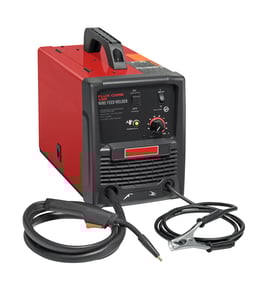
No, welders do not use a “special welding outlet”; they need an outlet and circuit that match the welder’s input voltage and amperage. For the Craftsman 113201260 231 amp AC arc welder, the correct setup is the one specified on the welder’s data plate (input volts and input amps).
What you actually need (and what to check)
Start by reading the welder’s data plate; it tells you the required input voltage and the maximum input current. Use that information to choose the right receptacle, breaker, and wire size.
- Confirm input voltage on the data plate (many shop welders are 240V)
- Confirm max input amps on the data plate (this drives breaker and wire sizing)
- Use a dedicated circuit so other loads do not cause voltage drop
- Match the receptacle configuration to the welder’s plug
- Avoid long, undersized extension cords; they reduce arc stability
Typical outlet and circuit setups for welders
These are common patterns; your Craftsman 113201260 must be wired to the data-plate rating.
| Welder input | Typical receptacle/circuit approach | Best for |
|---|---|---|
| 120V | Standard 15A or 20A circuit (light-duty) | Small welders, thin material |
| 240V | Dedicated 240V circuit with correct receptacle and breaker | Higher output, steadier arc |
Why it matters
If the outlet or circuit is undersized, you get nuisance breaker trips, overheated wiring, and weak or unstable arc starts. A correctly sized circuit delivers steadier current when you turn the amperage up.
Practical next steps
- Verify the data plate and compare it to your shop power
- If you are adding or changing a circuit, use a qualified electrician
- If you suspect low voltage or intermittent power, test the circuit; see how to use a multimeter to test electrical parts video
- If cords or connections look damaged, repair them correctly; see how to repair broken or damaged wires video
Last updated: February 2026
How many volts do you need to run a welder for a generator?
For the Craftsman 113201260 231 amp AC arc welder, you typically need a generator that can supply the welder’s input voltage (most commonly 240V for higher-output stick welders). We recommend choosing a generator with extra capacity so voltage stays steady under load and the arc remains stable.
What voltage should the generator provide?
Most welders are designed to run on one of these input voltages:
- 120V: light-duty welders; limited output
- 240V: common for higher-amperage welders and more consistent arc performance
- Dual-voltage (120/240V): depends on how the welder is configured and plugged in
If your welder’s nameplate lists values like 126V or 253V, that is a normal “real-world” voltage assumption some manufacturers use for calculations (instead of exactly 120V or 240V).
Generator sizing basics (why “breathing room” matters)
A generator that is barely large enough can cause low voltage, hard starts, and a weak or unstable arc. Plan for:
- Starting and surge load (especially if the welder has a fan or transformer inrush)
- Continuous load while welding (not just idle)
- Voltage drop from long extension cords or undersized wiring
- Other tools running at the same time (grinders, lights, compressors)
Quick sizing guide
| What you match | What to look for | Why it matters |
|---|---|---|
| Input voltage | 240V (typical) | Correct power for the welder’s primary circuit |
| Generator output | Rated (running) watts, not just peak | Welding is a sustained load |
| Headroom | Add about 10% to 25% capacity | Helps prevent voltage sag and nuisance trips |
Steps we use to confirm the right setup
- Check the welder data plate for input voltage and input amps
- Confirm your generator has the same receptacle type (often 240V)
- Use the shortest, heaviest-gauge cord practical
- If the arc feels “soft” or the breaker trips, increase generator capacity or reduce welding output
Why it matters
Welders are sensitive to low voltage. When generator voltage sags, the arc can become unstable, penetration can suffer, and internal components can run hotter than intended.
For safe electrical testing and troubleshooting (cords, receptacles, and continuity), we use the same approach shown in how to use a multimeter to test electrical parts video.
Last updated: February 2026
What are the parts of an arc welder?
An arc welder like the Craftsman 113201260 (231 amp AC arc welder) is built around a power source that creates welding current, plus the output connections that deliver that current to the electrode and the work clamp. Most welders also include controls, protection devices, and internal wiring that manage heat and amperage.
Main parts you will typically find
- Power input cord and plug: brings line power into the welder.
- On/off switch: energizes the machine.
- Transformer (AC welders): steps voltage down and increases current for welding.
- Current control: sets welding amperage (often a tap switch, selector, or movable shunt).
- Output terminals: where the electrode lead and work (ground) lead connect.
- Electrode holder (stinger) and lead: carries current to the welding rod.
- Work clamp and lead: completes the circuit through the workpiece.
What’s inside vs. what’s external
| Area | Common components | What it does |
|---|---|---|
| Inside the welder | Transformer, selector/tap switch, internal wiring, thermal protection | Creates and regulates welding current; protects from overheating |
| Outside the welder | Electrode lead/holder, work lead/clamp | Delivers current to the rod and returns it through the work |
Quick troubleshooting checks (parts-related)
- Inspect the electrode lead and work lead for cracked insulation, burns, or loose lugs.
- Confirm the work clamp bites clean metal (paint and rust cause weak or unstable arc).
- Check the output terminals for heat discoloration or looseness.
- If the welder cuts out, let it cool and suspect thermal overload protection or restricted airflow.
- If you suspect an electrical issue, use a meter safely to verify continuity and connections (with power disconnected); see how to use a multimeter to test electrical parts video.
Why it matters
Knowing the major arc welder parts helps you diagnose common problems like hard starts, arc wandering, low output, or overheating. Most issues trace back to poor connections, damaged leads, or incorrect amperage settings rather than the transformer itself.
Last updated: February 2026
Where can I buy Craftsman replacement parts?
For your Craftsman 113201260 231 amp AC arc welder, the most reliable way to buy replacement parts is to search by the exact model number and match the part to the correct diagram and description. We recommend starting with Sears PartsDirect so you can shop by model and avoid ordering the wrong item.
Best way to find the right part for model 113201260
Because older power tool parts can have similar-looking versions, we focus on identification first, then purchase.
- Confirm the model number is 113201260 on the welder’s ID plate
- Use the model-based parts listing to narrow results to compatible parts
- Compare the part description to what you’re replacing (switch, cord, clamp, holder, etc.)
- Check for left or right orientation and mounting style when applicable
- If your welder has been modified, match by function and connection type before ordering
What to have ready before you order
Having these details speeds up part matching and reduces returns.
| What to check | Why it matters |
|---|---|
| Model number (113201260) | Ensures the parts list matches your exact welder |
| Electrical rating and plug type | Helps match cords, switches, and internal electrical parts |
| Connection style (screw, spade, clamp) | Prevents ordering a part that will not connect |
| Photos of the old part | Helps confirm shape, terminals, and mounting |
If you cannot find the exact part right away
For welders, the most common “no match” issues are discontinued parts or parts that were superseded by an updated version. When that happens, we recommend these steps:
- Search using the model number first, then refine by the part’s function
- Inspect for a readable number stamped on the old part (if present)
- Verify whether the issue is actually a consumable or accessory (electrode holder, ground clamp, leads)
- Test the suspected electrical part before replacing it (fuse, switch, cord)
A good starting point for electrical troubleshooting is how to tell if a fuse is blown.
Why it matters
Ordering by model number is the fastest way to get a compatible Craftsman replacement part, especially for an older 231 amp AC arc welder where small differences in terminals, lead length, or mounting can prevent a proper repair.
Last updated: February 2026