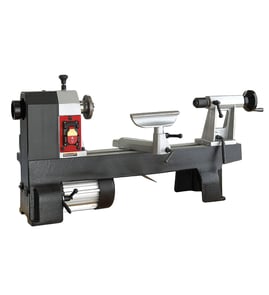

How do I find the model number on my 10121400?
The model number for your Craftsman 6" metal turning lathe is typically printed on an ID plate or sticker on the machine base or bed. We use that exact model number to match the correct diagrams and replacement parts for your lathe.
Check these common locations first:
- On the front or side of the lathe base (stand or cabinet)
- On the bed near the headstock (left side where the spindle is)
- On the back of the base, near the motor or belt cover
- Under the change-gear cover or electrical switch box cover
- On the underside of the bed casting (use a flashlight)
Record the information exactly as shown on the tag.
| Item on tag | Example | Why it matters |
|---|---|---|
| Model number | 10121400 | Identifies the correct parts breakdown |
| Serial number | Varies | Helps confirm production run/version |
| Voltage/amps | Varies | Helps match motor, switch, wiring parts |
Use these practical checks to narrow it down:
- Compare your lathe to the parts diagrams for model 10121400 (bed length, headstock style, gear cover shape)
- Look for stamped numbers on castings (bed, headstock, tailstock) and write them down
- Check any paperwork, old parts bags, or maintenance notes for “10121400”
Small design changes across production runs can affect fit for items like belts, bearings, switches, and gears. Using the exact model number prevents ordering parts that look similar but do not mount correctly.
For more help identifying the correct model number format, use [how to find your appliance model number (and what it means for parts)].
Last updated: March 2026
What is the average lifespan of 10121400?
A Craftsman 10121400 6" metal turning lathe typically lasts 20 to 40 years with normal hobby use and basic maintenance. Lifespan is driven more by lubrication, belt condition, bearing wear, and keeping chips out of gears than by age alone.
These items determine how long a metal lathe stays accurate and reliable:
- Regular lubrication of ways, lead screw, and gears
- Keeping the drive belt properly tensioned and not oil-soaked
- Spindle and motor bearing condition (noise, heat, play)
- Avoiding crashes and heavy interrupted cuts beyond the lathe’s capacity
- Cleanliness (chips and grit accelerate wear on ways and gears)
| Time in service | Common needs | What you notice |
|---|---|---|
| 0 to 10 years | Belt adjustments, cleaning, lubrication | Smoother running, fewer vibrations |
| 10 to 25 years | Belts, bearings, switch/wiring attention | Noise, vibration, intermittent power |
| 25+ years | Bearings, gears, alignment/tune-up | Chatter, poor finish, accuracy drift |
Focus on a few high-impact habits:
- Wipe and oil the bed ways after each use
- Check gibs and carriage play; adjust before wear becomes severe
- Inspect wiring insulation and the power switch for heat damage
- Keep change gears clean and lightly lubricated (do not over-grease)
A lathe can still “run” while losing accuracy. Preventive maintenance protects the bed ways and spindle bearings, which are the hardest components to restore once worn.
For electrical upkeep guidance, use [how to use a multimeter to test electrical parts video].
Last updated: March 2026
What replacement parts are most commonly needed for the 10121400?
For the Craftsman 10121400 6" metal turning lathe, the most commonly replaced items are wear parts and electrical components: drive belts, bearings, switches, and gearing-related pieces. These parts wear from vibration, load, and chip contamination during normal turning.
These are the parts we see needed most often on small metal lathes:
- Drive belt: slipping, glazing, squealing, speed changes under load
- Spindle bearings: rumbling, heat at the headstock, measurable spindle play
- Motor bearings: high-pitched whine, vibration, motor running hot
- Power switch or wiring: intermittent power, arcing smell, loose terminals
- Change gears/gear bushings: clicking, missing teeth, inconsistent feed/threading
- Tool post or compound hardware: stripped threads, inability to hold adjustment
Confirm the failure so you replace the right component:
- Check belt tension and pulley alignment before replacing a belt
- Spin the spindle by hand (power off); feel for roughness or tight spots
- Verify power at the switch and motor with a meter
- Inspect gears for cracked hubs or missing teeth, not just dirty grease
| Part type | What must match | Example details |
|---|---|---|
| Belt | Length/profile | Width, V-belt profile, pulley size |
| Bearings | Size and type | ID/OD, sealed vs shielded |
| Switch | Ratings and mounting | Voltage/amps, terminal style |
| Gears | Tooth count and pitch | Bore size, keyway, gear train position |
Ordering by symptom alone often leads to the wrong fit. Matching measurements (belt profile, bearing dimensions, gear tooth count) keeps your lathe running smoothly and protects the headstock and feed system.
For safe electrical inspection and wire repair basics, use [how to repair broken or damaged wires video].
Last updated: March 2026