Installation guide
 Owner’s manual
 Error Codes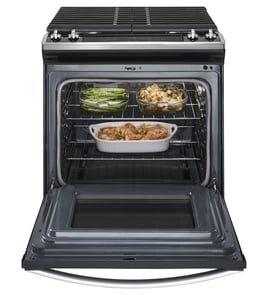




Does GE Profile make a 36 gas range?
Yes. GE makes 36-inch all-gas professional ranges, and your GE model ZGP366NR5SS is a 36-inch gas range platform covered by the 30-inch, 36-inch, and 48-inch professional all-gas range documentation. For exact features and configurations, match the series and model details in the ZGP366NR5SS owner’s manual.
What “36-inch gas range” means for fit and installation
A 36-inch professional gas range is primarily defined by its overall width and required clearances. The installation instructions for GE professional all-gas ranges list 36-inch models at 35-7/8 inches wide, with height and depth ranges that affect countertop alignment and cutout planning.
Common 36-inch model dimension ranges (from the install guide):
| Spec | Typical value for 36-inch models | Why you care |
|---|---|---|
| Width | 35-7/8 in. | Cabinet and cutout fit |
| Height | 35-1/4 to 36-3/4 in. | Leveling legs, countertop alignment |
| Depth to front of door | 28-1/4 in. | Aisle clearance, door swing |
Quick checks before you shop or compare models
Use these steps to confirm you are looking at the right 36-inch GE range family and that it will fit your kitchen.
- Confirm the rating plate model number matches ZGP366NR5SS.
- Verify cutout width and side clearances before ordering trim or panels.
- Plan ventilation; installations without a hood require larger clearance to combustibles.
- Use the anti-tip bracket requirements in the ZGP366NR5SS installation guide.
- If you are comparing “GE Profile” vs “GE Monogram/Professional,” compare burner layout, controls, and oven features, not just width.
Why it matters
“36-inch” tells you the range’s footprint, but safe installation depends on clearances, ventilation, and anti-tip setup. Using the correct documentation for the ZGP366NR5SS platform helps prevent fit issues and ensures the range is installed to spec.
Last updated: February 2026
How do I reset the error code on my GE oven?
On the GE ZGP366NR5SS gas range, we reset most function error codes by turning the Oven Mode Selector and Temperature knob to OFF, letting the oven cool for about 1 hour, then restoring power for 30 seconds. If the code returns, the range needs service-level troubleshooting.
Step-by-step reset (ZGP366NR5SS)
- Turn the Oven Mode Selector to OFF.
- Turn the Temperature knob to OFF.
- Let the oven cool for 1 hour (important if the door is locked from heat).
- Disconnect power to the range for 30 seconds (breaker off, then back on).
- Restore power and try operating the oven again.
- If an F- and a number code repeats, schedule service (the control is detecting a persistent fault).
What the display message usually means
| Display message | What it indicates | What to do next |
|---|---|---|
| F- and a number flashing | Function error code | Do the reset steps above; if it repeats, service is needed |
| CLOSE door scrolling | Self-clean selected but door not closed | Close the door, or turn both knobs to OFF to cancel |
| Door locked when you want to cook | Oven is above the unlock temperature | Turn both knobs to OFF and allow more cooling time |
| Display blank | Oven/timer not in use, or home power issue | Check house breaker or fuse, then retry |
Why it matters
Resetting the code the right way protects the control and helps you avoid repeated ignition attempts while the oven is hot or locked. It also helps confirm whether you are dealing with a one-time glitch or a real component problem.
If the code keeps coming back
A repeating error often points to a failed sensing or ignition component. On this model, common service checks include:
- Oven temperature sensing circuit (wiring and sensor)
- Ignition system performance (weak ignition can cause heat faults)
- Control input issues (stuck or erratic control signals)
If you are diagnosing a no-heat condition along with the error, the GE range bake igniter WB13X25264 is a common part involved in bake ignition.
For control meanings and operating steps specific to this range, use the ZGP366NR5SS owner’s manual.
Last updated: February 2026
What does F3 mean on a GE gas stove?
On the GE ZGP366NR5SS gas range, the F3 error code points to an oven temperature sensing problem, most commonly an oven temperature sensor circuit issue that can make the oven think it is overheating. The usual fix is diagnosing the sensor and its wiring, then replacing the failed part.
What to do first (safe, quick checks)
- Press Clear/Off (if your control has it) and let the oven cool completely.
- Turn power off at the breaker for 1 minute, then restore power to reset the control.
- If the code returns, stop using the oven until the cause is found.
- Check that the range vents are not blocked; proper airflow is required for safe operation.
- If you smell gas, follow the safety steps in the ZGP366NR5SS owner’s manual and do not attempt DIY leak testing.
Likely causes of an F3 code
- Failed oven temperature sensor (sensor out of range)
- Loose, damaged, or overheated wiring between the sensor and control
- Control problem interpreting sensor input (less common)
Quick symptom guide
| What you notice | What it usually indicates | What we do next |
|---|---|---|
| F3 appears during preheat | Sensor reading incorrect | Test sensor resistance and harness |
| Oven heats erratically | Intermittent sensor or connection | Inspect connectors, repair wiring |
| F3 appears immediately at power-up | Open/shorted sensor circuit | Check sensor circuit continuity |
Parts that may be involved
If testing confirms a sensor circuit problem, the sensor or related control components are typically addressed. For this model, a commonly replaced temperature-related component is the sensor assembly WB21T10019.
Why it matters
An F3 condition can cause inaccurate temperatures or overheating behavior. Correcting it protects baking performance and helps prevent heat-related damage to wiring, controls, and nearby components.
Last updated: February 2026
What model is my GE gas range?
Your GE gas range model number is printed on the appliance ID label. On the GE ZGP366NR5SS, you can typically find that label behind the left burner knob or below the control panel where it’s visible when the oven door is opened; match the printed model number to order the correct parts.
Where to look on the range
Check these common label locations on professional-style GE all-gas ranges:
- Behind the left burner knob (look for a label plate or sticker)
- Below the control panel, visible when you open the oven door
- Around the front frame of the oven opening (with the door open)
- If your unit has a flip-up tag or flag near the controls, rotate it to view the label
Use the ZGP366NR5SS owner’s manual to confirm the exact label location and how GE describes it for your series.
What to write down (and why)
Record both numbers exactly as shown:
- Model number (example format: ZGP366NR5SS)
- Serial number
Why it matters
The model number narrows parts down to the correct burner grates, igniters, knobs, and control components for your exact configuration. Even small differences in a professional range can change which parts fit.
Quick checklist before ordering parts
| Item to verify | What to do | Common mistake |
|---|---|---|
| Model number | Copy it character-for-character | Mixing up 0 (zero) and O (letter) |
| Serial number | Copy it too | Skipping it when a revision matters |
| Label legibility | Take a clear photo | Relying on memory |
If the label is hard to read
- Wipe the label gently with a damp cloth and dry it
- Use your phone camera zoom and good lighting
- Avoid abrasive cleaners that can remove printing
Last updated: February 2026