Owner’s manual
 View engine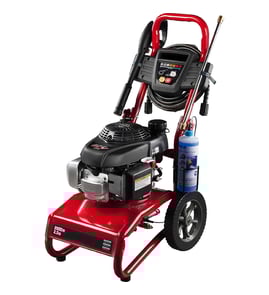




Can you put 87 gas in a pressure washer?
Yes. For the Craftsman pressure washer model 580752040, regular unleaded gasoline with an 87 octane rating is the standard fuel choice for normal operation. We recommend following the fuel guidance and any ethanol limits listed in the 580752040 owner's manual.
Use fresh, clean gasoline and keep it simple; fuel quality matters more than chasing higher octane.
- Use 87 octane unleaded from a busy station (fresher fuel).
- Avoid old gas (more than 30 days in the can without stabilizer).
- Avoid mixing oil into the gas unless your engine is specifically a 2-cycle (most gas pressure washers are 4-cycle).
- Avoid overfilling the tank; leave room for expansion.
- If your manual specifies an ethanol limit (common guidance is E10 or less), follow that.
Higher octane does not increase cleaning power; pressure and flow come from the pump and engine condition.
| Fuel option | When it makes sense | What you should expect |
|---|---|---|
| 87 octane (regular) | Normal use | Best everyday choice |
| 89 to 93 octane (mid/premium) | Only if the manual calls for it or you have persistent knock | Usually no performance gain |
| Ethanol-free (if available) | Seasonal equipment, storage concerns | Often starts easier after storage |
If the engine surges, stalls, or loses power, the issue is usually fuel freshness, carburetor varnish, or a restricted nozzle.
- Drain and replace with fresh 87 octane.
- Check the spray tip for blockage; a clogged tip can overload the pump.
- Inspect the water supply and hose for kinks or restrictions.
- Review our guide on pressure washer engine losing power for common causes and fixes.
Using the correct gasoline helps the engine start easier, run smoother under load, and reduces fuel-system problems that can lead to hard starting and poor pressure.
Last updated: January 2026
What is the PSI of a gas-powered pressure washer?
Gas-powered pressure washers typically run in the 2,000 to 5,000 PSI range, depending on the pump, engine, and spray tip. For the Craftsman 580752040, the exact PSI rating is listed on the unit label and in the 580752040 owner's manual.
Most pressure washers fall into these practical ranges:
- Light-duty: ~1,200 to 2,000 PSI (patios, outdoor furniture)
- Medium-duty: ~2,000 to 3,100 PSI (driveways, siding, fences)
- Heavy-duty: ~3,100 to 5,000 PSI (large concrete areas, prep work)
| Washer type | Typical PSI range | Typical best use |
|---|---|---|
| Electric pressure washer | 1,200 to 4,000 | Light to medium cleaning |
| Gas pressure washer | 2,000 to 5,000 | Medium to heavy cleaning |
Even if the machine is rated for a certain PSI, real-world pressure at the spray nozzle can change based on setup and wear.
- Spray tip orifice size and angle (0°, 15°, 25°, 40°)
- Clogged or worn spray tip
- Low garden hose flow or restricted inlet screen
- Air trapped in the pump (needs purging)
- Pump valve or seal wear
If your pressure seems low or inconsistent, a worn or partially clogged nozzle is a common cause; matching the correct tip style for your job also helps. See choosing the correct spray tip for a pressure washer for practical tip selection guidance.
Choosing the right PSI helps you clean faster without damaging surfaces. Too much pressure can etch concrete or strip paint; too little pressure wastes time and detergent.
Last updated: January 2026
How do I find the model number on my 580752040?
Your Craftsman pressure washer’s model number is printed on the model and serial number label; for this unit it will read 580752040. Use that exact number when ordering parts or checking specifications in the owner's manual.
On most Craftsman gas pressure washers, the model/serial label is attached to the main frame/base area where it stays readable and protected.
Check these common spots:
- On the base frame near the pump mounting area
- On the handle/frame upright close to where the handle bolts on
- Near the engine mounting plate on the frame
- Around the chemical tank area on the main unit
- On a label near the pump (sometimes on the frame beside it)
Match the format on the label to these fields so you record the right information.
| Label field | What it’s used for | Example for your unit |
|---|---|---|
| Model number | Identifies the exact pressure washer version | 580752040 |
| Serial number | Identifies your specific unit | Varies |
| PSI/GPM ratings | Confirms performance class | 2200 PSI max, 2.2 GPM max |
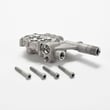
Using the full model number 580752040 helps us match the correct diagrams and parts list so you get the right fit the first time. It is especially important for items like spray tips, hoses, and pump service kits.
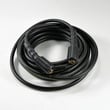
Once you find the model number, compare the part description in the parts list to what you’re replacing. For example, the parts list for this model includes items like the pressure washer hose 84006753 and specific quick-connect nozzles.
Last updated: March 2026