Owner’s manual
 View engine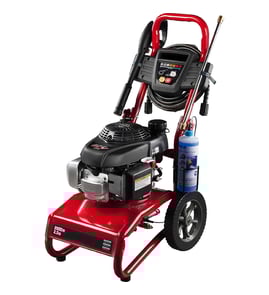



What are the most common issues with 580752210?
The most common issues we see with the Craftsman 580752210 gas pressure washer are no or low pressure, surging pressure, detergent not siphoning, water leaks at hose connections, and engine starting or power problems. Most are caused by a clogged spray tip, air leaks, worn seals, or a restricted water supply.
- Confirm the garden hose delivers strong flow; use a short, non-kinked hose.
- Purge air: connect water, squeeze the trigger until flow is steady, then start the engine.
- Clean the spray tip; debris in the orifice causes low pressure and pulsing.
- Inspect quick-connects and O-rings for cuts or flattening; reseat and tighten.
- Verify the correct spray tip is installed for the job (wide fan for rinsing, narrow for heavy cleaning).
| Symptom | Most likely causes | What to do first |
|---|---|---|
| No/low pressure | Clogged nozzle, low water supply, air in pump | Clean tip, verify flow, purge air |
| Pressure surges | Partially clogged tip, unloader valve sticking | Clean tip; follow how to replace a pressure washer unloader valve if needed |
| Leaks at wand/hose | Worn O-ring, loose fitting, damaged coupler | Reseat fittings; replace seals as needed |
| Detergent not drawing | Wrong tip/setting, clogged injector, air leak | Use correct tip; check injector path |
| Won’t start/loses power | Fuel issues, dirty air filter, spark plug, choke/throttle setting | Follow starting steps in the owner's manual |
These are frequent wear items for pressure and spray issues on this model:
- Pressure washer spray nozzle 195983XGS (clogs easily; causes low pressure)
- Nozzle 706155 (alternate spray tip option)
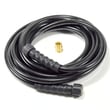
- Hose kit 6189 (leaks, damaged couplers, or internal restriction)
Running the pump without adequate water flow or with trapped air can overheat seals and valves, turning a simple nozzle cleaning into a bigger pump repair. Keeping the spray tip and connections in good shape protects pressure output and pump life.
Last updated: March 2026
What is the PSI of a gas-powered pressure washer?
For the Craftsman pressure washer model 580752210, the maximum outlet pressure is 3,000 PSI under PWMA PW101 rating standards; that is the top pressure the pump is designed to produce with the correct nozzle and adequate water supply (see the 580752210 owner's manual).
Gas-powered pressure washers cover a wide range, so it helps to compare by type:
- Gas pressure washers: commonly 2,000 to 5,000 PSI
- Electric pressure washers: commonly 1,200 to 3,000 PSI
- Higher PSI is not always better; the right spray tip and technique often matter more than raw pressure.
| Type | Common PSI range | Best for |
|---|---|---|
| Electric | 1,200 to 3,000 | Cars, patio furniture, light mildew |
| Gas | 2,000 to 5,000 | Driveways, siding, heavy grime |
Even with a 3,000 PSI-rated unit like the Craftsman 580752210, real-world pressure can drop if setup is off.
- Nozzle condition and size: a worn or partially clogged tip reduces performance
- Water supply: this model calls for more than 3.7 GPM supply flow and at least 20 PSI at the garden hose connection
- Air in the pump: purging air at startup helps stabilize pressure
- Engine speed/power: a dirty air filter or fuel issue can reduce pump output
- Unloader/valves: sticking components can cause surging or weak pressure
Matching PSI to the job helps you clean faster while reducing the risk of surface damage. For example, using too aggressive a spray pattern on wood or painted surfaces can cause gouging or peeling, while too low a PSI can make cleaning slow and uneven.
If spray performance is inconsistent, start with the simplest check: inspect and clean the spray tip, or replace it if it is worn. For this model, a common replacement is the pressure washer spray nozzle 195983XGS.
Last updated: January 2026
What kind of gas goes in a Craftsman 3000 PSI pressure washer?
For the Craftsman pressure washer model 580752210, we use clean, fresh unleaded gasoline with a minimum 87 octane (87 AKI, 91 RON) rating. Avoid old fuel and keep the fuel container clean so the engine starts easily and runs smoothly.
Use fuel that matches these basics:
- Unleaded gasoline
- Minimum 87 octane (87 AKI, 91 RON)
- Fresh fuel (ideally less than 30 days old)
- Clean, approved gas can (no water or debris)
- Correct oil level in the engine before starting (fuel type does not replace engine oil)
Avoid these common problems:
- Stale gasoline that has been sitting for months
- Fuel contaminated with water or dirt
- Overfilling the tank (leave room for expansion)
- Spilling fuel onto hot engine parts
| Item | Recommended | Why it matters |
|---|---|---|
| Octane | 87 or higher | Helps prevent poor running and hard starts |
| Fuel freshness | Fresh, recently purchased | Reduces varnish buildup in the carburetor |
| Storage | Sealed container | Limits moisture and contamination |
If the engine surges, stalls, or loses power after adding gas, these checks usually help:
- Drain and replace old fuel with fresh 87+ octane
- Check the air filter and spark plug condition
- Confirm the water supply meets the washer requirements before running the pump
- Inspect the spray tip for blockage and clean or replace if needed
If you suspect the spray pattern or pressure is inconsistent, a clogged tip is common; the pressure washer spray nozzle 195983XGS is a model-matched replacement option.
Using the correct gasoline helps protect the small engine and reduces starting issues, surging, and fuel-system deposits. It also supports consistent pressure output when you are cleaning with the right spray tip and water flow.
For additional model-specific operating and safety details, follow the 580752210 owner's manual.
Last updated: January 2026