Owner’s manual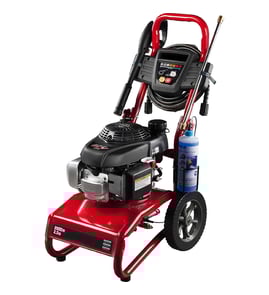



What kind of gas goes in a Craftsman 3000 PSI pressure washer?
For the Craftsman pressure washer model 580768331, use clean, fresh gasoline in the fuel tank; we recommend unleaded regular (87 octane/87 AKI) and never refuel while the engine is hot. For the exact fueling and safety steps, follow the owner's manual.
What to use (and what to avoid)
Use fuel that helps the engine run cleanly and reduces starting issues.
- Use fresh, clean, unleaded gasoline
- Use 87 octane (87 AKI) minimum
- Buy fuel you will use within 30 days
- Avoid old or contaminated gas (varnish smell, dark color)
- Avoid spilling fuel on a hot engine; let the unit cool before refueling
Quick specs for this model
The manual lists the fuel tank capacity, which helps prevent overfilling.
| Item | Spec for model 580768331 |
|---|---|
| Gasoline type | Unleaded gasoline |
| Minimum octane | 87 AKI |
| Gasoline capacity | 1.6 quarts |
Safe fueling checklist
Gasoline vapors are explosive, so we follow a consistent routine.
- Shut the engine off and allow it to cool
- Refuel outdoors in a well-ventilated area
- Keep sparks, flames, and smoking away from the unit
- Tighten the gas cap securely after filling
- Wipe up any spilled fuel before restarting
Why it matters
Using the right gasoline and safe fueling practices helps prevent hard starting, surging, and engine damage; it also reduces fire risk when operating a gas pressure washer.
Last updated: February 2026
What is the life expectancy of a gas pressure washer?
A homeowner gas pressure washer like the Craftsman 580768331 typically lasts 5 to 7 years, which usually works out to roughly 100 to 300 operating hours with normal maintenance. Lifespan is driven more by maintenance and storage than calendar age; follow the service schedule in the owner's manual.
Typical lifespan ranges (what we see most often)
Gas pressure washer life is best measured in hours because usage varies a lot.
| Use level | Typical operating hours | Typical calendar life |
|---|---|---|
| Light (seasonal cleaning) | 50 to 150 hours | 6 to 10 years |
| Moderate (regular homeowner use) | 100 to 300 hours | 5 to 7 years |
| Heavy (frequent, long run times) | 300+ hours | 2 to 5 years |
Maintenance that extends life the most
The 580768331 manual calls out routine items like checking oil before use and changing oil after the first 5 hours, then every 50 hours (or yearly). These steps make the biggest difference:
- Check engine oil before each use; keep the level correct.
- Change engine oil after the first 5 hours, then every 50 hours (every 25 hours in dusty or very hot conditions).
- Keep a clean air filter and replace it when worn.
- Replace the spark plug and air filter about once per season for best running.
- Never run the pump without water supplied; it overheats and damages seals quickly.
- Store it properly if it will sit idle longer than 30 days.
Why it matters
A pressure washer can still “run” while slowly losing performance. Staying on schedule helps prevent common failures like hard starting, loss of pressure, and premature pump seal wear.
Quick signs it is nearing end of life
- Pressure surges or drops even with a clean nozzle
- Water leaking at the pump or fittings
- Engine loses power under load
- Excessive vibration or unusual noise
Last updated: February 2026
How many PSI for my pressure washer?
Your Craftsman gas pressure washer model 580768331 is rated at 2400 PSI (pounds per square inch). That pressure level is a strong fit for most home cleaning jobs like decks, siding, patio furniture, and driveway spot-cleaning; use the correct spray tip and distance to avoid surface damage. See the owner's manual for the full specifications and operating guidance.
Quick PSI guidance for common jobs
We recommend matching pressure to the surface and starting gently, then increasing only as needed:
- 1,300 to 2,000 PSI: cars, grills, patio furniture, softer woods
- 2,000 to 2,800 PSI: decks, fences, siding, most home concrete cleaning
- 2,800+ PSI: heavier concrete and tougher stains (use extra care)
How to use 2400 PSI safely (and get better results)
A 2400 PSI washer can damage paint, wood fibers, and soft stone if you get too close or use too narrow a spray.
- Start with a wider spray pattern and stand farther back
- Test a small, hidden area first
- Keep the spray moving; do not “dig in” on one spot
- Work top to bottom when rinsing to prevent streaks
- Do not run the pump without water connected and turned on
What else matters besides PSI
PSI is only half the story. Your model is also rated at 2.2 GPM (gallons per minute), which affects how fast you rinse and how efficiently you clean.
| Spec | Craftsman 580768331 rating | Why it matters |
|---|---|---|
| Pressure (PSI) | 2400 | Determines impact force on the surface |
| Flow (GPM) | 2.2 | Determines rinsing speed and cleaning efficiency |
| Water temp limit | 140°F max | Hotter water can damage the pump |
Why it matters
Using the right PSI range helps you clean faster while preventing etched concrete, splintered wood, and damaged paint. With a 2400 PSI, 2.2 GPM machine, technique and nozzle choice make the biggest difference in results.
Last updated: February 2026
Why does my gas pressure washer have no pressure?
For a Craftsman 580768331 gas pressure washer, “no pressure” is usually caused by air trapped in the pump, a clogged nozzle or inlet screen, a restricted water supply, or a leak/blockage in the high-pressure hose or spray gun. Follow the setup and purge steps in the owner's manual.
Quick checks that fix most “no pressure” complaints
- Confirm the garden hose is fully on and supplying steady flow (the manual calls for more than 2.2 GPM).
- Make sure the water supply is not over 140°F.
- Check the water inlet screen/strainer for debris; clean it.
- Inspect the high-pressure hose for kinks, cuts, soft spots, or a blockage.
- Remove the spray tip and test briefly; a clogged nozzle can cause low or erratic pressure.
- Look for leaks at the gun, wand, and hose fittings; hand-tighten connections.
Purge air from the pump (important)
Air in the pump can prevent pressure from building.
- Connect the garden hose to the pump inlet and turn the water on.
- Remove the wand/nozzle from the spray gun.
- Hold the trigger open until you get a steady stream of water.
- Reinstall the wand, then install the correct spray nozzle.
Match the symptom to the most likely cause
| What you notice | Most likely cause | What to do next |
|---|---|---|
| No pressure at all | Blocked inlet, inadequate water supply, air in pump | Clean inlet screen; verify flow; purge air |
| Pressure pulses | Nozzle partially clogged | Clean nozzle with the cleaning wire; rinse 30 to 60 seconds |
| Low pressure only with detergent | Wrong nozzle installed | Switch to the low-pressure (soap) nozzle when applying detergent |
| Pressure drops after a minute | Hose/gun leak or restriction | Inspect hose and gun; tighten fittings; replace damaged hose |
Parts that commonly relate to pressure problems
These parts do not fix every “no pressure” issue, but they are common wear or restriction points:
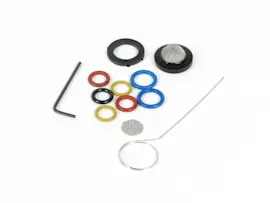
- Filter 709496 (inlet/chemical filtering; clean or replace if restricted)
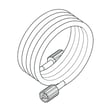
- 30'hose 84006753 (replace if the high-pressure hose is damaged or leaking)
- O-ring B2218GS (seal leaks at connections that can reduce pressure)
Why it matters
Running the pump without water can damage the pump quickly, and restricted flow (clogged screen/nozzle, kinked hose) can cause erratic pressure and poor cleaning performance.
Last updated: February 2026
Is it worth repairing a pressure washer?
Yes, repairing a Craftsman pressure washer model 580768331 is worth it when the problem is a wear item or leak (hose, filter, O-ring, clamp) and the fix restores safe operation at a reasonable cost; major pump damage or repeated failures usually make replacement the better value. See the maintenance and safety guidance in the owner's manual.
Quick decision checklist
- Repair it if the issue is a leak at a connection, a clogged inlet screen/filter, or a worn seal.
- Repair it if the engine runs well and the unit only needs routine maintenance.
- Replace it if the pump was run with no water supply and now has low pressure or severe internal damage.
- Replace it if repair cost is over about 50% of what you would spend on a comparable new unit.
- Replace it if you have recurring breakdowns that keep coming back after repairs.
Common repairs that are usually worth it (and why)
Many “pressure washer problems” are caused by simple flow restrictions or leaks that are inexpensive to correct.
| Symptom | Most common cause | Typical fix | Parts you may need |
|---|---|---|---|
| Leaks at hose connections | Worn O-ring or washer | Replace seals, re-seat couplers | O-ring B2218GS, washer 50190 |
| Low pressure or surging | Clogged inlet screen or in-line filter | Clean screen/filter, purge air | Filter 709496 |
| Hose bulging, cuts, or leaks | Hose damage from wear or kinks | Replace hose (do not patch) | 30'hose 84006753 |
Safety and “don’t repair this” guidance
We follow the same safety rule stated in the manual: never repair a high pressure hose. Replace it immediately if it shows damage.
- Disconnect the spark plug wire before adjustments or repairs.
- Inspect the high-pressure hose before each use for cuts, abrasions, bulges, or coupling damage.
- Fix leaks at fittings with the correct O-rings or washers; do not overtighten couplers.
- Purge air and contaminants from the pump before use.
Why it matters
A small leak or restriction can make the pump work harder, reduce cleaning performance, and shorten pump life. Routine checks (oil level, inlet screen, hose condition, and filters) help your 580768331 run better and last longer.
For deeper troubleshooting steps, use our solving pressure washer problems guide alongside the owner's manual.
Last updated: February 2026