Installation guide
 Owner’s manual
 Error Codes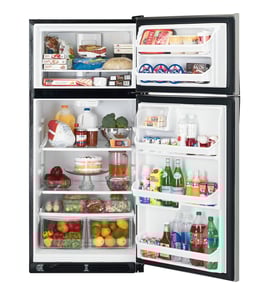
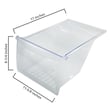


How do I tell what model Kenmore fridge I have?
Your Kenmore refrigerator model number is printed on the serial plate inside the fresh food (refrigerator) compartment. On Kenmore model 2533111330D, this plate is located inside the refrigerator compartment; we recommend writing down both the model and serial number for parts lookup and service records (see the owner's manual).
Check these common label locations on Kenmore top-mount refrigerators:
- Inside the refrigerator compartment on a side wall (most common)
- On the ceiling of the refrigerator compartment near the light
- On the frame just inside the door opening
- Behind or near the crisper drawers (look on the liner wall)
- Less common: behind the toe grille (kick plate) area
Record the full information exactly as shown on the serial plate:
- Model number (example: 2533111330D)
- Serial number
- Purchase date (if listed or known)
The model number ensures we match the correct Kenmore parts list and diagrams. Even small model variations can change fit and wiring for items like a temperature control thermostat, evaporator fan motor, or door gasket.
If the label is worn or smudged:
- Use a flashlight and view from an angle to reduce glare
- Take a close-up photo and zoom in
- Copy the characters carefully (watch for 0 vs O, 1 vs I)
- Keep the serial number too; it helps confirm the correct build
| Item | What it tells us | Used for |
|---|---|---|
| Model number | The exact refrigerator design | Correct parts diagrams and part fit |
| Serial number | The production run and build details | Verifying version changes and service history |
Last updated: February 2026
What's the average lifespan of a Kenmore refrigerator?
Most Kenmore refrigerators last 10 to 15 years. For a Kenmore top-mount like model 2533111330D, regular maintenance (cleaning condenser coils, keeping door gaskets sealing, and fixing cooling issues early) helps you reach the full expected service life; major sealed-system failures typically shorten it.
- Average: 10 to 15 years
- Common “long life” with good care: 15 to 20 years
- Shortened lifespan drivers: poor airflow around the cabinet, dirty condenser coils, repeated door seal leaks, and delayed repairs after temperature problems
| Refrigerator type | Typical lifespan | What most affects it |
|---|---|---|
| Top-mount (top freezer) | 10 to 15 years | Coil cleanliness, door seal condition, stable temperatures |
| Side-by-side | 10 to 15 years | Ice maker and dispenser wear, airflow issues |
| French door | 10 to 15 years | More electronics, ice maker and fan-related wear |
We recommend these habits because they reduce compressor run time and prevent frost and airflow problems:
- Vacuum and brush condenser coils regularly (more often with pets).
- Keep the doors closing squarely; replace worn gaskets when you feel air leaks.
- Set stable temperatures (avoid frequent dial changes).
- Keep vents inside the fresh food and freezer compartments unblocked.
- Address unusual noises early (fan blade rubbing, fan motor squeal, clicking timer).
These are examples of parts on this model that often relate to cooling performance and long-term reliability:
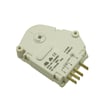
- Refrigerator defrost timer 215846602 (defrost cycling issues can lead to frost buildup and warm temps)
- Refrigerator evaporator motor 5303918549 (weak airflow can cause warm refrigerator section)
- Refrigerator gasket 241872512 and refrigerator freezer gasket 241872509 (air leaks increase run time and frost)
A refrigerator near the end of its lifespan often shows up as temperature swings, heavier frost, louder fan noise, or longer run times. Catching those symptoms early usually means a smaller repair and less stress on the compressor.
For model-specific operating and care guidance, follow the maintenance and “Before you call” sections in the owner's manual.
Last updated: February 2026
How many cubic feet is my Kenmore refrigerator by model number?
Your Kenmore top-mount refrigerator model 2533111330D has its exact cubic-foot capacity listed on the appliance rating plate inside the fresh food compartment and in the specifications section of the owner's manual. Using the rating plate is the fastest, most accurate way to match capacity to your exact build.
On model 2533111330D, we use the same identification location described in the manual: the serial and model plate is inside the refrigerator compartment. Capacity is typically shown on that same label or in the manual specs.
- Look on the side wall inside the fresh food (refrigerator) section
- Check near the crisper area or along the upper interior liner
- Write down the full model number and serial number before you start shopping parts
- If the label is hard to read, take a clear photo and zoom in
The owner's manual is the best model-matched reference for specifications and features.
| Method | What you get | Accuracy |
|---|---|---|
| Rating plate inside refrigerator | Exact identification and often capacity | Highest |
| Owner’s manual specifications | Published capacity and configuration details | High |
| Measuring interior space yourself | Rough estimate only | Low |
Cubic-foot capacity helps you compare refrigerator sizes, but it is not the best way to choose replacement parts. For parts like door bins, gaskets, thermostats, and fan components, the model number (2533111330D) is what ensures correct fit.
If you are troubleshooting cooling or fit issues, these parts are often involved and must match the model:
- Evaporator fan components (motor and blade)
- Temperature control thermostat
- Door and freezer gaskets
- Door shelf rails and supports
- Defrost timer
Last updated: February 2026
How to read Kenmore model numbers?
For Kenmore appliances, we read the model number from the serial plate and use the prefix to identify the manufacturing source and the remaining digits/letters to match the exact design and parts list. On Kenmore refrigerator model 2533111330D, the model/serial plate is located inside the refrigerator compartment (as shown in the owner's manual).
On Kenmore 2533111330D top-mount refrigerators, the model number is printed on the serial plate inside the fresh food (refrigerator) compartment.
- Open the refrigerator door and look along the inside walls
- Check near the upper side walls or ceiling area of the compartment
- Write down the full model number exactly as shown (including letters)
- Record the serial number too; it helps confirm production details
- Use the full model number when selecting parts such as a thermostat, gasket, or fan motor
Kenmore model numbers are usually easiest to interpret in two pieces: the prefix and the remainder.
| Model number section | What it tells you | Why you need it |
|---|---|---|
| First 3 digits (prefix) | Manufacturing source code (who built it for Kenmore) | Helps narrow down the correct parts system |
| Remaining digits/letters | Exact model design and variation | Ensures the right fit and wiring, shelves, controls, and seals |
For this refrigerator, the prefix is 253, which is the key identifier we use to match the correct Kenmore 253-series parts breakdown.
A single digit or letter change can mean different door hardware, temperature controls, or cooling components. Using the exact model number helps you avoid ordering the wrong part and reduces repeat repairs.
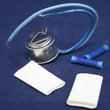
If you are troubleshooting cooling issues, common model-matched parts on this page include the refrigerator evaporator fan motor 5303918549, refrigerator defrost timer 215846602, and refrigerator temperature control thermostat 241537103.
Last updated: February 2026
What are the common problems with Kenmore Elite refrigerators?
Common problems we see on Kenmore refrigerators like model 2533111330D include warm temperatures (cooling failure), ice maker not making ice, water leaks, and unusual noise or vibration. Most issues trace back to airflow problems (dirty coils, fan failures), defrost problems, or door seal and leveling issues; our 2533111330D owner's manual covers several “before you call” checks.
- Not cooling or weak cooling: condenser coils clogged with dust, evaporator fan not running, temperature control set incorrectly, or the unit stuck in a defrost cycle.
- Freezer too cold or fridge too cold: control settings too cold; allow about 24 hours after changes for temperatures to stabilize.
- Ice maker not working (some models): wire shutoff arm up, water supply off, or a frozen fill path.
- Leaks or puddles: clogged/iced defrost drain, door left ajar, or a poor door seal.
- Noisy or vibrating: cabinet not level, weak floor, or a failing fan motor/blade.
- Confirm the plug is fully seated in the outlet.
- Make sure the temperature control is not set to “0” (that stops the compressor but does not shut off power).
- If the refrigerator just stopped cooling, wait 20 minutes to see if it is in a normal defrost cycle.
- Level the cabinet to reduce vibration and help doors seal.
- For ice maker issues, verify the wire signal arm is down and the water supply is on.
If you have warm temperatures or inconsistent cooling, these model-compatible parts are frequent solutions:
| Symptom | Common suspect part | Example part on this model page |
|---|---|---|
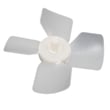
| Fridge/freezer warm, poor airflow | Evaporator fan motor or blade | Refrigerator evaporator motor 5303918549, refrigerator evaporator fan blade 5308000010 |
| Frost buildup, warming over time | Defrost system timing issue | Refrigerator defrost timer 215846602 |
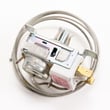
| Temperature swings | Temperature control issue | Refrigerator temperature control thermostat 241537103 |
Cooling, ice production, and even leaks all depend on steady airflow and proper defrosting. When airflow is restricted or the defrost system fails, temperatures rise, frost builds up, and the refrigerator works harder (which can shorten compressor life).
Last updated: February 2026