Owner’s manual
 View engine


Where to find model number on Craftsman lawn mower?
On your Craftsman walk-behind mower, the model number is printed on a decal on the rear of the mower housing. For model 917388480, check the back of the deck near the discharge area, then record both the model and serial number for parts lookup and service reference (see the owner's manual).
Where to look on model 917388480
Most owners find the decal in one of these spots on the rear of the mower deck:
- On the back edge of the cutting deck (rear skirt area)
- Near the rear discharge opening or discharge guard mounting area
- Close to the height-adjustment hardware on the rear of the deck
- On the rear-facing surface of the housing, just above the wheels
What to write down (and why)
Capture both numbers exactly as shown on the decal.
- Model number: identifies the mower assembly for non-engine parts
- Serial number: helps match production variations
- Date of purchase: useful for maintenance records and documentation
Quick reference
| Item | What it’s used for | Example format |
|---|---|---|
| Model number | Finding correct mower parts diagrams and parts | 917.388480 or 917388480 |
| Serial number | Matching the exact build/version | Letters and numbers |
| Date of purchase | Recordkeeping | Month/day/year |
If the decal is dirty, faded, or missing
Use these steps to make the label readable before you assume it is gone:
- Brush off dry grass and debris, then wipe with a damp rag
- Use a flashlight at an angle to highlight faint printing
- Take a close-up photo and zoom in to read worn characters
- Check for a second label on the rear housing area if the first is damaged
Why it matters
The model number is the fastest way to match the right Craftsman walk-behind mower parts (blade, blade adapter, wheels, cables, and hardware) to your exact deck and handle configuration.
Last updated: February 2026
Should I use 87 or 89 gas for lawn mower?
For your Craftsman lawn mower model 917388480, use regular unleaded gasoline (87 octane minimum). Higher octane (like 89) is not needed for normal operation; what matters most is using fresh fuel and avoiding alcohol-blended fuel issues described in the owner's manual.
What to use (and what to avoid)
- Use fresh, clean, regular unleaded fuel (87 octane minimum).
- Buy only what you can use in about 30 days to keep fuel from going stale.
- Do not mix oil with gasoline.
- Avoid fuel with more than 10% ethanol (E10); higher ethanol blends can cause hard starting and fuel-system problems.
- Wipe up spills and refuel only when the engine is off and cool.
Quick comparison: 87 vs 89
| Fuel choice | Works in 917388480? | When it makes sense | What matters more than octane |
|---|---|---|---|
| 87 (regular) | Yes (recommended) | Everyday mowing | Freshness, clean storage, low ethanol |
| 89 (mid-grade) | Yes, but unnecessary | Only if 87 is unavailable | Still must be fresh and E10 or lower |
If the mower runs rough or won’t start
Fuel quality is usually the issue, not octane. Check these first:
- Old gas (older than about a month)
- Water contamination (from poor storage)
- Clogged air filter or dirty carburetor passages
- Fouled spark plug
- Incorrect starting procedure (primer use)
If you’re also servicing the cutting system, inspect the blade and mounting hardware while you’re there; a bent or damaged blade can add vibration and stress.
Why it matters
Using the correct fuel helps your 917388480 start easier, run smoother, and reduces varnish and corrosion in the carburetor and fuel system during storage. Regular 87 octane meets the mower’s needs; fuel freshness and ethanol content drive reliability.
Last updated: February 2026
What is the life expectancy of a gas-powered lawn mower?
Most gas-powered walk-behind lawn mowers, including the Craftsman 917388480, typically last 8 to 10 years with normal residential use and consistent maintenance. Regular blade care, oil changes, and cleaning under the deck are the biggest factors that extend engine and deck life.
What affects lifespan the most
A mower’s “age” matters less than hours of use and maintenance. These items have the biggest impact:
- Engine oil care: checking oil before use and changing it on schedule reduces internal wear.
- Blade condition: a dull or bent blade increases vibration and stress on the crankshaft.
- Deck cleanliness: grass buildup holds moisture and makes the engine run hotter.
- Air filter and spark plug service: keeps starting easy and power consistent.
- Fuel storage habits: stale fuel and varnish are common causes of hard starting after storage.
Maintenance checkpoints (practical schedule)
Your Craftsman 917388480 manual includes a maintenance schedule that focuses on routine inspections, blade service, oil service, and end-of-season fuel steps. Use the owner's manual as your baseline.
| Task | Typical timing | Why it matters |
|---|---|---|
| Check engine oil level | Before each use | Prevents low-oil damage |
| Change engine oil | About every 25 hours or each season | Reduces wear and overheating |
| Check/sharpen/replace blade | Regularly during season | Cleaner cut, less vibration |
| Clean underside of deck | After each use | Prevents corrosion and overheating |
| Replace spark plug | Each season or 100 hours | Improves starting and performance |
Parts that commonly wear out first
These are normal wear items; replacing them on time often makes an older mower feel “new” again:
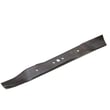
- Lawn mower blade 532406712
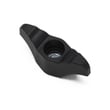
- Lawn mower blade adapter 581547901
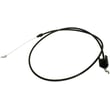
- Walk-behind lawn mower engine cable 532176556
Why it matters
A mower that’s past 10 years can still be a solid machine, but neglected maintenance shortens engine life quickly. Keeping the blade sharp, the deck clean, and the oil fresh prevents overheating, vibration damage, and hard-start problems.
Last updated: February 2026
What are the most common lawn mower repairs?
On the Craftsman 917388480 walk-behind mower, the most common repairs are tied to starting and cutting performance: cleaning or replacing tune-up items (spark plug, air filter), fixing fuel issues (stale gas, carburetor varnish), and servicing the cutting system (blade, blade adapter, and blade hardware). See the maintenance and troubleshooting steps in the owner's manual.
Most common repairs (and what you’ll notice)
- Won’t start or starts then dies: stale fuel, dirty spark plug, clogged air filter, or a control bar issue
- Loss of power: dirty air filter, grass buildup under the deck, cutting too low in heavy grass
- Surging or rough running: fuel restriction or carburetor contamination (often after storage)
- Poor cut or uneven cut: dull/bent blade, uneven wheel height settings, deck packed with clippings
- Excessive vibration: loose blade bolt, bent blade, damaged blade adapter
- Starter rope hard to pull: blade dragging in grass, brake not releasing, or blade adapter problems
Quick checks we recommend first
- Disconnect the spark plug wire before any service.
- Check for heavy grass and debris under the mower deck; clean it out.
- Verify all wheel height adjusters are set to the same cutting height.
- Inspect the blade for bends, cracks, or severe dulling.
- Drain old fuel and refill with fresh gasoline if the mower sat for weeks or over winter.
Parts that commonly get replaced on this model
If you find wear or damage, these are common service parts for the Craftsman 917388480:
- Lawn mower blade 532406712 (dull, bent, or damaged blade)
- Lawn mower blade adapter 581547901 (vibration, blade won’t stay tight, or damaged hub)
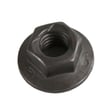
- Lawn mower hex flange nut 532409149 (blade hardware that is stripped or won’t hold torque)
Symptom-to-fix guide
| Symptom | Most likely cause | Typical fix |
|---|---|---|
| Poor cut, uneven cut | Dull blade, uneven wheel heights, deck buildup | Sharpen/replace blade; level wheels; clean deck |
| Excessive vibration | Loose/bent blade, bad adapter | Tighten hardware; replace blade/adapter |
| Loss of power | Dirty air filter, cutting too low, deck packed | Service filter; raise height; clean deck |
| Hard to pull starter rope | Blade dragging, brake engaged, adapter issue | Move to hard surface; check blade/adapter |
Why it matters
These repairs prevent unsafe vibration, reduce strain on the crankshaft, and restore airflow and blade lift so the mower cuts cleanly and starts reliably.
Last updated: February 2026
Is it cheaper to repair or replace a lawnmower?
Repairing a Craftsman walk-behind mower like model 917388480 is cheaper when the problem is a normal wear item and you can do the work yourself. Replacing the mower makes more sense when the engine or crankshaft is damaged, or when several major repairs are needed at once.
Quick way to decide
- Repair for poor cut, uneven cut, vibration, or a control cable issue.
- Replace for persistent severe vibration (possible crankshaft damage) or repeated no-start problems after basic tune-up steps.
- Use the manual’s troubleshooting chart to match symptoms to fixes before buying parts.
Cost-effective repairs we see most often
- Replace a worn or bent blade (poor cut, uneven cut, vibration)
- Replace a damaged blade adapter (vibration, starter rope hard to pull)
- Replace a stretched/broken zone control cable (engine will not keep running)
- Clean grass buildup under the deck (loss of power)
Common symptom-to-part examples
| Symptom | Typical fix | Example part |
|---|---|---|
| Poor or uneven cut | Replace blade | Lawn mower blade 532406712 |
| Excessive vibration | Replace blade adapter if damaged | Lawn mower blade adapter 581547901 |
| Control problem | Replace engine/zone cable | Walk-behind lawn mower engine cable 532176556 |
When replacement is the better value
- Engine crankshaft damage is suspected (vibration continues after blade and adapter are confirmed good)
- The starter rope is hard to pull and blade/adapter checks do not correct it
- The deck or handle structure is badly damaged and needs multiple assemblies
Why it matters
A mower that vibrates or cuts unevenly wears out blade hardware and engine components faster. Fixing a blade or adapter early often prevents a much bigger repair.
For model-specific safety steps and troubleshooting, follow the owner's manual.
Last updated: February 2026