Owner’s manual
 Error Codes


What is the warranty on LG LRMVC2306D?
For the LG LRMVC2306D refrigerator, warranty coverage varies by component and is spelled out in the product’s Limited Warranty section. For the most accurate coverage terms for your unit (including what is covered and what is excluded), use the warranty details in the LRMVC2306D owner’s manual.
What we can confirm for this model
LG’s warranty for LRMVC2306D commonly includes long-term coverage on the compressor (Linear/Inverter), listed as 10 years parts and 5 years labor for that component.
How to verify your exact warranty coverage
Warranty terms can differ by purchase date, region, and component. We recommend checking these items:
- The Limited Warranty section for covered parts and time periods
- Whether coverage is parts-only or parts and labor
- Any requirements for proof of purchase
- What’s considered normal wear vs. a defect in materials/workmanship
- Service process and any authorized service requirements
Warranty quick-reference (typical structure)
| Component or area | Coverage type | Notes |
|---|---|---|
| Compressor (Linear/Inverter) | Parts and labor (varies by term) | Often the longest coverage item on this model line |
| Sealed system / refrigeration components | Varies | May have different terms than the compressor |
| Other refrigerator parts | Varies | Many items have shorter coverage windows |
Why it matters
Knowing whether a failure is covered can change your next step. For example, a cooling problem tied to the sealed system or compressor may be handled differently than an issue with a wear item like a door bin or filter.
Last updated: January 2026
Why does my LG freezer keep icing up at the bottom?
On LG model LRMVC2306D, ice building up as a sheet at the bottom of the freezer is most often caused by a defrost drain that is partially or fully blocked. When defrost water cannot flow to the drain pan, it refreezes on the freezer floor. For model-specific safety and access guidance, use the LRMVC2306D owner’s manual.
What to check first (quick diagnosis)
- Look for a solid ice slab on the freezer floor or under the lower basket.
- Check for water dripping into the freezer after a defrost cycle.
- Inspect door closing; a door left slightly open can add moisture and worsen icing.
- Confirm temperatures; the default freezer setting is typically 0°F.
- Listen for the evaporator fan; weak airflow can contribute to frost and ice issues.
How we recommend fixing it
- Manually defrost the freezer: unplug the refrigerator, remove food, and let the ice melt (towels help).
- Clear the drain path: once melted, flush the drain opening with warm water (a turkey baster works well).
- Remove debris: food particles or ice crystals can re-block the drain.
- Reassemble and restart: restore power and allow 24 hours for temperatures to stabilize.
If the drain keeps re-freezing
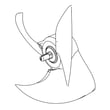
A recurring freeze-up can point to an airflow or defrost-related issue (for example, ice forming around the evaporator area). If you suspect a fan or duct problem, the refrigerator freezer air duct cover and fan assembly AEB76044903 is one compatible component to review for this model.
Common causes and what they look like
| Symptom | Most likely cause | What you’ll notice |
|---|---|---|
| Ice sheet on freezer floor | Clogged/iced defrost drain | Water refreezes at the bottom |
| Frost on packages and walls | Door not sealing or left ajar | Frost everywhere, not just bottom |
| Ice returns quickly after defrost | Drain re-freezing or defrost/airflow issue | Ice back within days |
Why it matters
When the drain is blocked, meltwater has nowhere to go. That can lead to repeated ice buildup, harder drawer operation, and temperature swings that affect food quality and ice maker performance.
Last updated: January 2026
Why is my LG refrigerator leaking from the bottom?
On LG model LRMVC2306D, a leak that shows up at the bottom is most often caused by a clogged defrost drain (defrost water overflows and runs down to the floor) or a water supply leak feeding the dispenser or ice maker. Less commonly, an ice maker fill issue can create overflow that ends up underneath the cabinet.
Quick checks we recommend first
- Confirm the liquid is water, not oily residue; wipe it up and see how quickly it returns.
- Check the drip tray and dispenser area for splashes that run down the front.
- Look for ice or frost buildup on the freezer floor; that often points to a defrost drain problem.
- Inspect the water line connection behind the refrigerator and the shutoff valve for slow drips.
- Check the ice maker area for cubes clumped together or water staining.
Most common causes (and what to do)
| What you notice | Most likely cause | What we do next |
|---|---|---|
| Water appears after a defrost cycle; ice on freezer floor | Defrost drain clogged or frozen | Clear the drain path and flush with warm water |
| Water appears when dispensing water or making ice | Water line or fitting leak | Inspect tubing, fittings, and valve connections |
| Water near ice maker compartment | Ice maker fill or overflow issue | Check fill tube alignment and ice maker area for leaks |
Parts that can be involved on this model
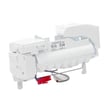
If the leak is tied to ice production (overflow, dripping in the ice compartment, or water staining near the ice maker), we typically inspect the ice maker assembly and related water routing.
- LG refrigerator ice maker assembly AEQ73110219
- Refrigerator water tube fitting 4932JA3002C
- Refrigerator water inlet valve MJX64471402
Using the manual to pinpoint the leak area
Your LRMVC2306D owner documentation shows the ice maker locations and water line connection basics, which helps narrow down whether the leak is from defrost water (freezer area) or the water supply system.
Why it matters
Water leaking from the bottom can damage flooring and can also lead to ice buildup in the freezer, poor door sealing, and inconsistent temperatures. Catching a small drip early often prevents a larger repair later.
Last updated: January 2026