Owner’s manual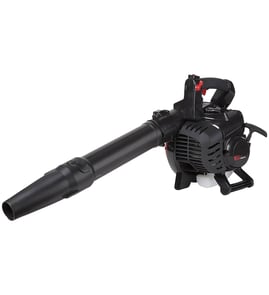

What is the life expectancy of a gas leaf blower?
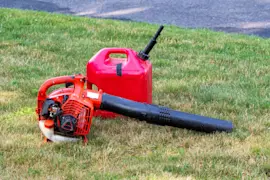
A gas leaf blower like the Craftsman 967851701 typically lasts about 10 years with normal homeowner use and consistent maintenance (clean air filtration, fresh fuel practices, and periodic tune-ups). Heavy use, dirty conditions, and stale fuel shorten lifespan quickly.
Typical lifespan ranges
Most gas leaf blowers fall into these real-world ranges:
- 7 to 10 years: common for average homeowner use
- 10+ years: achievable with excellent maintenance and proper storage
- 3 to 6 years: common when run with stale fuel, clogged air filter, or neglected maintenance
| Usage pattern | What to expect | Biggest wear drivers |
|---|---|---|
| Occasional seasonal use | 8 to 12 years | Fuel aging in storage, carburetor varnish |
| Regular weekly use | 6 to 10 years | Air filter loading, spark plug wear |
| Heavy or dusty use | 3 to 7 years | Abrasive dust ingestion, overheating, vibration |
What makes a gas leaf blower wear out sooner
These issues cause most early failures on 2-cycle equipment:
- Old fuel or incorrect fuel mix leading to hard starting and poor lubrication
- Dirty or damaged air filter letting debris into the engine
- Carburetor gumming from storage without fuel stabilization
- Overheating from blocked cooling fins or restricted airflow
- Loose fasteners and vibration causing air leaks or cracked fuel lines
Maintenance that extends life
We recommend following the service intervals in the 967851701 owner's manual. In general, these habits add years:
- Use fresh fuel and the correct 2-cycle oil mix every time
- Clean or replace the air filter regularly
- Replace the spark plug on schedule
- Inspect fuel lines and the fuel filter for cracking or soft spots
- Empty the unit or stabilize fuel before long-term storage
Why it matters
A leaf blower that is near end-of-life often starts showing the same symptoms: hard starting, surging, loss of power, smoking, or fuel leaks. Addressing fuel system and airflow maintenance early prevents expensive engine damage.
For troubleshooting and repair planning, use our DIY resources like leaf blower won't start and easy steps for maintaining a leaf blower. For parts lookup by model number and diagrams, start with the parts list for Craftsman 967851701, or search more broadly on Sears PartsDirect.
Last updated: February 2026
Is a higher MPH or CFM better for a leaf blower?
Higher CFM is better when we need to move more material at once (big piles, damp leaves), while higher MPH is better when we need more “punch” to break debris loose or push it off hard surfaces. For a Craftsman gas blower like model 967851701, the best choice is the balance that matches your yard and cleanup style; check the owner's manual for the exact performance ratings for your unit.
MPH vs CFM: what each number really does
- CFM (cubic feet per minute) measures air volume; it tells us how much air the blower moves.
- MPH (miles per hour) measures air speed; it tells us how fast that air hits the debris.
- Higher CFM usually helps most for piles, wet leaves, and mulch-like debris.
- Higher MPH usually helps most for stuck-on leaves, pine needles in cracks, and clearing patios/driveways.
- Nozzle design and tube length affect “real-world” force; a narrower outlet often boosts perceived push.
Quick guide: which spec to prioritize
| Cleanup situation | Prioritize | Why it helps |
|---|---|---|
| Large piles on grass | Higher CFM | Moves more leaves per pass |
| Wet leaves or heavy debris | Higher CFM (plus decent MPH) | Volume keeps material rolling |
| Driveway, sidewalk, deck | Higher MPH | Breaks loose and pushes off surfaces |
| Crevices, edging, corners | Higher MPH | Focused stream reaches tight spots |
How we recommend choosing for model 967851701
- Match the spec to your most common job (piles vs hard surfaces).
- Consider runtime and comfort; more output can mean more fuel use and more vibration.
- Keep the blower maintained (fresh fuel mix, clean air filter, good spark); performance drops fast when tune-up items are neglected.
- If your blower is underperforming, use our troubleshooting content like leaf blower running rough before assuming you need a higher-rated unit.
Why it matters
Choosing the right balance of MPH and CFM saves time and reduces strain on the engine because we are not forcing the blower to do a job it is not optimized for.
You can look up diagrams and replacement items for Craftsman 967851701 on the parts list for this model, or search by model number on Sears PartsDirect.
Last updated: February 2026
What is the best gas-powered leaf blower on the market?
The “best” gas-powered leaf blower depends on how you’ll use it: backpack blowers win for all-day power and comfort, while handheld blowers are lighter and simpler for quick cleanup. For your Craftsman model 967851701, use the owner's manual to match performance needs (air speed, airflow, weight) to the jobs you do most.
How we recommend choosing the best one
Focus on the specs and features that change real-world performance.
- Airflow (CFM): Higher CFM moves more leaves at once (best for piles and wet debris).
- Air speed (MPH): Higher MPH helps break loose stuck leaves and heavier debris.
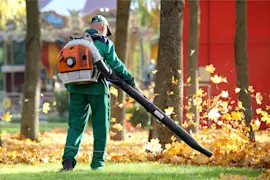
- Type: Backpack for long sessions; handheld for smaller yards and quick work.
- Weight and harness: Comfort matters as much as power for longer jobs.
- Starting and fuel system: Easy-start features and a stable fuel system reduce downtime.
- Noise and neighborhood fit: Choose a blower you can realistically use where you live.
Quick comparison: which style is “best” for your job?
| If you need... | Best style | Why it’s usually best |
|---|---|---|
| Large yard, long run time | Backpack gas blower | More power with less arm fatigue |
| Tight spaces, quick cleanup | Handheld gas blower | Lighter, easier to maneuver |
| Heavy, damp leaves | Higher-CFM model (often backpack) | Moves more material per pass |
| Occasional use | Mid-range handheld | Lower cost and simpler storage |
Top picks by use case (what shoppers typically choose)
These are common “best-in-class” choices by category; the right pick is the one that fits your workload and comfort.
- Maximum power (backpack): Stihl BR 800 C-E Magnum
- Strong balance of power and comfort (backpack): Husqvarna 150BT
- Great residential handheld: Stihl BG 56 C-E
- High-performing handheld: ECHO PB-2620
- Value-focused options: Troy-Bilt and Craftsman backpack/handheld models in the mid-range class
Why it matters
Buying “the best” blower is really about matching CFM/MPH, weight, and run time to your yard size and debris type. When those are matched well, you finish faster, fight clogs and stalls less, and reduce fatigue.
Keeping any gas blower running like the best
If your blower starts acting up, our DIY troubleshooting helps you pinpoint the cause fast:
- Leaf blower won't start
- Leaf blower running rough
- Leaf blower leaking gas
- Easy steps for maintaining a leaf blower
For replacement parts for Craftsman 967851701, start with the parts list for your model, or search by model number on Sears PartsDirect.
Last updated: February 2026
Why does my leaf blower stop when I give it gas?
When a Craftsman gas blower model 967851701 dies as you squeeze the throttle, it is usually running too lean under load. The most common causes are restricted fuel flow (dirty carburetor, clogged fuel filter, cracked fuel line) or restricted airflow (dirty air filter), which makes it stall on acceleration.
Quick checks that fix most stalling-on-throttle problems
- Drain old fuel and refill with fresh, properly mixed fuel (most 2-cycle blowers use a gas:oil mix; confirm the exact ratio in the 967851701 owner's manual).
- Clean or replace the air filter; a plugged filter can make the engine bog and quit.
- Inspect the fuel lines for soft spots, cracks, or loose connections at the tank and carburetor.
- Check the fuel filter in the tank; replace it if it looks dark, gummy, or restricted.
- Verify the spark arrestor screen (muffler screen) is not carbon-clogged.
If it runs on choke but dies on “run”
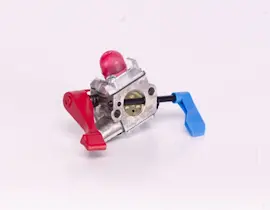
That pattern strongly points to a carburetor that cannot deliver enough fuel as the throttle opens.
What to do next
- Try a carburetor cleaning and fresh fuel first.
- If the problem returns quickly, rebuild or replace the carburetor.
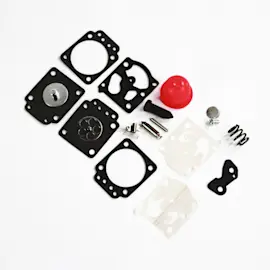
For step-by-step help, use our guide: how to rebuild a leaf blower carburetor.
Troubleshooting guide (symptom to likely cause)
| What you notice | Most likely cause | What we recommend |
|---|---|---|
| Starts, then dies when you pull the trigger | Carburetor passages restricted | Clean, then rebuild/replace carburetor |
| Dies only at full throttle | Fuel filter or fuel line restriction | Replace filter, inspect/replace lines |
| Bogging plus heavy smoke | Incorrect fuel mix or stale fuel | Correct mix, fresh fuel |
| Surges or hunts at idle | Air leak or carb issue | Check lines/gaskets, service carb |
Why it matters
Stalling on acceleration usually means the engine is not getting the right fuel-air mix. Fixing it early prevents hard starting, plug fouling, and overheating that can shorten engine life.
Parts and diagrams
We list model-specific diagrams and replacement parts for 967851701 on the model parts page; you can also search by model number on Sears PartsDirect if you are sourcing additional maintenance items.
Last updated: February 2026
Who makes Craftsman leaf blowers?
Craftsman leaf blowers are sold under the Craftsman brand; the Craftsman brand is owned by Stanley Black & Decker. For your specific Craftsman gas blower model 967851701, the most reliable way to identify the actual manufacturer is to match the ID label information to the identification section in the 967851701 owner's manual.
How to identify the maker for model 967851701
On gas leaf blowers, the company that built the unit is usually indicated on the product ID label (sometimes as a manufacturer name, an emissions statement, or an engine family code).
Check these common locations:
- Starter housing or recoil cover area
- Rear handle or frame near the throttle trigger
- Near the fuel tank or fuel cap area
- Blower tube connection area
- Under a cover panel (if equipped)
What information to write down
Record the details exactly as printed; this helps confirm the correct parts and service information.
- Model number: 967851701
- Serial number or date code
- Engine family or emissions information (often on a decal)
- Any secondary model numbers or prefixes/suffixes
- Any manufacturer name printed on the label
| Label item | What it tells you | Why it matters |
|---|---|---|
| Model number | The Craftsman model identifier | Ensures you are looking up the right diagrams and specs |
| Serial/date code | Production run | Helps account for running changes |
| Engine family/emissions info | Engine platform identification | Useful for fuel and ignition troubleshooting |
Why it matters
Different production runs can use different carburetor, fuel line, primer bulb, or ignition layouts even within the same Craftsman model family. Using the ID label details helps you match the correct repair approach and replacement parts.
Next steps for parts and repair help
- Use model number 967851701 when searching parts diagrams and lists
- If you are diagnosing a fuel smell or leak, use leaf blower leaking gas
- If you suspect cracked or misrouted fuel lines, use how to replace leaf blower fuel lines
- For broader model-based lookup and ordering, use Sears PartsDirect
Last updated: February 2026