Installation guide
 Owner’s manual
 Error Codes



How to remove the top of a Kenmore gas range?
On the Kenmore gas range model 79074233314, the cooktop (top) is not removable, so we do not remove it for service. For cleaning and most repairs, we access components by removing grates, burner caps/heads, and sometimes the front control panel or by pulling the range out safely per the installation guide.
What you can remove for cleaning and access
- Remove the cooking grates.
- Lift off the surface burner caps.
- Lift off the surface burner heads (if your burner style uses separate heads).
- Clean ports and the area around the igniters; keep water out of the igniter area.
- If you need deeper access, use the service access points described in the 79074233314 owner’s manual.
Safe access steps (recommended)
- Turn all burner knobs to OFF and let everything cool.
- If you need to move the range, shut off the gas supply and unplug the power cord.
- Pull the range out only as far as needed; protect the floor.
- When reinstalling, confirm the range is level and the anti-tip bracket is engaged.
Quick troubleshooting: when “removing the top” seems necessary
Often the real goal is fixing ignition or uneven flames. These checks solve most issues without removing the cooktop:
- Burner cap seated flat and aligned
- Burner ports clear (no grease or food debris)
- Igniter clicking and sparking consistently
- Flame not lifting or blowing off the burner
- Gas supply valve fully open
| Symptom | Most common cause | What to do first |
|---|---|---|
| Burner clicks but won’t light | Wet/dirty burner parts | Dry and clean cap and head, reseat |
| Uneven flame | Clogged ports or misaligned cap | Clean ports, align cap |
| No clicking on one burner | Igniter/wiring issue | Inspect igniter area; check connections |
Why it matters
This model’s cooktop is designed as a fixed assembly; forcing it can damage gas tubing, igniters, or the main top. Using the correct access method keeps the range safe, level, and properly secured.
Last updated: February 2026
Where to find Kenmore gas range model number?
On the Kenmore gas range model 79074233314, the model and serial number identification plate is on the right-hand surface of the oven front frame. Open the storage drawer, warmer drawer, or broiler drawer to see the plate; we use those numbers to match the correct parts and specifications in the 79074233314 use & care guide.
Where to look on the range
Check these common label locations on this model:
- Right-hand surface of the oven front frame (behind the drawer opening)
- Behind the storage drawer (if equipped)
- Behind the warmer drawer (if equipped)
- Behind the broiler drawer (if equipped)
What to write down (and why)
When you find the identification plate, record:
- Model number (example: 79074233314)
- Serial number
- Lot number or letter (if shown)
- Fuel type and pressure information listed on the plate
Why it matters
The model and serial information ensures we recommend the correct Kenmore range parts, such as an igniter, oven temperature sensor, or gas valve, and helps avoid ordering a similar-looking part that will not fit.
Quick checklist
| If you see this drawer | Do this |
|---|---|
| Storage drawer | Pull it fully open and look at the right-hand oven frame |
| Warmer drawer | Pull it out and check the right-hand oven frame |
| Broiler drawer | Open it and look along the right-hand oven frame |
Last updated: February 2026
What is the average lifespan of 79074233314?
The average lifespan of the Kenmore gas range model 79074233314 is 15 years with normal household use and basic maintenance (cleaning burners, keeping the oven interior clean, and addressing ignition issues early). For model-specific care and cleaning routines, use the 79074233314 owner's manual.
What affects lifespan the most
A gas range typically reaches its full service life when these areas are kept in good shape:
- Ignition system health (weak igniters cause delayed ignition and extra heat stress)
- Oven temperature accuracy (prevents overheating and control issues)
- Gas supply setup (correct regulator and shutoff valve installation)
- Routine cleaning (grease buildup shortens component life)
- Door seal and hinges (heat loss makes the oven work harder)
Quick maintenance checklist (monthly or as needed)
- Clean burner caps and heads; make sure ports are clear and dry.
- Wipe spills promptly to prevent baked-on residue and corrosion.
- Confirm burners ignite promptly; investigate clicking, delays, or gas odor.
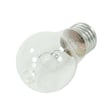
- Use the correct bulb type when replacing the oven light (40-watt appliance bulb).
- Keep racks and the oven bottom panel seated correctly after cleaning.
Common “end-of-life” symptoms vs. fixable issues
Many problems that feel like the range is “wearing out” are normal repairs.
| Symptom | Most common cause | Typical fix |
|---|---|---|
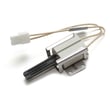
| Oven won’t heat or heats slowly | Weak bake igniter | Replace bake igniter 316489403 |
| Oven temperature swings | Sensor drifting out of spec | Replace range oven temperature sensor 316490000 |
| Burner won’t light or clicks constantly | Dirty burner parts or failing igniter | Clean and dry parts; replace igniter/holder if needed |
| Oven light out | Burned-out bulb | Replace appliance light bulb, 40-watt 316538904 |
Why it matters
At around 15 years, reliability depends heavily on ignition performance and temperature control. Replacing a few high-wear parts on time (like an igniter or sensor) often restores safe, consistent baking and helps you avoid bigger repairs.
Last updated: March 2026