Owner’s manual
 Error Codes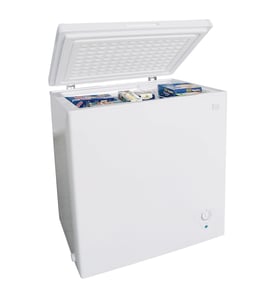



Can I look up Frigidaire parts by model number?
Yes. We look up replacement parts by using your Frigidaire model number, and for this freezer that model number is FFFC07M2KW. Enter the full model number exactly as shown on the model and serial tag to pull up the correct parts list and diagrams.
How to find the model number on your freezer
Most chest freezers list the model and serial number on a rating plate inside the cabinet or on the back of the unit. Your owner's manual also explains recording the model and serial number for future reference.
Tips for an accurate search
- Use the complete model number: FFFC07M2KW (do not shorten it)
- Match letters and numbers exactly (for example, 0 vs O)
- If your search results look close but not exact, re-check the rating plate and try again
- Keep the serial number handy; it helps confirm production variations when ordering parts
What you can order once you find your model
After you pull up the parts list for FFFC07M2KW, you can choose the exact replacement part by name and diagram location.
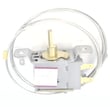
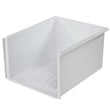
Here are two common examples available for this model:
Quick checklist: model number vs. part number
| What it is | Example | What it’s used for |
|---|---|---|
| Model number | FFFC07M2KW | Finds the correct parts list for your freezer |
| Part number / part ID | 5304476700 | Identifies the exact replacement part to order |
Why it matters
Using the exact model number prevents ordering a part that looks similar but does not fit your freezer’s wiring, mounting points, or temperature control setup.
Last updated: February 2026
What are the parts of a chest freezer?
A Frigidaire chest freezer like model FFFC07M2KW is built around a sealed refrigeration system (compressor and refrigerant tubing) plus user-access parts such as the temperature control, lid gasket, and storage basket. These parts work together to pull heat out of the cabinet and keep food frozen.
Main parts you will find in most chest freezers
- Compressor: pumps refrigerant through the sealed system to create cooling.
- Condenser: releases heat to the room (often tubing/coils near the compressor area).
- Evaporator: absorbs heat from inside the freezer (cooling surface/tubing inside the cabinet walls).
- Capillary tube (metering device): controls refrigerant flow into the evaporator.
- Temperature control (thermostat/control): senses temperature and cycles cooling on and off.
- Cabinet insulation and liner: keeps cold in and heat out.
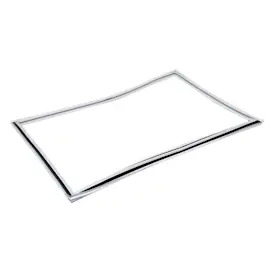
- Lid and lid gasket: seals the opening to prevent warm air leaks.
- Defrost drain (some models): helps route meltwater during manual defrost.
Model-specific parts customers commonly replace
These are common, serviceable items we see for FFFC07M2KW:
| Part | What it does | When it is usually needed |
|---|---|---|
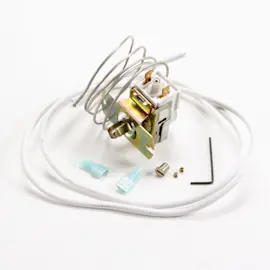
| Freezer temperature control thermostat 5304476700 | Regulates cabinet temperature by cycling the cooling system | Freezer too warm, too cold, or temperature swings |
| Freezer basket 5304439835 | Helps organize food and improve access | Basket is missing, bent, or broken |
How to identify what you are looking at
Use these quick checks before ordering parts:
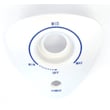
- The temperature control on chest models is typically on the front outside wall; adjust it toward Coldest and allow time for temperatures to stabilize.
- If the freezer is noisy, some sounds (gurgling, popping, louder start-up) are normal as refrigerant circulates and metal expands and contracts.
- If the lid does not seal or the unit rocks, leveling matters; an unlevel freezer can cause sealing and cooling problems.
Why it matters
Knowing the difference between sealed-system parts (compressor, evaporator, condenser) and user-access parts (thermostat, basket, gasket) helps you troubleshoot faster and replace only what is practical. For operating details and feature locations, use the FFFC07M2KW owner's manual.
Last updated: February 2026
What is the average lifespan of a chest freezer?
A chest freezer typically lasts 16 years. With normal home use and basic care, many units run 10 to 20 years. For your Frigidaire FFFC07M2KW chest freezer, steady temperatures, good airflow around the cabinet, and correct control settings from the owner's manual help you reach that full service life.
Typical lifespan at a glance
| Appliance type | Typical lifespan | What shortens it fastest |
|---|---|---|
| Chest freezer (manual-defrost style) | 16 years | Heat, poor airflow, dirty condenser area, lid seal leaks |
| Upright freezer | 12 years | Door openings, frost buildup, fan and defrost system wear |
What helps a chest freezer last longer
We see the longest-lasting chest freezers when these basics are consistent:
- Keep the temperature control stable; avoid frequent knob changes
- Allow proper cool-down time after startup (about 4 hours before loading unfrozen food)
- Open the lid less often; warm air adds run time and wear
- Keep the lid sealing tightly; fix alignment or gasket issues early
- Defrost and clean on a regular schedule so ice does not insulate surfaces
- Use a dedicated, properly grounded outlet (avoid extension cords)
Signs your freezer is nearing end-of-life
These symptoms usually point to a failing cooling system, control issue, or air leak:
- Runs almost constantly and still will not hold safe freezing temperatures
- Temperature swings even after you let settings stabilize for several hours
- Excessive frost or moisture that returns quickly after defrosting
- Unusual start-up clicking or repeated attempts to start the compressor
- Cabinet feels warmer than expected for long periods (some warmth can be normal during heavy running)
Parts that commonly affect performance
If your freezer is warming up or not cycling correctly, the temperature control is a common place to start. For this model, we list the freezer temperature control thermostat 5304476700.
Why it matters
A chest freezer that holds steady temperatures protects food quality and reduces compressor run time. Less run time means less wear on the sealed system, which is the most expensive part of the freezer.
Last updated: February 2026
What is the most reliable brand of chest freezer?
No single brand is the “most reliable” for every home; reliability comes from a simple design, stable power, and correct setup. If you are considering the Frigidaire FFFC07M2KW, follow the operating and loading guidance in the FFFC07M2KW owner's manual to get the most consistent temperatures and longest service life.
What “reliable” means in real use
A reliable chest freezer holds steady temperatures, starts and runs normally, and seals tightly so warm air does not leak in.
Key reliability indicators:
- Consistent freezing after temperature changes and lid openings
- Compressor starts quickly without repeated clicking
- Lid gasket seals evenly all the way around
- Frost buildup stays manageable with normal use
- Temperature control responds predictably to adjustments
What to look for when comparing brands and models
Across Frigidaire, GE, and other major brands, the most dependable units share similar traits.
We recommend prioritizing:
- Fewer electronic features (simpler controls mean fewer failure points)
- A strong lid seal and solid hinge alignment
- Proper electrical setup (grounded outlet; no extension cords)
- Practical storage that reduces lid-open time (baskets help)
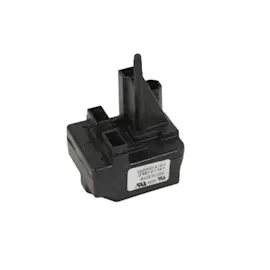
- Serviceable wear parts (temperature control, start components)
Practical comparison (how to choose)
| What you compare | More reliable choice | Why it helps |
|---|---|---|
| Controls | Mechanical dial thermostat | Fewer electronics to fail |
| Use location | Stable room temperature | Less compressor stress |
| Loading habits | Smaller batches of fresh food | Faster pull-down, steadier temps |
| Maintenance | Clean, dry packages; organized interior | Less frost, fewer long lid openings |
Why it matters
Chest freezers are most likely to struggle when power is unstable, the room is hot or cold, or the lid is opened often. Choosing a simpler model and using correct loading and control practices prevents temperature swings that can reduce food quality.
Reliability tips for the Frigidaire FFFC07M2KW
These match common chest-freezer best practices and the guidance in the manual:
- Let the freezer run several hours before adding already-frozen food; wait about 4 hours before loading unfrozen food
- Freeze about 3 lb of fresh food per cubic foot at one time, distributed evenly
- Adjust the control gradually; allow several hours between changes
- Keep food wrapped and containers dry to reduce frost buildup
- Do not line baskets or walls with foil or paper; it restricts cold air circulation
Last updated: February 2026