Installation guide
 Owner’s manual
 Error Codes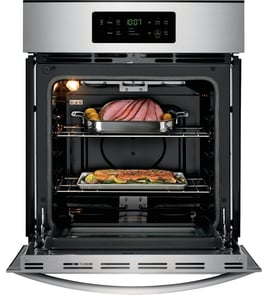



How long do GE Profile ovens last?
A GE Profile electric wall oven like model PK956SM2SS typically lasts 12 to 15 years with normal household use and basic care. Keeping the oven clean, avoiding excessive self-clean cycles, and fixing small issues early helps many owners reach the upper end of that range.
Typical lifespan and what affects it
Most wall ovens wear based on heat cycles and how hard key components work (heating elements, door seal, fans, and controls).
Common factors that extend life:
- Wiping spills promptly to reduce baked-on residue
- Using self-clean only when needed (and letting the door fully unlock after cooling)
- Keeping the door closing tightly so heat stays in the cavity
- Replacing wear items early (light bulbs, door gasket, hinges)
- Ensuring proper installation and ventilation around the oven cabinet
Common factors that shorten life:
- Frequent high-heat cooking and long bake times
- Heavy reliance on self-clean for routine cleaning
- Running with a torn gasket or sagging door (heat leaks stress components)
- Ignoring fan noise or uneven heating symptoms
Quick “age check” guide
| If your GE Profile oven is… | What we recommend | What it usually means |
|---|---|---|
| Under 8 years old | Repair is usually the best value | Most parts are still in their prime |
| 8 to 15 years old | Repair common wear parts first | Normal wear window for elements, fans, seals |
| Over 15 years old | Compare repair cost vs. replacement | Multiple components may be nearing end-of-life |
Parts that commonly drive repair decisions
If performance drops, these are frequent culprits on electric wall ovens:
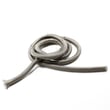
- Door seal: a worn gasket can cause heat loss and longer cook times (example: wall oven door gasket WB32T10012)
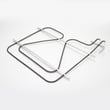
- Broil heating: weak or uneven broiling can point to the broil element (example: range broil element WB44T10099)
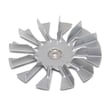
- Cooling and convection: loud fan noise or poor airflow can indicate a fan issue
Why it matters
A wall oven that seals well and heats evenly cooks more accurately and puts less strain on the control and heating system. Following the care steps in the PK956SM2SS owner’s manual helps you get the most years out of your GE Profile oven.
Last updated: February 2026
How much does it cost to replace a GE oven control board?
For a GE PK956SM2SS electric wall oven, replacing the oven control board typically runs $200 to $600+ total. The board itself is commonly $150 to $400, and professional labor is often $150 to $300+, depending on access, diagnosis time, and local rates.
Typical cost breakdown
Here’s how the price usually stacks up for an electric wall oven control board repair:
- Control board (part only): $150 to $400
- Service call/diagnosis: $75 to $150 (sometimes applied to the repair)
- Labor for replacement: $150 to $300+
- Total typical out-the-door: $200 to $600+
What changes the price the most
A few factors drive the final number more than anything else:
- Exact board type: Some models use a main control (ERC/clock) plus separate relay or UI boards
- Whether the issue is the board: A failed sensor, wiring, or thermal fuse can mimic a bad board
- Built-in wall oven access: Pulling the oven from the cabinet can add time and labor
- DIY vs. pro install: DIY saves labor but still requires safe electrical handling
- Parts availability: In-stock parts reduce delays and repeat service calls
Quick checks before buying a board
We recommend confirming the failure pattern first, especially if you’re seeing beeping or an error.
- If an “F-” code flashes and the oven signals, the manual directs you to press Clear/Off and allow the oven to cool; persistent errors point to a control or related circuit issue
- Verify the oven has correct power (wall ovens typically need a dedicated 240V supply)
- Inspect for burned connectors or damaged wiring at the control area
For control features, error behavior, and basic troubleshooting steps, use the PK956SM2SS owner’s manual.
DIY vs. pro: a simple comparison
| Option | What you pay for | Best when |
|---|---|---|
| DIY replacement | Part cost only (plus tools) | You’re comfortable shutting off power and handling wiring correctly |
| Professional repair | Part + labor + diagnosis | You want confirmation of the failed component and safer built-in removal |
Why it matters
Control boards are one of the highest-cost electronic parts in a wall oven. A quick diagnosis step can prevent buying an expensive board when the real cause is a sensor, wiring connection, or cooling/heat-related issue.
Last updated: February 2026
How to replace the control panel on a GE oven?
On the GE PK956SM2SS electric wall oven, control panel replacement typically involves shutting off power, removing the control panel mounting screws, tilting the panel out, and transferring the wiring to the new panel one connector at a time. Use the PK956SM2SS owner’s manual for model-specific access points and safety notes.
Safety first (do this before touching anything)
- Turn off power at the circuit breaker (wall ovens are 240V).
- Confirm the display is dark and the oven is fully off.
- Let the oven cool completely.
- Use cut-resistant gloves; sheet metal edges behind the panel can be sharp.
- Label wires or take photos before moving any connectors.
Step-by-step: replacing the control panel (typical GE wall oven process)
- Disconnect power at the breaker.
- Access the control panel from the front; remove the screws securing the panel (often along the underside or inside the top vent area).
- Tilt the panel outward from the bottom, then lift or unhook it (many panels hang on tabs).
- Transfer wiring to the new panel or control assembly:
- Move one connector at a time to the matching terminal.
- Do not pull on wires; pull on the connector body.
- Reinstall the panel: hook tabs first, then swing it back into place and reinstall screws.
- Restore power and test Bake, Broil, Convection, and the clock.
What to check if the new panel still does not work
- Home breaker or fuse issue; reset the breaker fully.
- Loose connector on the control or keypad ribbon.
- If an “F-” code returns after reset steps, follow the error-code reset guidance in the manual (Clear/Off, cool-down, then power reset).
Common fasteners and trim notes
Some repairs require removing trim or moving the oven slightly. GE installation guidance warns that trim can be damaged if the oven is pulled without removing trim first; follow the PK956SM2SS installation guide if you need to shift the unit.
| Task | Typical tools | Notes |
|---|---|---|
| Remove panel screws | Phillips or nut driver | Keep screws sorted by location |
| Verify power is off | Multimeter | Test before handling wiring |
| Re-seat connectors | Needle-nose pliers (optional) | Grip connector body only |
Why it matters
A loose connector or miswired plug can cause dead controls, error codes, or heating functions that will not start. Doing the wiring transfer carefully protects the control board and keeps Bake and Broil operating correctly.
Last updated: February 2026
Is GE profile considered high end?
Yes. GE Profile is widely considered GE’s higher-end mainstream line; it typically adds more advanced cooking features, upgraded styling, and more convenience options than standard GE models. For your GE PK956SM2SS electric wall oven, the exact feature set is best confirmed in the PK956SM2SS owner's manual.
What “high end” means in the GE lineup
GE generally positions its brands in tiers. GE Profile sits above standard GE and is designed for shoppers who want premium features without moving into true luxury pricing.
Common GE Profile “step-up” traits include:
- More cooking modes (often including convection options)
- More precise temperature control and programming features
- Upgraded finishes and design details
- More robust control features (for example, control lockout is commonly included)
- Convenience features like enhanced timers and special settings
How to judge if your PK956SM2SS is “high end” for your kitchen
Use this quick checklist for your specific wall oven:
- Cooking performance: convection modes, even baking, broil power
- Controls: ease of use, timer functions, control lockout
- Cleaning: self-clean capability and door cleaning guidance
- Serviceability: parts availability for common wear items (lights, door gasket, racks)
Quick comparison
| Line | Typical positioning | What you usually get |
|---|---|---|
| GE (standard) | Value to mid-range | Core features, simpler controls |
| GE Profile | Mid-to-high end | More features, more modes, upgraded design |
| GE Café / Monogram | Premium to luxury | Pro styling, specialty features, luxury positioning |
Why it matters
Knowing the tier helps set expectations for features, replacement part costs, and long-term maintenance. For example, higher-feature ovens often use specialty lighting and door components; if your oven light is out, matching the correct bulb matters (see range halogen light bulb WB49X29679 for a model-matched option).
Last updated: February 2026
What are common problems with GE ranges?
Common GE electric cooking appliances (including the GE PK956SM2SS electric wall oven) most often have heating performance issues (won’t heat, uneven baking, inaccurate temperature), control problems (beeping, unresponsive keys), and door or self-clean concerns (latch, won’t start). Many fixes start with correct settings and basic checks in the PK956SM2SS owner’s manual.
Most common symptoms and what they usually point to
- Oven not heating or slow to heat: failed heating element, wiring issue, or control problem
- Uneven baking or temperature seems off: rack position, airflow, or thermostat calibration needed (the manual includes an “adjust the oven thermostat” section)
- Broil not working well: broil element issue or incorrect broil setup
- Control panel beeps or acts erratically: stuck key, moisture/soil on the panel, or electronic control issue
- Self-clean won’t start or stops: door not fully latched, incorrect cycle entry, or a latch/switch problem
- Door doesn’t seal, heat leaks, or longer cook times: worn door gasket
Quick checks we recommend first (safe, no tools)
- Confirm you entered a cooking mode and temperature (Bake or Broil) before waiting for heat.
- For broiling, keep the door closed (this model is designed for closed-door broiling).
- Try a simple reset: turn the oven off, wait 1 minute, then set Bake again.
- Verify racks are fully seated and level; use the rack positions recommended in the manual.
- If heat seems to leak, inspect the gasket for gaps, tears, or flattening.
Parts that commonly solve these problems
| Symptom | Likely part area | Example part for this model |
|---|---|---|
| Poor broil or no broil | Broil circuit | Range broil element WB44T10099 |
| Heat leaking, poor temp stability | Door seal | Wall oven door gasket WB32T10012 |
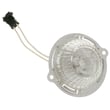
| Oven light out | Lamp/bulb | Range halogen light bulb WB49X29679 or halogen lamp WB25T10096 |
Why it matters
Heating and door-seal issues affect cooking results and can make the oven run longer than normal. Control and self-clean problems are often setup-related, so confirming the correct steps in the manual saves time before replacing parts.
Last updated: February 2026
What are the parts of an electric oven?
An electric oven like the GE PK956SM2SS is built around heating elements, temperature sensing and controls, airflow and venting, and door and lighting components. Knowing the main parts helps you troubleshoot issues like uneven baking, weak broiling, or heat loss using the diagrams and care guidance in the PK956SM2SS owner's manual.
Core parts you will find in most electric wall ovens
- Bake element (bottom heat source; sometimes hidden under a cover)
- Broil element (top heat source for high-heat browning and broiling)
- Oven control and keypad (sets modes, time, temperature)
- Temperature sensor (tells the control how hot the oven is)
- Convection fan and cover (moves hot air for more even cooking on convection models)
- Oven light and lens/cover (interior visibility)
- Door assembly (hinges, glass panels, liner, gasket/seal)
- Vent and cooling airflow path (moves heat and moisture out; protects cabinetry)
Model-relevant examples of parts for GE PK956SM2SS
These are common service parts we see replaced when performance or usability problems show up:
| Symptom | Likely area | Example part for this model |
|---|---|---|
| Weak or no broil heat | Upper heating circuit | Range broil element WB44T10099 |
| Oven light out or dim | Lamp or bulb | Range halogen light bulb WB49X29679 or halogen lamp WB25T10096 |
| Heat leaking, long preheat | Door sealing | Wall oven door gasket WB32T10012 |
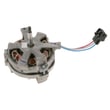
| Convection not circulating | Fan motor | Wall oven convection fan motor WB26T10043 |
Why it matters
When you can name the part group (heating, airflow, door sealing, lighting), you can narrow the cause faster. For example, a damaged door gasket can waste heat and affect baking results, while a failed broil element can stop broiling even if bake still works.
Quick safety notes before inspecting parts
- Turn off power at the breaker before removing panels or touching wiring.
- Let the oven cool completely before working near elements, glass, or the light cover.
- For hard-wired wall ovens, follow the electrical and grounding requirements in the PK956SM2SS installation guide.
Last updated: February 2026
What is the best brand for electric wall ovens?
GE, Bosch, Thermador, and Café are consistently strong choices for electric wall ovens; the “best” brand depends on your priorities (reliability, features like convection, service availability, and budget). If you already own a GE PK956SM2SS, staying with GE-family design and parts support is often the most practical path.
How we recommend choosing the “best” brand
- Fit and installation requirements: cabinet cutout, electrical supply, and hardwiring needs
- Cooking performance: even baking, convection results, broil power, and temperature stability
- Service and parts availability: how easy it is to get common parts like a light bulb or door gasket
- Feature set: self-clean options, smart features, probe support, and controls
- Total cost of ownership: purchase price plus typical repair costs over time
Installation and electrical considerations (often overlooked)
Most electric wall ovens, including the GE PK956SM2SS, are designed to be hard wired (direct wired) into an approved junction box; a plug and receptacle setup is typically not permitted. For exact requirements and clearances, use the PK956SM2SS installation guide.
Quick comparison: what “best” can mean
| If you care most about... | What to prioritize | What to check before buying |
|---|---|---|
| Reliability and serviceability | Common parts availability, strong service network | Parts diagrams, local service options |
| Premium cooking performance | Convection design, broil output, insulation | Reviews plus spec sheet details |
| Budget value | Proven platform, fewer complex features | Warranty terms, repair part pricing |
Why it matters
A wall oven is a long-term built-in appliance; the “best” brand is the one that fits your cabinet and electrical setup, cooks the way you want, and stays repairable. For example, if your oven lighting is important, having readily available parts like the range halogen light bulb WB49X29679 can reduce downtime.
Last updated: February 2026