Owner’s manual
 Error Codes


What is the bottom compartment of a fridge called?
On the KitchenAid KRFF507HWH00, the “bottom compartment” is typically the freezer compartment (the pull-out drawer at the bottom). People also use “bottom section” to mean the machine compartment underneath or behind the unit where the compressor and other cooling components are located; our owner's manual describes this as a French door bottom-mount design.
Common names you might hear (and what they mean)
- Freezer compartment: The bottom drawer where frozen food is stored.
- Freezer drawer: Another name for the freezer compartment on bottom-mount models.
- Machine compartment: The service area that houses cooling-system parts (not a food-storage area).
- Compressor area: Informal name for the machine compartment.
- Lower rear access area: What you remove a cover/panel to reach for service.
Quick identification guide
| If you mean this… | Where it is | What it does |
|---|---|---|
| Freezer compartment | Bottom pull-out drawer | Stores frozen food; can show frost/ice if the drawer is left open |
| Machine compartment | Under or behind the cabinet | Runs the cooling system (compressor, condenser fan, etc.) |
Why it matters
Using the right term helps you find the correct instructions and parts. For example, frost or ice buildup is usually a freezer drawer sealing or usage issue, while unusual humming or long run times often relate to normal compressor operation on high-efficiency refrigerators.
When a “bottom compartment” issue points to a part
If you are troubleshooting cooling, ice, or moisture problems, these model-matched parts are commonly involved:
- Refrigerator thermistor W11724692 (temperature sensing)
- Refrigerator defrost heater WP12729128 (defrost system)
- Refrigerator compressor WPW10466675 (cooling system)
Last updated: February 2026
How to remove bottom grill from KitchenAid refrigerator?
To remove the bottom grille (base grille) on your KitchenAid KRFF507HWH00 bottom-mount refrigerator, grasp the grille firmly and pull it straight toward you. You may need to open the freezer drawer for better access to the brake feet area behind the grille; reinstall by aligning the ends and snapping it back into place (see the owner's manual).
Quick steps
- Open the freezer drawer to give yourself room to work.
- Place both hands near the left and right ends of the grille.
- Pull the grille straight toward you to release the retaining clips.
- Set the grille aside on a soft surface to prevent scratches.
- When finished, align the grille ends with the leveling assemblies.
- Press firmly until it snaps into place.
When you typically remove the base grille
Removing the base grille is common when you need to:
- Adjust the brake feet for leveling and door alignment
- Clean dust from the condenser area for better efficiency
- Access the front roller and brake foot area
What you will see behind the grille
| Item | What it does | Common reason to access |
|---|---|---|
| Brake feet | Stabilize the refrigerator | Stops the unit from rolling forward |
| Front rollers | Help move the refrigerator | Repositioning during install |
| Condenser front area | Releases heat | Cleaning in dusty or pet-heavy homes |
Why it matters
A properly installed base grille helps protect the brake feet and condenser area, and it makes future leveling and condenser cleaning easier and safer.
Last updated: February 2026
What is KRFF507HWH00 oil?
KRFF507HWH00 is a KitchenAid bottom-mount refrigerator model number, so it does not use engine oil. The only “oil” in this refrigerator is sealed inside the refrigeration system (compressor) and is not a maintenance item; use the KRFF507HWH00 owner's manual for approved care and service guidance.
What you should do instead (common mix-up)
If you were asking about routine maintenance for your KRFF507HWH00, focus on these items:
- Replace the refrigerator water filter on schedule (typical rated capacity is about 200 gallons)
- Replace the air filter if your model is equipped with one
- Keep door gaskets clean and sealing tightly
- Confirm the refrigerator and freezer temperatures are set correctly
- Address ice maker or water dispenser issues by checking the water supply and valve operation
Filters and accessories that actually apply to this model
Your manual lists common accessories for this KitchenAid refrigerator, including an air filter and water filter.
| Item | What it affects | Example part on this model page |
|---|---|---|
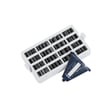
| Air filter | Odors inside fresh food section | Refrigerator air filter W10311524 |
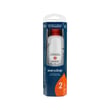
| Water filter | Water and ice taste, flow | Refrigerator cartridge wrap assembly EDR2RXD1 |
| Water inlet valve | Ice maker fill and dispenser water | Refrigerator water inlet valve assembly WPW10341329 |
Why it matters
Adding or changing “oil” is not part of refrigerator maintenance. Trying to service the sealed system can cause leaks, cooling failure, or unsafe conditions. For cooling problems, we focus on airflow, temperatures, and serviceable parts like filters, switches, and valves.
Last updated: February 2026
What is the most common problem with KitchenAid refrigerators?
For KitchenAid refrigerators like model KRFF507HWH00, the most common issues we see are ice maker problems (no ice or low ice production) and cooling or temperature complaints that trace back to airflow, door sealing, or basic maintenance. Our owner's manual troubleshooting section focuses heavily on these same symptom areas.
Most common symptoms (and what usually causes them)
- Ice maker not producing enough ice: water supply shutoff not fully open, kinked water line, ice maker switched off, or the door not closing completely.
- Warm refrigerator or freezer: controls not set correctly, frequent door openings, or restricted airflow.
- Frost or ice buildup in the freezer: drawer left open, poor door seal, or temperature settings off.
- Water leaks or ice clumps: often tied to water supply issues or door sealing problems.
- Noises or intermittent operation: can be normal cycling, but persistent issues can point to a fan, control, or compressor-related concern.
Quick checks we recommend first (KRFF507HWH00)
- Confirm the unit has power and the controls are turned on.
- After a new install or power loss, allow 24 hours to cool; allow 3 days for full ice production.
- Verify the water shutoff valve is fully open and the supply line is not kinked.
- Make sure doors and the freezer drawer close fully and seal tightly.
- Review the recommended temperature settings in the owner's manual.
Parts that commonly relate to these problems
| Symptom | Common part involved | Example part for KRFF507HWH00 |
|---|---|---|
| Low or no ice | Water supply to ice maker | Refrigerator water inlet valve assembly WPW10341329 |
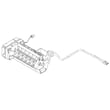
| Ice maker not cycling | Ice maker module/assembly | Ice maker assembly W11658802 |
| Frost buildup, poor cooling | Defrost system | Refrigerator defrost heater WP12729128 |
| Temps fluctuate | Temperature sensing | Refrigerator thermistor W11724692 |
Why it matters
Ice production and temperature stability depend on consistent water flow, a solid door seal, and correct control settings. Catching a kinked line or a door that is not sealing can prevent food spoilage and reduce strain on the sealed system.
Last updated: February 2026
What's the average lifespan of a KitchenAid refrigerator?
KitchenAid refrigerators typically last 12 to 15 years on average, and many run 10 to 17 years with normal use. For your KitchenAid KRFF507HWH00 bottom-mount refrigerator, consistent cleaning, correct temperatures, and timely part replacement are what most directly extend service life (see the owner's manual).
Typical lifespan and what affects it
A refrigerator’s lifespan is mostly driven by how hard the sealed system and airflow components have to work.
- Room conditions: hot garages and tight built-ins shorten life
- Condenser cleanliness: dust buildup raises compressor workload
- Door seal condition: leaks force longer run times
- Ice maker and water system health: slow fills and leaks create secondary damage
- Defrost performance: frost buildup reduces cooling efficiency
Quick maintenance checklist (best payoff)
Use this short routine to keep KRFF507HWH00 running efficiently:
- Keep fresh food at 37°F and freezer at 0°F
- Clean condenser area every 6 to 12 months
- Replace the air filter on schedule (use refrigerator air filter W10311524)
- Replace the water filter when flow drops or taste changes (use refrigerator cartridge wrap assembly EDR2RXD1)
- Inspect door gaskets for gaps, tears, or sticky spots
- Keep vents inside the refrigerator and freezer unblocked
Common “wear items” vs. major repairs
| Category | Examples on this model | What you’ll notice |
|---|---|---|
| Routine maintenance | Air filter, water filter | Odors, taste issues, slow dispensing |
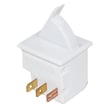
| Mid-level repairs | Door switch, thermistor, inlet valve | Lights issues, temperature swings, no ice/water |
| Major sealed-system repairs | Compressor, evaporator, drier tube | Warm temps, long run times, poor cooling |
Why it matters
When airflow is restricted or seals leak, the compressor runs longer and hotter. That extra runtime is the biggest factor that turns a 15-year refrigerator into a 10-year refrigerator.
Last updated: February 2026