Owner’s manual
 Error Codes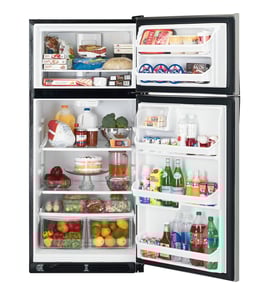



What are the disadvantages of a top mount fridge?
Top-mount refrigerators like the Galaxy 25363802202 are reliable and efficient, but the main tradeoffs are convenience and storage layout: fresh-food items sit lower (more bending), the freezer is smaller and less organized, and premium features like in-door ice and water are less common.
- More bending for fresh food: the refrigerator compartment is below the freezer, so you reach down more often.
- Less freezer organization: top freezers typically have fewer bins and dividers than bottom-freezer designs.
- Smaller freezer capacity: many top-mount layouts prioritize fresh-food space over freezer volume.
- Fewer “premium” options: in-door water and ice dispensers are less common on top-mount models.
- Door swing and clearance needs: you may need extra side clearance if the hinge side is near a wall.
Even though these are not “disadvantages” of the design itself, top-mount refrigerators are sensitive to placement and airflow. For the Galaxy 25363802202, our owner's manual calls out:
| Requirement | Typical guidance for this model type |
|---|---|
| Room temperature | Avoid locations below 55°F or above 110°F |
| Air clearance | About 3/8 inch at sides and top; about 1 inch at the back |
| Door clearance | Add space on the hinge side if the door can’t open fully |
Most complaints about “top-mount drawbacks” come down to ergonomics and access. If you use fresh foods constantly, bending becomes the biggest annoyance; if you use frozen foods heavily, the smaller, simpler freezer layout is the bigger limitation.
Last updated: February 2026
What is the top part of a fridge called?
On a Galaxy top-mount refrigerator like model 25363802202, the top section is the freezer compartment (often just called the freezer). It’s the area designed to keep foods frozen and typically houses the ice maker (if equipped). See the owner's manual for your model’s compartment features and controls.
Most top-mount freezers include storage and airflow components that help keep temperatures stable.
- Freezer shelves or racks for frozen foods
- Door racks/bins for smaller items
- An ice tray or optional automatic ice maker (model dependent)
- Cold air circulation that helps cool the refrigerator section below
- A freezer temperature control (sometimes paired with the fresh food control)
| Section | Typical temperature range | Main purpose |
|---|---|---|
| Freezer (top) | 0°F to 5°F | Long-term frozen storage |
| Refrigerator (bottom) | 35°F to 40°F | Fresh food storage |
Knowing the correct name helps when you’re looking up parts, troubleshooting cooling issues, or following setup steps like the initial cool-down period and temperature adjustments in the owner's manual. It also makes it easier to identify which door, gasket, shelf, or rack you need for the freezer side.
If you’re working on storage or door-sealing issues, these are common refrigerator parts to check for this model:
- Galaxy refrigerator freezer door rack 240534801 (cracked or loose rack)
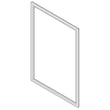
- Refrigerator gasket 242193213 (warm spots, frost, or poor sealing)
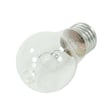
- Refrigerator light bulb 316538904 (no interior light)
Last updated: February 2026
Can you buy replacement shelves for a fridge?
Yes. You can buy replacement shelves for a refrigerator, and for your Galaxy 25363802202 the best match is ordering the exact shelf components made for that model. Use the parts list for your model and the shelf handling and adjustment steps in the owner's manual.
Before ordering, we recommend confirming these details so the replacement fits your Galaxy top-mount refrigerator:
- Model number: 25363802202 (from the rating label inside the fresh food section)
- Shelf type: glass, wire, or sliding shelf
- Location: fresh food compartment shelf vs freezer shelf vs door rack
- Any trim pieces needed (front trim, side rails, supports)
- Color and finish (some shelves and trims are color-specific)
| What you are replacing | What to verify | Why it matters |
|---|---|---|
| Interior shelf (glass or wire) | Width, depth, and rail style | Prevents a shelf that will not sit on the supports |
| Door shelf or bin | Left/right position and mounting style | Door liners vary by position |
| Shelf trim/support | Exact mounting points | Small plastic parts often differ by revision |
Our model’s manual notes that tempered glass shelves can break if nicked, scratched, or exposed to sudden temperature changes. Follow these basics:
- Remove food from the shelf first
- Pull the shelf forward to the stop position
- Lift the front edge up, then pull the shelf out
- Reinstall by reversing the steps on the desired rails
- Handle glass carefully and avoid bumping edges on the liner
If the issue is not the shelf itself, these parts are often involved in “shelf problems” such as sagging door storage or broken supports:
- Door rack support (240534901) - refrigerator shelving part by frigidaire 240534901 (door bin support hardware)
- Frigidaire refrigerator glass shelf 240350620 (interior shelf option listed for this model)
- Frigidaire refrigerator shelf trim 240357704 (trim piece that can crack or loosen)
A correctly fitting shelf keeps airflow moving through the fresh food section, which helps maintain even temperatures and reduces warm spots caused by overcrowding or blocked vents.
Last updated: February 2026
What not to store on top of fridge?
For your Galaxy 25363802202 top-mount refrigerator, do not store flammable items (gasoline, solvents, aerosols, matches, lighters, candles) on top of the fridge or nearby. The refrigerator can produce heat and electrical sparks during normal operation, which increases fire risk.
- Flammable liquids or vapors (gasoline, paint thinner, acetone)
- Aerosol cans (cooking spray, cleaners, spray paint)
- Candles, matches, lighters, or charcoal starters
- Paper goods that can trap heat (cardboard boxes, stacks of mail)
- Heavy items that could fall (small appliances, glass jars)
- Anything that blocks airflow behind the refrigerator (large bins, folded blankets)
Storing items on top often blocks ventilation and makes the refrigerator work harder. Use these alternatives instead:
| Item type | Better place to store it | Why it is better |
|---|---|---|
| Flammables and aerosols | A cool, dry cabinet away from appliances | Reduces fire risk |
| Paper goods | Pantry shelf | Avoids heat buildup |
| Heavy appliances | Countertop or lower cabinet | Prevents falls and damage |
| Cleaning supplies | Under-sink cabinet (if appropriate) | Keeps chemicals away from heat |
Your refrigerator needs good airflow to run efficiently, and the safety guidance for this model specifically warns against storing or using gasoline or other flammable liquids near the appliance. Keeping the top clear also helps prevent items from vibrating off and reduces noise.
We recommend reviewing the safety section in the owner's manual for your Galaxy 25363802202, especially the warnings about flammable liquids and operating the refrigerator around fumes.
Last updated: February 2026
What is the most expensive part to replace on a refrigerator?
On the Galaxy refrigerator model 25363802202, the most expensive single repair is typically a sealed-system component, especially the compressor. These repairs cost the most because they involve refrigerant handling and specialized labor, not just swapping an electrical or plastic part.
Sealed-system repairs are the top-cost category because they require opening the refrigeration system, evacuating and recharging refrigerant, and leak-checking.
Common high-cost items include:
- Compressor (often the priciest part and labor)
- Evaporator (sealed-system component inside the cooling circuit)
- Condenser or heat exchanger (sealed-system components)
- Refrigerant leak repair (labor-intensive diagnosis and brazing)
- Main control issues (on models that use electronic boards)
Here is how a few parts on this model typically compare by cost category.
| Part type | Example part on this model | Typical cost impact |
|---|---|---|
| Sealed-system | Refrigerator compressor 5304507765 | Highest |
| Sealed-system | Refrigerator evaporator 5303918274 | High |
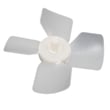
| Cooling/airflow | Refrigerator evaporator fan blade 5308000010 | Medium |
| Defrost | Refrigerator timer 215846602 | Medium to low |
| Convenience | Refrigerator light bulb 316538904 | Low |
If your refrigerator is not cooling, it is easy to assume the compressor failed, but airflow and defrost problems can mimic sealed-system failures. Checking the basics first can prevent an unnecessary high-dollar repair.
Before you commit to a major repair, we recommend these quick checks:
- Confirm the temperature control is not set to “0” (off)
- Give temperatures 24 hours to stabilize after an adjustment
- Clean the condenser area periodically (helps efficiency and cooling)
- Listen for the evaporator fan running; lack of airflow can cause warm temps
- Review the troubleshooting section in the owner's manual
Last updated: February 2026