Owner’s manual
 Error Codes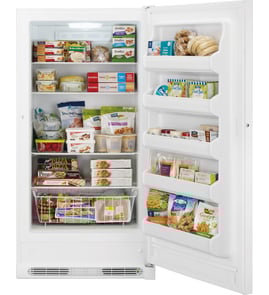



Where to find model number on upright freezer?
On the Frigidaire upright freezer model GLFH21F8HBH, the model number is printed on a rating label that’s typically inside the cabinet. Check the interior side walls first; many upright freezers also place the label near the top (ceiling area) or behind the lower kick plate.
Most common places to check
Look for a paper or metal tag with the model number and serial number in these spots:
- Inside the freezer on the left or right interior wall
- On the ceiling area inside the cabinet (near the top front)
- Behind the kick plate or lower front grille
- On the back exterior panel of the freezer
- Along the door opening frame (hinge side)
Quick tips to find it faster
These steps help you locate the label without removing unnecessary parts:
- Use a flashlight and look along the interior walls at eye level
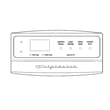
- Check near the temperature control area (many upright models place controls inside)
- Wipe frost or residue off the walls so the label is readable
- If the label is behind the kick plate, unplug the freezer before removing the panel
- Write down the full model number and serial number exactly as shown
What the label usually looks like
Most Frigidaire rating labels include the same key fields.
| Label item | What it’s used for |
|---|---|
| Model number | Matching parts and diagrams for GLFH21F8HBH |
| Serial number | Determining production run and compatible revisions |
| Electrical ratings | Verifying voltage/amps for safe service |
Why it matters
Using the exact model number prevents ordering the wrong freezer door gasket, electronic control board, or evaporator fan motor. Even small model-number differences can change shelf layouts, door bin fit, and wiring connections.
For model-specific identification details and diagrams, use the GLFH21F8HBH owner's manual.
Last updated: January 2026
Why is my Frigidaire upright freezer not freezing?
If your Frigidaire GLFH21F8HBH upright freezer isn’t freezing, the most common causes are a temperature control set to OFF or too warm, poor airflow from dirty condenser areas, a door that isn’t sealing, or a failed airflow/defrost component. Start with the quick checks in the GLFH21F8HBH owner's manual.
Quick checks we recommend first
- Confirm the temperature control is not set to OFF and adjust colder; allow 24 hours to stabilize.
- Make sure the door closes fully; the freezer must be level so the door seals correctly.
- Check for frequent door openings or a recent load of warm food (both can temporarily raise temps).
- Listen for the evaporator fan; if you don’t hear airflow inside, circulation may be failing.
- Look for heavy frost buildup on the back wall or shelves (often points to a defrost problem).
What the symptoms usually mean
| What you notice | Likely cause | What to do next |
|---|---|---|
| Freezer runs a lot but still warm | Door slightly open or gasket not sealing | Level the cabinet, inspect gasket contact, reduce door openings |
| Warm temps and no airflow sound | Evaporator fan not running | Inspect fan area for ice; consider replacing the freezer evaporator fan motor 297309000 |
| Heavy frost, weak cooling | Defrost system issue | Check defrost heater circuit; consider the defrost heat 5304496284 |
| Unit not running at all | Power, control setting, or electrical issue | Verify outlet and breaker; confirm control is not OFF |
Why leveling and sealing matter
Your manual notes that if the freezer is not level, the door can be misaligned and not close or seal properly. A small air leak lets warm, moist air in, which reduces freezing performance and can cause frost and moisture problems.
DIY help that matches this problem
If you suspect a defrost failure (frost buildup, poor cooling), follow a step-by-step repair outline in how to replace a freezer defrost heater.
Last updated: January 2026
How long does a Frigidaire upright freezer last?
A Frigidaire upright freezer like model GLFH21F8HBH typically lasts 10 to 15 years. With steady temperatures, good airflow, and basic upkeep (especially keeping the door sealing well), it’s common for an upright freezer to reach the upper end of that range.
Typical lifespan and what affects it
Most upright freezers fail early because they run too hot, run too long, or build up frost that restricts airflow.
- Keep door openings short; warm air makes the freezer run longer
- Allow about 4 hours for a full cool-down after startup or a long unplug
- Avoid lining shelves with foil, wax paper, or paper towels; it blocks cold-air circulation
- Do not overload with unfrozen food; freeze in smaller batches
- Keep the door gasket clean and sealing tightly
For model-specific use and care details, follow the GLFH21F8HBH owner's manual.
Quick “good vs. hard on the freezer” checklist
| Habit | Better for lifespan | Hard on lifespan |
|---|---|---|
| Door use | Open briefly, grab items fast | Long searches, frequent openings |
| Loading food | Freeze in batches | Large warm loads all at once |
| Airflow | Shelves uncovered, air can circulate | Shelves lined, vents blocked |
| Door seal | Gasket clean and tight | Gasket dirty, cracked, or leaking |
When a shorter lifespan points to a repair issue
If the freezer is running constantly, warming up, or building heavy frost, a repair can prevent extra wear on the sealed system.
Common parts involved on GLFH21F8HBH include:
- Freezer door gasket 5304507205 if the door seal is leaking
- Defrost heat 5304496284 if frost buildup is restricting airflow
- Freezer evaporator fan motor 297309000 if cold air is not circulating
Why it matters
A freezer that runs longer than normal uses more electricity and puts extra strain on the compressor. Simple habits like protecting airflow and maintaining a tight door seal help the freezer hold temperature with less run time.
Last updated: January 2026
What are the signs of a failing freezer?
A failing Frigidaire GLFH21F8HBH upright freezer typically shows up as warming temperatures, heavy frost, unusual noises, water leaks, or a compressor that runs too long. These symptoms often point to airflow problems, a door seal issue, a defrost-system failure, or an electrical/power supply problem (see the GLFH21F8HBH owner’s manual).
Common signs you should not ignore
- Food is softening or thawing, or ice cream is consistently “mushy”
- Freezer runs constantly or runs much longer than normal
- Excessive frost buildup on the back wall or around shelves
- Clicking, grinding, or loud fan noise (often tied to the evaporator fan area)
- Water pooling inside the cabinet or near the front (possible drain issue)
- Door does not close easily or you feel warm air leaking around the gasket
Quick checks we recommend first
- Confirm power and outlet setup: The manual warns against using extension cords/adapters and notes that voltage swings can affect performance.
- Check the temperature control setting: Turning the control to OFF stops the compressor but does not disconnect power to other components.
- Inspect door sealing and leveling: The manual notes the freezer must be level so the door closes and seals properly.
- Look for frost patterns: Heavy frost often points to a defrost problem; a common repair part is the defrost heat 5304496284.
- Listen for airflow: If you do not hear/feel air movement, the freezer evaporator fan motor 297309000 is a common suspect.
Symptom-to-likely-cause guide
| Symptom | Most common cause | What to check next |
|---|---|---|
| Warm temps, unit runs a lot | Door not sealing, hot room, airflow restriction | Door alignment, gasket condition, vents not blocked |
| Heavy frost on back wall | Defrost system issue | Defrost heater circuit, frost pattern |
| Clicking and no cooling | Start components or compressor issue | Power supply, start relay/capacitor, service diagnosis |
| Water inside cabinet | Drain restriction | Drain area for ice/debris, drain tube condition |
Why it matters
These warning signs usually get worse over time; catching a door-seal, leveling, or defrost issue early helps protect food, reduce energy use, and prevent long run times that strain the sealed system.
Last updated: January 2026