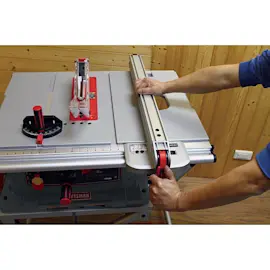
Owner’s manual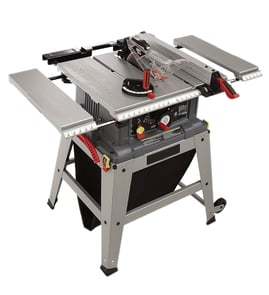

What size blade is a Craftsman 137221940 table saw?
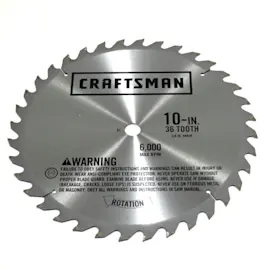
The Craftsman 137221940 table saw uses a 10-inch blade. This is the standard blade diameter specified for this model, and it determines what replacement blades (and compatible accessories) will fit and run safely; see the 137221940 owner's manual for details.
How to confirm you are buying the right blade
Use these quick checks before ordering a new table saw blade:
- Match the blade diameter: 10 inches
- Match the arbor (center hole) size to your current blade (most 10-inch saw blades are 5/8 inch, but confirm)
- Choose the right tooth count for the cut (rip vs. crosscut vs. combination)
- Verify the blade is rated for at least the saw’s speed (this model is listed at 5000 RPM)
- Inspect the blade guard and splitter alignment after installing a new blade
Common blade and accessory fit notes for this model
The manual also lists a dado limitation that matters when you are shopping for cutting accessories.
| Item | What fits this saw | What to avoid |
|---|---|---|
| Standard saw blade | 10-inch blade | Wrong diameter blades |
| Dado set | Up to 6-inch diameter, max 1/2-inch dado width | Adjustable (wobble) dadoes; dado sets larger than 6 inches |
Why it matters
Using the correct blade size helps the blade guard, splitter, and rip fence work as intended. A mismatched blade can cause poor cut quality (burning, wandering cuts) and can interfere with height or bevel adjustments.
Related DIY help
If you are replacing the blade, we recommend following a step-by-step procedure to keep the arbor nut, washers, and guard parts installed correctly: how to replace a table saw blade. For additional parts and diagrams for Craftsman 137221940, search by model on Sears PartsDirect.
Last updated: February 2026
Does Craftsman make a good table saw?
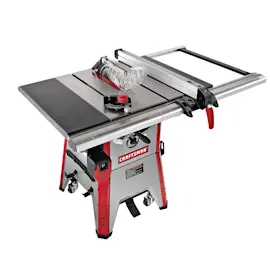
Yes. Craftsman table saws are a solid choice for many DIYers, and the Craftsman 137221940 is built as a practical, high-speed 10-inch saw (rated up to 5000 RPM) that handles common ripping and crosscutting tasks well when it is assembled, aligned, and used with the proper safety accessories listed in the owner's manual.
What “good” means for the Craftsman 137221940
A “good” table saw is one that stays accurate, cuts consistently, and is safe to operate. For this model, the manual highlights key basics that support that goal:
- 10-inch blade capacity (common size for general woodworking)
- Up to 5000 RPM for clean cuts when the blade is sharp
- Designed to be used with a rip fence or miter gauge (not freehand)
- Includes safety components like blade guard, splitter/spreader, and anti-kickback pawls
- Intended for typical home-shop use when maintained and kept aligned
How to get the best results (and avoid the common complaints)
Most “mixed reviews” on table saws come down to setup, alignment, and technique. These steps make the biggest difference:
- Wax the table surface to reduce friction so stock feeds smoothly
- Confirm the rip fence locks parallel to the blade (reduces burning and kickback risk)
- Use the miter gauge for crosscuts and the fence for ripping; never guide stock by hand alone
- Use a push stick for narrow rips
- Keep the blade clean and sharp; a dull blade makes any saw feel underpowered
If your cuts are not square or angles drift, use our guide on table saw bad angle cuts.
Quick comparison: who it fits best
| User type | Fit for 137221940 | Why |
|---|---|---|
| DIYer / homeowner | Good | 10-inch blade, strong speed, practical features |
| Hobby woodworker | Good | Capable for repeatable cuts with careful alignment |
| Jobsite daily pro | Fair | Pros often demand faster adjustments and tighter tolerances |
Why it matters
A table saw can only be “good” if it is safe and predictable. Using the blade guard/spreader and anti-kickback pawls when possible, keeping hands out of the blade line, and avoiding freehand cuts are the difference between confident results and frustrating, risky cutting.
If you need replacement parts for the Craftsman 137221940, start with the parts list for your model, or search by model number on Sears PartsDirect.
Last updated: February 2026
What are the common table saw mistakes?
The most common mistakes on a Craftsman table saw like model 137221940 are skipping basic safety steps (eye protection, blade guard, push stick), making freehand cuts, and standing in line with the blade. These errors increase kickback risk and blade-contact injuries; our 137221940 owner's manual spells out the safe setup and cutting rules.
Common mistakes we see (and what to do instead)
- Not wearing eye protection: Always wear safety goggles (ANSI-rated) before powering on.
- Running without the blade guard/spreader and anti-kickback pawls: Use them for operations where they apply, including through-sawing.
- Cutting freehand: Always guide the work with the rip fence or miter gauge.
- Standing directly behind the cut line: Keep your body out of the blade path to reduce injury risk if kickback happens.
- Using hands too close to the blade: Use a push stick for narrow ripping and keep hands out of the blade line.
- Leaving the saw unattended: Turn the switch OFF and wait for a complete stop before walking away.
Quick pre-cut safety checklist (model 137221940)
Before each use, we follow the same basics:
- Blade is tight on the arbor
- Bevel angle lock knob is tight
- Rip fence is locked and parallel to the miter gauge grooves (when ripping)
- Blade guard is installed and working properly
- Safety glasses are on
| Task | Safer setup | Common mistake |
|---|---|---|
| Ripping | Fence locked; use push stick when needed | Freehand ripping or reaching near blade |
| Crosscutting | Remove rip fence; use miter gauge in the groove | Using fence and miter gauge together (pinch risk) |
| Blade height | Set blade about 1/8 inch above the workpiece | Blade set too high |
Why it matters
Most table saw injuries happen fast, and the manual warns that even a fraction of a second of carelessness can cause severe injury. Using the guard system, correct guides (fence or miter gauge), and proper stance reduces kickback and keeps your hands out of the blade path.
Helpful how-to resources
For technique and setup help, we recommend:
You can also look up replacement parts for Craftsman 137221940 by model number on the parts list, or search more broadly on Sears PartsDirect.
Last updated: February 2026
Can you use an 8 inch blade on a 10 inch table saw?
Yes, you can use an 8-inch blade on the Craftsman 137221940 table saw as long as the blade has the correct arbor (shaft) hole size and is rated for the saw’s speed; the tradeoff is reduced maximum cutting depth compared with a 10-inch blade. For dado work on this model, our manual specifies using a 6-inch dado set.
What changes when you drop from 10-inch to 8-inch
Using a smaller diameter blade is usually about clearance and cut capacity, not “fit.” Expect these differences:
- Shallower cut depth (an 8-inch blade cuts less deep than a 10-inch blade)
- Potentially less strain in some cuts (less blade mass), but feed rate still matters
- Guard and splitter alignment may not match the smaller blade height
- Riving knife/splitter and anti-kickback setup still needs to be correct for safe ripping
Fit and safety checks we recommend
Before installing any non-original blade size, verify these basics:
- Arbor hole size matches your saw’s arbor (do not force-fit)
- Blade RPM rating meets or exceeds the saw’s operating speed (this model is listed at 5000 RPM)
- Blade clears the throat plate and housing through full height and bevel travel
- Blade is tightened on the arbor before every use
- Fence is parallel to the miter gauge grooves to reduce binding and kickback risk
Dado note for Craftsman 137221940
This model includes a dado table insert, but the manual limits dado setup as follows:
| Setup item | What to use on this model | Why it matters |
|---|---|---|
| Dado diameter | 6-inch dado set | Helps ensure internal clearance and proper operation |
| Max dado width | 1/2 inch | Arbor length restricts stack width |
| Guard/splitter | Removed for dado cuts | Required for dado operation; use extra caution |
For the exact blade-change steps and dado instructions, use the 137221940 owner's manual.
Why it matters
Blade diameter affects cutting depth, guarding geometry, and clearance inside the saw. Matching the arbor fit and RPM rating keeps the blade stable at speed, and following the model’s dado limits helps prevent contact with the housing or insert.
If you need to look up compatible accessories or replacement items by model number, we list them through the model parts lookup and on Sears PartsDirect.
Last updated: February 2026
Are table saw miter gauges universal?
No, table saw miter gauges are not universal. Your Craftsman table saw model 137221940 uses a miter gauge that rides in the table’s miter slot, and compatibility depends on the slot size and the gauge’s bar dimensions and adjusters. For safe operation, use a miter gauge that fits the slot without side-to-side play.
What makes a miter gauge “compatible”
A miter gauge has to match the saw’s miter slot and lock securely at the angle you set. Before buying a replacement or upgrade, we check these items:
- Miter slot size and shape (common sizes are 3/4 inch by 3/8 inch, but not all saws match)
- Bar fit: slides smoothly but has minimal wiggle
- Angle stops and lock: holds 90° and common angles without drifting
- Right-slot use: this saw’s manual calls out using the right side groove for crosscutting and compound miter cuts
- Fence clearance: the gauge and workpiece must clear the blade guard and splitter when installed
For model-specific setup and safe crosscutting steps, use the 137221940 owner's manual.
Quick fit check before you purchase
Use this simple checklist to avoid a poor fit that causes inaccurate cuts:
- Measure the slot width and depth with a ruler or calipers
- Confirm the gauge bar is the same size (or has expansion discs/adjusters to remove play)
- Slide it end-to-end; it should not bind or rock
- Lock the head at 90° and verify it stays square during a test cut
- Tighten the miter lock knob fully; a loose lock is a common cause of inaccurate crosscuts
Why it matters (accuracy and safety)
A loose or mismatched miter gauge can twist during the cut, leading to bad angles, burning, or kickback risk. The manual also stresses holding the work firmly against the miter gauge or rip fence and avoiding “free hand” cutting.
Common symptoms and likely causes
| Symptom | What it usually points to |
|---|---|
| Crosscuts not square at 90° | Miter gauge out of adjustment, lock not tight |
| Angles drift during a cut | Poor bar fit in slot, worn lock mechanism |
| Rough, inconsistent feed | Table pitch buildup, alignment issues |
If your angles are off even with a good-fitting gauge, follow the alignment guidance in table saw bad angle cuts.
You can look up replacement parts and accessories by model number on Sears PartsDirect.
Last updated: February 2026