
What is the average lifespan of a snowblower?
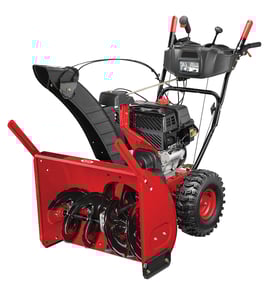
Most snowblowers last 10 to 20 years. For a Craftsman 536883300 20" snow blower, lifespan depends mainly on off-season storage, fuel system care, and keeping wear items (belts, scraper bar, bearings) in good shape.
- 10 to 20 years: common for well-maintained gas snowblowers
- 5 to 10 years: heavy use with minimal maintenance or poor storage
- 20+ years: consistent maintenance, clean fuel, and timely part replacement
| What affects lifespan most | What to do each season |
|---|---|
| Fuel quality and storage | Run the unit dry or treat fuel before storage; check for leaks/cracks in the fuel line |
| Drive and auger wear | Inspect belt condition and tension; replace worn belts before they slip or shred |
| Ground-contact wear | Replace a worn scraper bar so the housing does not grind down |
| Corrosion and buildup | Clean packed snow/salt residue; store dry and covered |
Replacing normal wear parts on time prevents bigger failures and keeps performance consistent:
- V-belt 319596MA (drive/auger belt wear can cause slipping and poor throwing)
- Scraper 55323MA (protects the housing and improves clean-down to pavement)
- Gas line 791766 (prevents fuel leaks and hard-start issues from cracked lines)
- Bearing assembly 577023MA (reduces drag and wobble in rotating components)
A snowblower usually gets retired due to neglected fuel issues, belt slip, or excessive wear at the scraper and bearings, not because the machine “times out.” Routine maintenance and a few key replacements often keep a 20-inch Craftsman unit working reliably for many winters.
Last updated: February 2026
How to find snowblower model number?
For a Craftsman snowblower like model 536883300, the model number is typically on an ID label or stamped plate on the rear frame between the wheels, on the auger housing, or near the engine mounting area. Use that exact number to match the correct parts list.
Check these common spots first (wipe off snow, salt, and grime so the label is readable):
- Rear frame between the wheels (often the quickest find)
- Side or rear of the auger housing (near the front bucket)
- Near the engine mounting area on the frame
- Under or behind the handlebar panel area
- On the engine itself (engine model is separate from the snowblower model)
Snowblowers often have more than one identification number. Use this quick guide:
| What you’re identifying | Where it’s found | What it’s used for |
|---|---|---|
| Snowblower model number (example: 536883300) | Frame or auger housing label/plate | Matching the correct Craftsman parts diagrams and hardware |
| Engine model/type/code | Stamped/printed on the engine shroud or valve cover area | Engine-specific parts like carburetor, ignition, fuel line |
Using the exact model number prevents ordering the wrong belt, scraper bar, bearings, or fasteners. Even small changes between similar Craftsman 20-inch snow blower versions can affect fit.
Use these practical workarounds:
- Look for a stamped number on the metal plate (not just a sticker)
- Check for a second label on the opposite side of the frame
- Use the engine numbers to narrow down engine-related parts (fuel system, ignition)
- Compare your machine to the parts diagrams for model 536883300 to confirm major assemblies
If you’re chasing a fuel leak or fuel delivery issue while identifying the unit, the engine fuel line is a common wear item; see the gas line 791766 if it matches your setup.
For more help with identification, use our guide: how to find your appliance model number (and what it means for parts).
Last updated: February 2026
Is it cheaper to repair or replace a snowblower?
For a Craftsman snowblower model 536883300, it’s usually cheaper to repair when the problem is a normal wear item (belt, fuel line, pulley) and the machine is otherwise solid. Replacement makes more sense when the engine has major internal problems or the repair total approaches about half the cost of a comparable new snowblower.
- Repair when the fix is straightforward and parts are inexpensive (belts, hardware, fuel line).
- Replace when the engine is failing (low compression, heavy smoking, metal noise) or the machine has multiple major issues.
- Lean toward replacement if you have repeated no-start problems every season even after fuel-system service.
These are the kinds of repairs that often restore performance without turning into a money pit:
- Replace a worn drive/auger belt (example: v-belt 319596MA)
- Replace cracked or leaking fuel hose (example: gas line 791766)
- Replace a noisy or seized pulley (example: idler pulley 48924MA)
- Replace worn bearings (example: bearing 583459MA or bearing assembly 577023MA)
- Replace the scraper bar if it’s worn down and performance is poor (example: scraper 55323MA)
| What you’re seeing | Most likely direction | Why |
|---|---|---|
| Runs well but won’t move or won’t throw snow | Repair | Often belt, idler pulley, or linkage adjustment |
| Fuel smell, wet spots, brittle hose | Repair | Fuel line replacement is usually straightforward |
| Loud grinding from auger area | Repair (sometimes) | Bearings or auger components may be serviceable |
| Hard starting plus surging plus stalling repeatedly | Replace (often) | Fuel system and engine wear can stack up |
| Heavy smoke, knocking, low power under load | Replace | Points to internal engine wear |
A snowblower is only “cheaper to repair” if it stays reliable after the fix. Replacing a few wear parts can extend the life of your Craftsman 536883300 for years, but chasing recurring engine problems can cost more than the machine is worth.
Last updated: February 2026
How to find out how old a snowblower is?
For a Craftsman snowblower model 536883300, the most accurate way to determine age is to read the snowblower frame model and serial tag, then decode the serial number date code. On many Craftsman units, the first five characters of the serial number contain the build date information.
Check the snowblower frame in these common spots:
- Rear of the frame behind the engine
- Side of the main frame near the wheels
- Near the chute base on the auger housing
- Under the handle/control panel area
- Near the engine mounting plate (on the frame)
Use this practical process that matches how Craftsman snowblower tags are commonly formatted:
- Step 1: Write down the full serial number exactly as shown.
- Step 2: Focus on the first five characters; this is where the date code is commonly embedded.
- Step 3: If the tag is damaged, take a close, well-lit photo and zoom in; faint characters often become readable.
| Tag | What it identifies | What it helps with |
|---|---|---|
| Snowblower model/serial (frame tag) | The snowblower build | Determining snowblower age and correct chassis parts |
| Engine model/type/code (engine shroud) | The engine build | Dating the engine and finding engine-specific parts |
Knowing the build period helps you choose the correct parts when there were mid-production changes (belt routing, pulley styles, hardware) and helps you plan age-related maintenance like belts, fuel line, and scraper replacement.
- Drive and auger belts for cracking or glazing
- Fuel line for hardening, leaks, or swelling
- Scraper bar for uneven wear and poor clearing
- Idler pulley for wobble or bearing noise
- Fasteners for loosening from vibration
If you find wear while checking the tag, common maintenance items on this model include the v-belt 319596MA and gas line 791766.
Last updated: February 2026