Installation guide
 Owner’s manual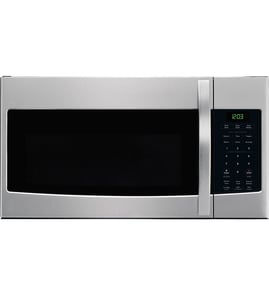



What is the average lifespan of a whirlpool microwave?
A Whirlpool microwave typically lasts 7 to 10 years. For the Whirlpool WMH1163XVQ1 microwave/hood combo, lifespan depends most on heat, grease, and electrical stress; keeping airflow clear and staying on top of routine filter and light maintenance helps it reach the full expected service life (and beyond). See the WMH1163XVQ1 owner’s manual for model-specific care and maintenance details.
Typical lifespan and what changes it
Most over-the-range microwave/hood combos fall into these real-world ranges:
- 7 to 10 years: typical average lifespan
- 4 to 6 years: heavy daily use, frequent overheating, poor ventilation
- 10 to 15 years: lighter use, good ventilation, consistent cleaning
What usually fails first
In many Whirlpool microwave/hood combos, the most common trouble spots are basic safety and power components, not the cooking cavity itself.
- Door safety switches and interlock components (symptoms: won’t start, stops when door moves)
- Line fuse (symptoms: dead display, no power)
- Cooktop or cavity lighting (symptoms: light out, flickering)
- Venting and filters (symptoms: poor airflow, excess heat, grease buildup)
- High-voltage components (symptoms: runs but does not heat)
Maintenance that extends lifespan (WMH1163XVQ1)
The WMH1163XVQ1 has replaceable filters and lights; keeping these maintained reduces heat buildup and strain on internal parts.
- Replace the charcoal filter about every 6 months if you recirculate air
- Keep the grease filter clean so airflow stays strong
- Keep the vent grille area clear so the unit can cool properly
- Avoid running the microwave empty (it stresses the magnetron)
- Use microwave-safe cookware only (no metal, no foil contact)
Quick maintenance guide
| Item | What to do | Typical interval |
|---|---|---|
| Charcoal filter | Replace (not washable) | About every 6 months |
| Grease filter | Clean regularly | Monthly or as needed |
| Cooktop/cavity lights | Replace when dim or out | As needed |
Why it matters
A microwave that runs hot (from clogged filters, poor venting, or heavy use) ages faster. Good airflow and basic upkeep help protect high-cost components like the magnetron and reduce nuisance failures like blown fuses.
Last updated: January 2026
What two things should you not put in a microwave?
For the Whirlpool WMH1163XVQ1 microwave/hood combo, the two most important things to never put in the microwave are metal (including foil and metal utensils) and sealed containers (like closed glass jars); both can cause arcing, fire, or an explosion risk. See the safety section in the WMH1163XVQ1 owner's manual.
The two “never” items (and why)
- Metal items (foil, utensils, twist ties, metal-trimmed dishes): can arc (spark), damage the cavity, and create a fire risk.
- Sealed containers (closed jars, tightly lidded containers): pressure can build and the container can burst.
Other common items to avoid
- Whole eggs in the shell: can explode from steam pressure.
- Straight-sided cups with narrow necks (some travel mugs): increase risk of superheated liquids.
- Paper or plastic not labeled microwave-safe: can melt, scorch, or ignite.
- Corrosive chemicals or vapors: the microwave is designed for food heating, not chemical use.
Quick “safe vs. not safe” guide
| Item | Put in microwave? | Safer alternative |
|---|---|---|
| Aluminum foil, metal utensils | No | Microwave-safe glass or ceramic |
| Closed jar or sealed container | No | Vent the lid or use a microwave cover |
| Whole egg in shell | No | Scramble in a microwave-safe bowl |
| Water heated too long | Use caution | Stir, heat in short bursts, let stand |
Why it matters
Avoiding metal and sealed containers helps prevent arcing, fires, and sudden pressure explosions. It also protects the door interlock safety system and reduces the chance of damage that leads to no-heat or no-power symptoms.
Last updated: January 2026
What are common problems with whirlpool microwaves?
Common problems on a Whirlpool microwave like model WMH1163XVQ1 include not heating, not powering on, door-related no-start issues, sparking in the cavity, and vent fan or light problems. We recommend starting with the built-in troubleshooting steps and a simple water-heating test from the WMH1163XVQ1 owner's manual.
Most common symptoms and what they usually point to
- Runs but does not heat: high-voltage component failure (often the magnetron, diode, or capacitor)
- Dead, no display, no response: power supply issue, blown fuse, or door interlock problem
- Starts then stops, or blows breaker: shorted high-voltage part, failing door switch, or wiring issue
- Sparking or arcing: food splatter or debris, damaged interior surface, or a problem near the waveguide cover
- Vent fan weak or noisy: grease buildup, blocked venting, or damper/grille restriction
Quick checks we recommend first (safe, no disassembly)
- Test heating: heat 1 cup of water on high power; if it does not heat, focus on the heating circuit.
- Confirm power: verify the unit is plugged into a grounded 3-prong outlet; check the home fuse or breaker.
- Check the door: close the door firmly; door switch and interlock issues can prevent operation.
- Inspect and clean: remove grease and food debris from the cavity and around the door sealing surfaces.
- Check venting basics: make sure the damper can open freely and venting is not restricted (installation details are in the WMH1163XVQ1 installation guide).
Parts that commonly fail on this model
| Symptom | Common suspect part | Example part on this model |
|---|---|---|
| No heat | High-voltage diode | Diode W11256462 |
| No start with door closed | Door interlock switch | Microwave door interlock switch W10269458 |
| Completely dead | Internal fuse | Microwave fuse W11707984 |
| No heat (after basic checks) | Magnetron | Microwave magnetron W10754299 |
Why it matters
Microwave/hood combos like the WMH1163XVQ1 rely on door interlocks and high-voltage components to operate safely. A “no heat” or “won’t start” symptom often narrows quickly to a small group of parts, which helps avoid unnecessary replacements.
Last updated: January 2026
What size is WMH1163XVQ1?
The Whirlpool WMH1163XVQ1 is a 1.6 cubic foot over-the-range microwave/hood combo designed for a standard 30-inch range space. For installation planning, the height shown in the installation dimensions is 17 1/4 inches at the back and 16 1/4 inches at the front; use the WMH1163XVQ1 installation guide for the complete dimension diagram and cabinet requirements.
What we can size from the installation dimensions
The installation diagram focuses on fit and clearances (the measurements that prevent mounting and venting problems).
- Height at back: 17 1/4 inches
- Height at front: 16 1/4 inches
- Typical range width below: 30 inches
- Typical install height reference: 66 inches (varies by cooktop/range)
- Power requirement: grounded 3-prong outlet in the upper cabinet
Installation clearances that affect real-world fit
Even if the microwave body fits between cabinets, venting space and cabinet depth can change what “fits”.
- Keep the vent cutout free of obstructions so the damper opens fully.
- For roof venting with a rectangular-to-round transition, allow 3 inches of clearance above the microwave so the damper blade opens freely.
- Plan cabinet depth and mounting height using the diagram in the WMH1163XVQ1 installation guide.
Quick reference table
| Measurement | What it’s used for | Where to confirm |
|---|---|---|
| Height (front/back) | Prevents cabinet and trim interference | Installation dimension diagram |
| Range width below (typical 30 in.) | Aligns microwave with cooktop/range | Installation dimension diagram |
| Vent clearance above (3 in. in some setups) | Prevents damper sticking | Venting design section |
Why it matters
Correct sizing prevents common install issues like a binding vent damper, misaligned mounting holes, or a microwave that sits at the wrong height over the cooktop.
Last updated: January 2026