Installation guide
 Owner’s manual
 Error Codes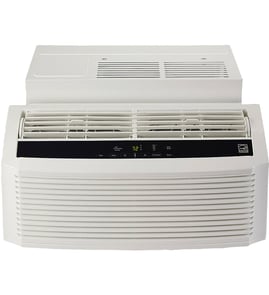



What size air conditioner do I need for a 200 square foot room?
For a 200 sq. ft. room, we typically recommend an air conditioner in the 4,000 to 6,000 BTU range; most rooms this size cool best around 5,000 BTU. Proper sizing matters because your Kenmore 25372088200 runs more efficiently and maintains comfort when the capacity matches the room size (see the owner's manual).
Quick BTU sizing guide (starting point)
Use this as a practical baseline, then adjust for heat and humidity load.
- 200 sq. ft.: 4,000 to 6,000 BTU (most common target: ~5,000 BTU)
- Add capacity if the room has strong afternoon sun or poor insulation
- Add capacity if you have more than 2 regular occupants
- Add capacity if it is a kitchen or cooking area
- Reduce capacity if the room is shaded most of the day
Adjustments that change the “right” size
Your air conditioner may need to run longer and more often when heat or humidity is above normal. That is expected behavior, and it is one reason correct BTU sizing is important.
Common room factors
- Sun exposure: west-facing windows usually need more BTUs
- Ceiling height: tall ceilings increase the air volume to cool
- Air leaks: gaps around windows and doors raise the load
- Blocked airflow: curtains or furniture in front of the unit reduce performance
- Dirty filter: restricted airflow can mimic an undersized unit
What happens if the unit is too small or too large?
| If the BTU rating is... | What you will notice | Why it matters |
|---|---|---|
| Too low | Runs constantly, struggles on hot days | Higher wear, less comfort |
| About right | Longer cycles during peak heat, steady comfort | Best efficiency and humidity control |
| Too high | Short cycles, uneven temps, clammy feel | Poor humidity removal and comfort |
Why it matters for Kenmore 25372088200
The manual emphasizes that capacity must fit the room size for efficient, satisfactory operation. Correct sizing also helps prevent issues that look like “not cooling,” such as icing when conditions and airflow are not ideal.
Parts and maintenance that support cooling performance
Even with the right BTUs, airflow and installation details affect results.
- Keep the front and rear airflow paths clear
- Clean the air filter on schedule (per the manual)
- Avoid extension cords; use a properly grounded outlet
- If you are reinstalling the unit, follow the installation guide
- For replacement hardware during service, we stock items like the screw 134178901
Last updated: February 2026
What are the most common issues with 25372088200?
The most common issues we see with the Kenmore 25372088200 room air conditioner are weak or no cooling, the unit not starting, loud vibration or rattling, poor airflow, and water leaking or not draining correctly. Many of these problems trace back to airflow restrictions, fan-motor wear, or compressor start components.
Common symptoms and what usually causes them
- Not cooling or cooling poorly: dirty coils, restricted airflow, failing compressor, or a sealed-system issue
- Won’t start or clicks/hums: failed start components such as the relay or overload, or a power supply problem
- Loud noise or vibration: worn fan motor, loose mounting hardware, or deteriorated compressor mounts
- Weak airflow: blocked grille/air path, fan housing damage, or a slowing fan motor
- Water leaking indoors: unit not level, blocked drain path, or a damaged seal/foam strip
Quick checks we recommend first
Use the owner's manual for model-specific operating and cleaning steps, then work through these basics:
- Confirm the outlet has power and the cord is firmly seated
- Set mode to Cool and lower the temperature setpoint
- Clean the air path and inspect the front grille for blockage
- Make sure the unit is slightly tilted to the outside for proper drainage
- Listen for repeated clicking or a brief hum followed by shutdown (start-component clue)
Parts that commonly relate to these issues
If troubleshooting points to a failed component, these model-matched parts are often involved:
| Symptom | Likely area | Example model-matched part |
|---|---|---|
| Won’t start, clicks/hums | Compressor start circuit | Room air conditioner compressor start relay kit 5303317601 |
| Shuts off on overload | Compressor protection | Overload 5303317553 |
| Rattling, vibration | Compressor mounting | Room air conditioner compressor grommet 5303283877 |
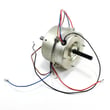
| Poor airflow, noisy fan | Air movement | Room air conditioner fan motor 309644302 |
Why it matters
Room air conditioners depend on steady airflow across the evaporator and condenser coils; when airflow drops or the compressor cannot start cleanly, cooling performance falls fast and electrical components can overheat.
Last updated: March 2026
How do I find the model number on my 25372088200?
For Kenmore room air conditioner model 25372088200, the model number is printed on the serial plate. The owner’s guide lists two common locations: on the outside of the cabinet, or behind the filter at the bottom of the unit; a flashlight often makes the label easier to read (see the owner's manual).
Where to look on the unit
Check these spots in order:
- Outside of the cabinet (look along the side or back panels)
- Behind the air filter at the bottom of the unit
- Behind the cabinet front (if you remove the front as described in the care and cleaning section)
- Near the power cord entry area (some units place the rating label nearby)
Quick steps to find it safely
- Turn the air conditioner off and unplug it.
- Shine a flashlight across the label; angled light makes faded printing easier to see.
- If the label is behind the filter, remove the front grille and slide the filter out.
- Write down both the model number and the serial number; you will need both for parts lookup and service history.
What the label usually includes
| Label item | What it’s used for |
|---|---|
| Model number | Matching the correct parts diagrams and replacement parts |
| Serial number | Identifying production run details and unit age |
| Electrical rating | Verifying outlet and circuit requirements |
Why it matters
Using the exact model number from the serial plate prevents ordering the wrong Kenmore parts (like a front grille, fan motor, or compressor components) and helps ensure the diagrams and installation details match your specific build.
Last updated: March 2026