Owner’s manual
 Error Codes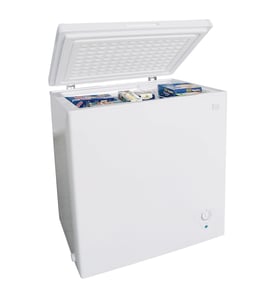



How many cubic feet is a Kenmore freezer model 25311531102?
Kenmore chest freezer model 25311531102 has a capacity of 14.1 cubic feet. You can also confirm the capacity on the model and serial number plate and in the 25311531102 owner's manual.
Where to verify the capacity on your freezer
Use these quick checks to match the spec to your exact unit:
- Look for the model and serial number plate on the left exterior wall (chest models)
- Check the specifications or product information section in the 25311531102 owner's manual
- Compare the model number on the plate to 25311531102 to ensure you are reading the correct data
Why it matters for loading and freezing performance
Capacity affects how much fresh food you can freeze at one time without warming the cabinet and extending run time.
The owner guidance for safe loading is:
- Allow about 4 hours for the freezer to cool down before loading unfrozen food
- Freeze about 3 lb of fresh food per cubic foot at one time
- Organize food to reduce lid-open time and warm air entry
Quick loading math for 14.1 cu ft
| Capacity | Max fresh food to freeze at once (approx.) |
|---|---|
| 14.1 cu ft | 42 lb |
Helpful related tip
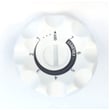
If you are troubleshooting temperature swings after heavy loading, start by checking the temperature control setting and lid seal condition; a worn gasket can let warm air leak in.
Last updated: January 2026
What are the most common issues with 25311531102?
The most common issues we see with the Kenmore 25311531102 chest freezer are warm temperatures, excessive frost, lid sealing problems, and interior light or switch failures. Many of these problems trace back to airflow, temperature control settings, or a worn lid gasket; use the 25311531102 owner's manual for model-specific operating and care steps.
Common symptoms and what usually causes them
- Not cold enough or thawing food: temperature control issue, dirty condenser area, weak start components, or sealed-system trouble
- Runs constantly: lid not sealing, warm room location, frequent openings, thermostat out of calibration
- Heavy frost buildup: lid left ajar, damaged gasket, humid air entering, infrequent defrosting
- Light not working: bulb, door switch, or wiring harness issue
- Won't start or clicks: start components, capacitor, or compressor problem
Quick checks we recommend first
- Confirm the control is set colder and allow 24 hours for temperature to stabilize.
- Make sure the lid closes fully and the gasket is clean and making full contact.
- Keep the freezer reasonably full; empty freezers warm up faster when opened.
- Defrost if frost is thick; ice buildup reduces efficiency.
- If the light stays off or on incorrectly, test the door switch.
Parts that commonly solve these problems
| Symptom | Part to consider | What it does |
|---|---|---|
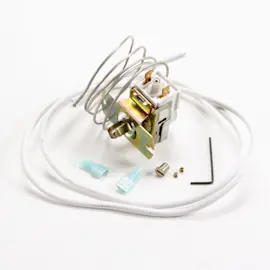
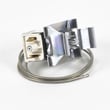
| Warm temps or temperature swings | Freezer temperature control thermostat 216714601 | Cycles the compressor to maintain set temperature |
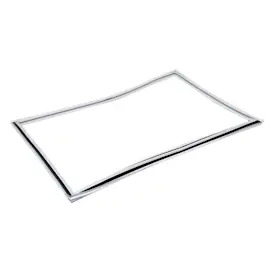
| Frost around lid, long run times | Freezer lid gasket 216481211 | Seals the lid to keep humid air out |
| Light issues | Freezer door switch 216822900 or freezer light bulb 5304517886 | Controls and powers the interior light |
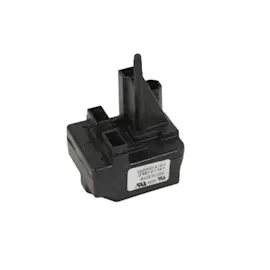
| Clicking/no start | Chest freezer run capacitor 5304464438 | Helps the compressor start and run properly |
Why it matters
A chest freezer that runs warm or frosts heavily can spoil food and drive up energy use. Fixing sealing and control issues early also reduces strain on the sealed system (compressor and refrigerant components).
Last updated: March 2026
What is the life expectancy of a chest freezer?
A chest freezer typically lasts 10 to 15 years with normal household use. For your Kenmore 25311531102 chest freezer, steady temperatures, good airflow around the cabinet, and avoiding heavy overloading help reduce compressor run time and extend overall life; see the 25311531102 owner's manual for care and operating guidance.
What affects freezer lifespan most
- Ventilation and heat: poor airflow makes the compressor work harder.
- Temperature stability: frequent warm-ups (lid left open) increase wear.
- Loading habits: overpacking restricts air circulation and slows recovery.
- Maintenance: keeping the unit clean and dry helps prevent corrosion and gasket issues.
- Power quality: low voltage or loose outlets can stress electrical components.
Practical habits that help it reach the high end of the range
Use these as a simple checklist:
- Keep the freezer in a cool, dry area with space around it for airflow.
- Set a consistent temperature and avoid frequent knob changes.
- Limit lid-open time; organize food so you can grab items quickly.
- Freeze in batches; most freezers perform best when you do not overload with unfrozen food at once.
- Defrost and clean when frost buildup starts reducing usable space.
What “normal” looks like (quick reference)
| Item | Typical expectation | What you can do |
|---|---|---|
| Overall service life | 10 to 15 years | Keep temps steady, maintain airflow |
| Sealed system reliability | Often lasts many years | Avoid overheating and heavy cycling |
| Temperature recovery | Slower when overpacked | Leave room for circulation |
Why it matters
A chest freezer’s longest-lived (and most expensive) component is the sealed refrigeration system. Reducing heat load and run time helps protect the compressor and keeps food at safe storage temperatures.
Last updated: January 2026