Error Codes


How to reset a Whirlpool Quiet Partner 1 dishwasher?
To reset a Whirlpool dishwasher like model WDF341PAPW1 (often marketed in the Quiet Partner family), we recommend starting with a simple power reset, then using the control-panel reset sequence that matches your button layout. This clears many “won’t start” and stuck-cycle issues.
Quick reset methods (try in order)
- Power reset: turn the dishwasher off at the breaker for 1 minute, then restore power.
- Cancel/Drain reset: press Cancel/Drain once; wait for the drain to finish.
- 3-button sequence reset (common on some Quiet Partner-style panels): press any 3 keys on the left in this pattern: 1-2-3, 1-2-3, 1-2-3 (three times total). If the panel beeps or lights change, the reset took.
- If the controls are unresponsive, check the door is fully latched; a weak latch can prevent a reset from completing.
What to expect after a reset
| What you see | What it usually means | What to do next |
|---|---|---|
| Lights cycle or flash briefly | Control rebooted | Select a normal cycle and start |
| Unit drains for 1 to 2 minutes | Cancel/Drain worked | Re-load and restart |
| No response at all | Power, latch, or control issue | Check breaker, then latch and wiring |
If it still will not reset or start
These checks solve the most common “reset didn’t help” situations:
- Confirm the breaker is on and the dishwasher has power.
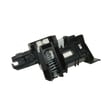
- Close the door firmly; if it will not “click” shut, inspect the dishwasher door latch WPW10653840.
- If the dishwasher has power but will not run, use our how to reset a Whirlpool dishwasher steps to rule out a stuck control state.
- If you see flashing patterns or an error code, use Whirlpool dishwasher error codes to identify the failure area.
- If the dishwasher fills but will not wash, a circulation issue can be involved; check for clogs and consider the dishwasher spray arm WPW10491331 if the arm is damaged or not turning.
Why it matters
A reset clears a locked-up control and cancels a stalled cycle, but it will not fix a mechanical problem like a bad door latch, blocked spray arm, or drain restriction. Doing the reset first prevents unnecessary part replacement.
Last updated: February 2026
How to unlock Whirlpool quiet partner 1?
On the Whirlpool dishwasher model WDF341PAPW1, the Control Lock is turned off by pressing and holding the button labeled for the lock function (often “Control Lock” or “Lock”) for about 3 seconds until the lock indicator turns off and the keys respond normally.
How to unlock (and lock) the controls
Use these steps in order; they cover the common Whirlpool control-panel variations.
- Press and hold the key that has a lock icon or says Control Lock/Lock for 3 seconds.
- If there is no dedicated lock key, press and hold the key that has “Control Lock” printed above it (some panels use a secondary function).
- If your panel indicates the lock is tied to a cycle option, press and hold that option key for 3 seconds (the lock light turns off).
- Try the unlock step with the door closed; if it does not respond, open the door and try again.
- If the panel beeps but stays locked, cancel the cycle, then repeat the 3-second hold.
If it still will not unlock
A locked panel can look like a dead panel, but power and door-latch problems can look similar.
| Symptom | What it usually means | What we do next |
|---|---|---|
| Lock light is on | Control Lock is enabled | Hold the lock-designated key 3 seconds |
| No lights at all | Power issue | Reset power at breaker or GFCI, then retry |
| Lights on, won’t start | Door not sensing closed | Check door closure and latch alignment |
Reset the control (clears many glitches)
- Turn off the dishwasher at the breaker for 1 minute.
- Restore power.
- Try the 3-second unlock again.
Why it matters
Control Lock prevents accidental button presses while a cycle is running or while wiping the console. If the dishwasher still will not start after unlocking, the next most common cause is the door not latching firmly.
If the door feels loose or the unit will not start unless you press on the door, check the latch; the model-matched replacement is the dishwasher door latch WPW10653840.
You can also use our troubleshooting steps in how to reset a Whirlpool dishwasher.
Last updated: February 2026
What is the lifespan of a Whirlpool dishwasher?
A Whirlpool dishwasher like model WDF341PAPW1 typically lasts 10 to 12 years. Consistent cleaning, correct detergent use, and fixing small problems early (draining, heating, or wash performance issues) are the biggest factors that help you reach the high end of that range.
What affects dishwasher life the most
- Water quality: hard water speeds up mineral buildup on the heater and inside the sump.
- Maintenance: cleaning the filter and spray arms prevents strain on the motor and pump.
- Loading habits: overloading blocks spray and increases wear.
- Drying and heating performance: weak heating can lead to longer cycles and more residue.
- Drain health: slow draining can cause odors and extra pump wear.
Maintenance that extends lifespan (simple routine)
- Clean the filter regularly; replace it if it is damaged or won’t come clean (see dishwasher filter WPW10463906).
- Check the spray arm holes for clogs and replace a cracked or warped arm (see dishwasher spray arm WPW10491331).
- Run a monthly cleaning cycle with a dishwasher cleaner.
- Use rinse aid to improve drying and reduce spotting.
- Keep the drain path clear; kinks and restrictions shorten pump life.
Common “end-of-life” symptoms and likely causes
| Symptom | Common cause | Part often involved on WDF341PAPW1 |
|---|---|---|
| Not draining | Clog, failing drain pump | Dishwasher drain pump W10876537 |
| Poor cleaning | Clogged spray arm, dirty filter | Dishwasher spray arm WPW10491331 |
| Not drying well | Heating issue, rinse aid empty | Element assembly W10518394 |
| Water left in tub | Drain restriction, hose issue | Dishwasher drain hose 8269144A |
Why it matters
Knowing the typical 10 to 12 year lifespan helps you decide whether to repair or replace. If your WDF341PAPW1 is under 10 years old and the issue is isolated (drain, spray, or heating), replacing a targeted part often restores performance and extends service life.
Last updated: February 2026
What's the most common problem with a Whirlpool dishwasher?
The most common Whirlpool dishwasher problem (including model WDF341PAPW1) is not draining. In most homes, the root cause is a restriction in the filter area, drain hose, or drain pump, which can also lead to dirty water left in the tub and poor cleaning.
Quick checks we recommend first
- Cancel the cycle and let the unit try to drain; listen for the drain pump running
- Remove and rinse the filter; clear food debris from the sump area
- Check the sink drain and garbage disposal for a clog (especially if the dishwasher drains into it)
- Inspect the drain hose for kinks, crushing, or a low loop problem
- Make sure the spray arms spin freely and the racks are not blocking them
Common symptoms and the most likely causes
| Symptom | Most likely cause | What to check next |
|---|---|---|
| Water standing in bottom | Clogged filter or drain path | Clean filter and inspect hose routing |
| Hums but won’t drain | Drain pump jammed or failing | Check for debris; consider dishwasher drain pump W10876537 |
| Poor cleaning | Clogged spray arm or weak circulation | Clean spray arm holes; inspect dishwasher spray arm WPW10491331 |
| Not drying well | Heater issue or rinse aid problem | Confirm rinse aid use; consider element assembly W10518394 |
When it’s likely a part problem (not just a clog)
If you have already cleaned the filter and confirmed the drain hose is clear, these are the parts we see most often tied to the symptoms:
- Drain problems: Dishwasher drain pump W10876537
- Poor wash performance: wash motor/circulation issues (often tied to the motor or sump area)
- Drying problems: heating circuit issues such as element assembly W10518394
- Door won’t start or stops mid-cycle: latch not closing consistently; check dishwasher door latch WPW10653840
Why it matters
Drain and wash issues usually start small (slow drain, gritty dishes) and then snowball into odors, redepositing food soil, and longer cycle times. Catching a restriction early helps protect the pump, motor, and sump seals.
For Whirlpool-specific troubleshooting steps and fault code meanings, use our how to reset a Whirlpool dishwasher and Whirlpool dishwasher error codes guides.
Last updated: February 2026
Where is the filter on Whirlpool Quiet Partner 1?
On the Whirlpool dishwasher model WDF341PAPW1 (often marketed in the Quiet Partner line), the filter area is in the bottom of the tub, directly under the lower rack, around the sump where water drains and recirculates. You access it by pulling out the lower rack and removing the filter pieces.
How to find and access the filter
- Turn the dishwasher off; let the unit cool if it just ran a heated dry cycle.
- Pull the lower dishrack straight out.
- Look at the center-rear to center-bottom area of the tub floor.
- Twist and lift the cylindrical filter (if equipped), then lift out any flat screen below it.
- Rinse the filter under warm water; use a soft brush for grease and debris.
- Reinstall the filter fully seated and locked before running a cycle.
What parts are involved (common on this model)
If the filter is cracked, warped, or will not lock back in place, these model-matched parts are commonly involved:
| What you see | What it does | Model-matched part to check |
|---|---|---|
| Filter screen/cup area in the sump | Catches food soil before it reaches the pump | Filter cup a W10872845 |
| Main filter assembly | Traps debris and helps protect the circulation system | Dishwasher filter WPW10463906 |
Why it matters
A clogged or misinstalled filter can cause poor cleaning, gritty residue, odors, and even draining complaints because water flow through the sump and pump gets restricted. Keeping the filter clean helps the spray arm and circulation system perform correctly.
Related troubleshooting if cleaning does not help
- If dishes are still dirty, check for a blocked or damaged spray arm: dishwasher spray arm WPW10491331
- If the unit will not drain after filter cleaning, the drain pump is a common suspect: dishwasher drain pump W10876537
- If you see an error code, use our guide: Whirlpool dishwasher error codes
Last updated: February 2026
Where to find part number on Whirlpool dishwasher?
On your Whirlpool dishwasher model WDF341PAPW1, the most reliable identifier for ordering parts is the model number and serial number on the appliance ID tag, not a part number printed on the dishwasher. Once we have the model number, we match the correct replacement part (like a pump, latch, or heating element) to your exact unit.
Where to look for the ID tag on a Whirlpool dishwasher
Check these common locations first (use a flashlight):
- Along the top edge of the tub opening (visible when you open the door)
- On the left or right side wall of the tub opening
- Around the door frame area near the hinges
- Occasionally on the side of the inner door
Write down the model number exactly as shown: WDF341PAPW1.
What numbers matter (and what they are used for)
Dishwashers can have several numbers on labels and parts. Here is what to use when ordering:
| What you find | Example | What it’s for |
|---|---|---|
| Model number | WDF341PAPW1 | Ensures parts fit your exact dishwasher |
| Serial number | (varies) | Helps confirm production version when needed |
| Part number | (on the part itself) | Identifies a specific component after you locate it |
If you already know which part is failing
If you are troubleshooting a symptom, we typically start with the model number, then choose the correct part by function. Common examples on WDF341PAPW1 include:
- Not heating or poor drying: element assembly W10518394
- Not draining: dishwasher drain pump W10876537
- Door won’t latch or won’t start: dishwasher door latch WPW10653840
- Poor cleaning: dishwasher spray arm WPW10491331
Why it matters
Whirlpool often uses similar-looking parts across different dishwasher series. Using the WDF341PAPW1 model number prevents ordering a look-alike part that mounts differently, uses a different connector, or does not seal correctly.
Last updated: February 2026