Owner’s manual
 Error Codes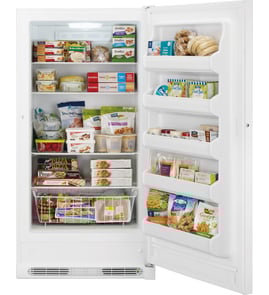


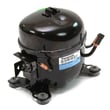
How many cubic feet is Kenmore freezer Model 25328452804?
We treat Kenmore upright freezer model 25328452804 as a 15 to 17 cubic foot class upright freezer. For the exact cubic-foot capacity for your specific unit, use the model and serial tag inside the cabinet and confirm the capacity listing in the 25328452804 owner's manual.
How to confirm the exact capacity on your freezer
- Check the model and serial number plate on the upper left wall inside the freezer (upright models).
- Match the model number exactly: 25328452804.
- Look in the specifications or features section of the manual for “capacity” or “cu. ft.”
- If your freezer has an electronic temperature control, confirm you are reading the correct model section.
- Keep the purchase date handy; it helps when comparing similar Kenmore 253-series uprights.
Typical capacity range (what to expect)
Most Kenmore upright freezers in this model family fall into one of these common size bands:
| Upright freezer size class | Typical capacity | Best for |
|---|---|---|
| Medium | 13 to 15 cu. ft. | Smaller households, overflow storage |
| Large | 15 to 17 cu. ft. | Bulk shopping, family use |
| Extra-large | 18+ cu. ft. | High-volume storage |
Why it matters
Capacity affects how much fresh food you can freeze at one time and how you should load the cabinet for airflow. As a rule of thumb, we follow the guidance to freeze about 3 pounds of fresh food per cubic foot at one time, then let temperatures stabilize before adding more.
Last updated: January 2026
What are the signs of a failing freezer?
A Kenmore freezer model 25328452804 is likely failing when it cannot hold a steady freezing temperature, runs almost constantly, or shows heavy frost and airflow problems. These symptoms often point to issues in the defrost system, door sealing, airflow (fan), or the sealed refrigeration system.
Common signs to watch for
- Food softening, ice cream getting “scoopable,” or items thawing and refreezing
- Excessive frost on the back wall or around shelves (more than a light, even coating)
- Unusual sounds: repeated clicking, loud humming, grinding, or a fan noise that changes
- The freezer runs too long or seems to never shut off
- Water or ice buildup where it should not be (often after a defrost issue)
- Door not sealing well (warm air leaks in, moisture increases)
Quick checks you can do first
Before replacing parts, we recommend these basic checks from the 25328452804 owner's manual:
- Confirm the temperature control is not set to OFF
- Make sure the power cord is firmly plugged in and the breaker is not tripped
- Avoid using an extension cord or adapter plug
- Keep the door closed as much as possible during a suspected cooling problem
- If the freezer is off during a power failure, keep the door closed; food can stay frozen at least 24 hours
What the symptoms usually mean
| Symptom | Most common cause areas | Parts often involved |
|---|---|---|
| Heavy frost, warm temps | Defrost system not clearing ice | Defrost heater, defrost thermostat |
| Warm temps, weak airflow | Evaporator fan not moving air | Fan motor, fan blade |
| Runs constantly | Air leak or poor heat removal | Door gasket, condenser area |
| Clicking, won’t start | Start components or compressor issue | Start relay, compressor |
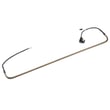
If you suspect a defrost failure (frost blanket on the back wall), the defrost system is a strong place to start, including the defrost heater 5304496687 and the refrigeration appliance defrost bi-metal thermostat 297216600.
Why it matters
A freezer that is drifting warm can spoil food quickly and can also overwork the compressor, which raises energy use and can turn a small airflow or gasket problem into a major repair.
Last updated: January 2026
Is there a reset button on a Kenmore upright freezer?
Yes. On Kenmore upright freezer model 25328452804, the control panel includes an ALARM RESET button used to silence the “Hi TEMP” alarm after a warm-temperature event; it is the closest thing to a “reset” button described for this freezer in the 25328452804 owner's manual.
What the ALARM RESET button does (and does not do)
- Does: silences the buzzer when the “Hi TEMP” indicator is on.
- Does: acknowledges a high-temperature condition so the alarm stops sounding.
- Does not: reset the freezer’s electronics like a full power reset.
- Does not: fix the cause of warming (door left open, power loss, airflow issue).
When you should use it
Use ALARM RESET when:
- The freezer was just plugged in and the alarm sounds.
- The freezer temperature rose above about 23°F and the “Hi TEMP” light is on.
- You had a brief power interruption and the freezer is recovering.
If you need a true “reset” (power reset)
If the freezer is acting erratically (display issues, alarms that return immediately, not cooling), a basic power reset often helps:
- Unplug the freezer (or switch the breaker off).
- Wait 5 minutes.
- Restore power and allow 24 hours for temperatures to stabilize.
| Situation | Best action | What to expect |
|---|---|---|
| “Hi TEMP” light and buzzer | Press ALARM RESET | Alarm silences; cooling continues |
| After outage or move | Power reset + wait | Temps gradually return to setpoint |
| “E” shows on the display | Service diagnosis | Indicates a fault needing repair |
Why it matters
The “Hi TEMP” alarm protects food quality by warning you when temperatures rise. Resetting the alarm without addressing the cause can lead to thawing, refreezing, and freezer burn.
Last updated: January 2026