Installation guide
 Owner’s manual
 Error Codes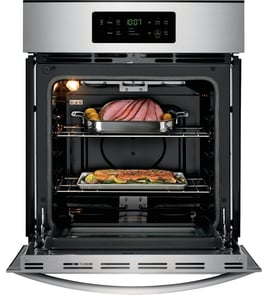


How many years should a wall oven last?
A Kenmore wall oven like model 79040524400 typically lasts about 16 years with normal use and basic maintenance. Many units run 10 to 20 years, and lifespan is strongly affected by heat exposure, cleaning habits, and how quickly failed parts (like elements or sensors) are replaced.
Typical wall oven lifespan (what to expect)
Most electric wall ovens fall into a similar lifespan range.
- Average lifespan: about 16 years
- Common range: 10 to 20 years
- Shorter lifespan is more likely with frequent self-clean cycles, poor ventilation, or repeated overheating
- Longer lifespan is more likely with good airflow, gentle cleaning, and prompt repairs
| What you see | What it usually means | What to do next |
|---|---|---|
| Oven heats unevenly or runs hot/cold | Temperature sensing or airflow issue | Check calibration steps in the 79040524400 owner's manual and inspect the sensor |
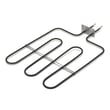
| Bake or broil stops working | Heating element failure is common | Inspect element for blisters or breaks; replace if damaged |
| Control panel acts erratic | Heat stress or electrical connection issue | Verify power supply and wiring connections; consider professional service |
Maintenance habits that extend life
These steps help reduce heat stress on the control area and keep temperatures stable.
- Keep the oven cavity and vent area clear of heavy grease buildup
- Avoid slamming the door; it can damage hinges and affect sealing
- Use cookware that fits the rack and allows airflow around food
- Replace failed heating parts promptly to prevent overworking the remaining components
- Follow installation spacing and centering guidance so heat does not build up in the cabinet (see the 79040524400 installation guide)
Why it matters
Wall ovens live in a tight cabinet space; if the oven is not centered or the cutout clearances are off, excess heat can build up and shorten the life of electronics, wiring, and controls. Proper installation and airflow are as important as cleaning and day-to-day use.
Last updated: January 2026
Are all 30 inch wall ovens the same size?
No. “30-inch” wall ovens are a size class, not an exact measurement; cutout width, cutout height, and trim overlap vary by brand and model. For Kenmore model 79040524400, use the required cutout dimensions and installation clearances in the 79040524400 installation guide to confirm fit.
What “30-inch” usually means (and what varies)
Even when two ovens are both labeled 30-inch, these details commonly differ:
- Cabinet cutout width (the opening in the cabinet)
- Cutout height (single vs. double oven openings differ)
- Overall depth and door clearance when open
- Trim size and overlap (how the decorative trim covers the cutout edges)
- Electrical requirements (circuit size, wire gauge, junction box location)
How we recommend you verify fit for 79040524400
Use these checks before ordering a replacement oven or planning a cabinet modification:
- Measure your existing cabinet cutout (width, height, depth).
- Compare your measurements to the cutout dimensions listed in the 79040524400 installation guide.
- Confirm door swing clearance; many wall ovens need significant space in front when the door is open.
- Confirm the junction box location and that the circuit matches the oven’s requirements.
Quick comparison: “label size” vs. what matters
| What you see advertised | What you must match for installation | Why it matters |
|---|---|---|
| 30-inch wall oven | Cutout width and cabinet width requirement | Prevents gaps and mounting issues |
| 30-inch wall oven | Cutout height (single vs. double) | Ensures the oven physically fits |
| 30-inch wall oven | Depth and door-open clearance | Prevents door interference and usability problems |
Why it matters
A wall oven installs into a fixed cabinet opening; if the cutout is even slightly off, the trim may not sit flush, the oven can vibrate or make noise (especially on convection models), or the unit may not mount securely.
Last updated: January 2026
Are electric wall ovens 110 or 220?
For the Kenmore 79040524400 electric wall oven, the electrical supply is 120/208V or 120/240V AC, 60 Hz on a dedicated circuit. In typical home wiring terms, that means it uses a “220/240V” style connection (not a standard 110/120V plug-in outlet). See the wiring requirements in the 79040524400 installation guide.
What this means for your home wiring
Most electric wall ovens are hardwired to a junction box and use a 3-wire or 4-wire connection. This model’s installation instructions call for a dedicated, properly grounded branch circuit.
- Plan for a dedicated circuit (no sharing with other appliances)
- Use a 3-wire or 4-wire single-phase supply (as allowed by local code)
- Use a time-delay fuse or circuit breaker (recommended)
- Do not use an extension cord with a wall oven
- Confirm the oven’s amperage on the rating plate (located on the oven frame)
Typical breaker and wire guidance (from the install instructions)
The installation guide provides wattage and breaker guidance at 240V:
| Oven type | Typical max load at 240V | Typical breaker | Typical wire gauge |
|---|---|---|---|
| Single wall oven | Up to 4000W | 30A | #8 AWG |
| Double wall oven | Up to 8000W | 40A | #8 AWG |
Quick checks before installation or troubleshooting
These checks help prevent nuisance breaker trips, weak heating, or control issues:
- Verify your home supply is 120/208V or 120/240V at the junction box
- Confirm the breaker size matches the oven’s rating plate
- Inspect the junction box for loose or overheated connections
- If you see heat damage at the power connection, a terminal block may be involved (for example, terminal block 5304409888 is a common connection component on many ovens)
Why it matters
A wall oven that is supplied with the wrong voltage can heat poorly, trip the breaker, or damage electrical components. Correct voltage and a properly sized circuit help the bake element, broil element, and electronic controls operate normally.
Last updated: January 2026