Owner’s manual
 Error Codes




Does a Samsung washer have a filter that needs to be cleaned?
Yes. The Samsung WF45R6300AV front-load washer includes a drain pump filter (debris filter) behind the lower front filter cover, and it needs periodic cleaning to help prevent slow draining, odors, and leak issues. See the steps and safety notes in the WF45R6300AV owner's manual.
Where the filter is on this model
On WF45R6300AV, the manual identifies these items at the lower front of the washer:
- Filter cover (access door)
- Pump filter (debris filter)
- Emergency drain tube (used to drain water before opening the filter)
How to clean the drain pump filter (safe, typical process)
We recommend cleaning the pump filter when you notice slow draining, odor, or a drain-related code, and as routine maintenance.
- Unplug the washer.
- Place a shallow pan and towels under the filter area.
- Open the filter cover.
- Use the emergency drain tube to drain remaining water into the pan.
- Turn the pump filter knob counterclockwise and remove the filter.
- Rinse debris off the filter and wipe the filter housing clean.
- Reinstall the filter fully and tighten the knob clockwise; close the cover.
What you may notice (and what it means)
The pump filter is directly tied to draining performance.
| Symptom | Common cause | What to do |
|---|---|---|
| Slow drain or water left in drum | Pump filter clogged with lint, coins, hair | Clean the pump filter and recheck |
| “5C” information code | Drain restriction, often a clogged pump filter | Clean the pump filter; confirm drain hose is not kinked |
| Musty odor | Residue trapped in seal, tub, or filter area | Clean filter; run a cleaning cycle and wipe the door boot |
Why it matters
A clean pump filter helps the drain pump move water efficiently, reduces standing water that can cause odors, and helps prevent leaks caused by an improperly seated filter after maintenance.
Last updated: February 2026
What is the lifespan of a Samsung front load washer?
A Samsung front-load washer like model WF45R6300AV typically lasts 10 to 15 years with normal household use and consistent maintenance. Lifespan depends most on load size, detergent choice (HE), installation stability, and routine cleaning outlined in the WF45R6300AV owner's manual.
What affects lifespan the most
- Overloading (stresses the tub, shocks, and bearings)
- Too much detergent (causes residue, odors, and extra strain during rinsing)
- Unlevel installation (increases vibration and wear)
- Water quality and pressure (this model’s spec range is 20 to 116 psi)
- Maintenance habits (Self Clean cycles, gasket cleaning, drain care)
Maintenance schedule we recommend (simple and effective)
- Monthly: Run Self Clean; wipe the door boot and glass dry after use
- Every 1 to 3 months: Clean the detergent drawer and flush residue
- As needed: Perform an emergency drain if the washer will not drain
- Twice per year: Check inlet hose connections for seepage and tighten if needed
- Anytime vibration increases: Re-level the washer and confirm it sits solidly on the floor
Quick lifespan expectations by usage
| Usage pattern | Typical lifespan | What to watch |
|---|---|---|
| Light (few loads/week) | 12 to 15 years | Keep up with Self Clean and gasket drying |
| Average (most households) | 10 to 12 years | Avoid overloads; keep washer level |
| Heavy (daily loads) | 8 to 10 years | Vibration, draining issues, door seal wear |
Why it matters
Front-load washers deliver high spin speeds (this model is rated up to 1200 rpm), which helps remove water but also makes leveling and load balance critical. Reducing vibration and residue buildup is the most reliable way to extend the life of key components like the tub system, drain pump, and door seal.
Last updated: February 2026
Can I still use the washer with a 4C error?
No. On the Samsung WF45R6300AV washer, a 4C error means the washer is not getting the water it needs to fill correctly, so the cycle cannot run properly. Power the washer off and correct the water supply issue before trying to wash again (see the WF45R6300AV owner's manual).
What 4C means on this Samsung washer
The manual ties 4C to the water supply line. In most cases, the washer is detecting one of these conditions:
- One or both water taps are closed or not fully open
- Fill hoses are kinked, crushed, or leaking
- The inlet hose mesh filters are clogged (the manual notes clogged mesh filters can trigger 4C)
- Home water pressure is too low or water supply is interrupted
- The washer was recently reconnected after a shutoff and the tap was opened too quickly
Fix it fast: checks we recommend first
- Press Power to turn the washer off.
- Fully open both hot and cold water taps.
- Straighten the fill hoses; make sure they are not pinched behind the washer.
- Remove the hoses at the back of the washer and clean the inlet mesh filters (the manual recommends cleaning these about once or twice a year).
- Restore power; wait 2 to 3 minutes, then power back on and try the cycle again.
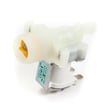
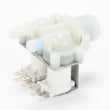
If you suspect a failed valve (no water enters even with good pressure and clean screens), a common repair is replacing the inlet valve such as washer water inlet valve DC62-30314K.
Quick reference table
| Symptom | Most likely cause | What to do |
|---|---|---|
| No water enters at all | Closed tap, kinked hose, clogged mesh filter | Open taps, straighten hoses, clean mesh filters |
| Slow fill, long fill time | Partially clogged mesh filter, low pressure | Clean filters, verify household pressure |
| 4C after plumbing work | Air/pressure surge in line | Open tap slowly, retry after power reset |
Why it matters
Running repeated start attempts with a water supply fault wastes time and can leave detergent undissolved and laundry unwashed. Fixing the fill issue first gets the washer back to normal operation and helps prevent leaks at the hose connections.
Last updated: February 2026