
Can you use an 8 inch blade on a 10 inch table saw?
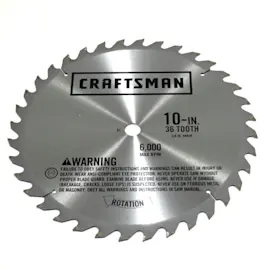
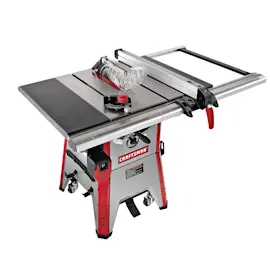
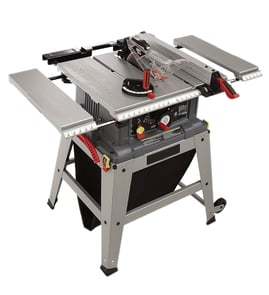
Yes, you can use an 8-inch blade on a Craftsman 11329903 10-inch tilting arbor bench saw as long as the blade matches the saw’s arbor size and speed rating; you will lose maximum cut depth compared with a 10-inch blade.
What changes when you drop from 10-inch to 8-inch
- Shallower cut capacity: an 8-inch blade reduces maximum depth of cut.
- Guard and splitter/riving knife fit: the factory blade guard setup is typically designed around a 10-inch blade.
- Throat plate clearance: the insert opening must match the blade and any dado setup.
- Cut quality and feed feel: smaller diameter can change tooth engagement and feed rate.
If you mean an 8-inch dado set
An 8-inch stacked dado set is commonly used on 10-inch table saws because dados are non-through cuts and do not require full 10-inch diameter. The key is confirming your arbor length can safely accept the stacked width you plan to use.
Quick compatibility checklist
| Item to verify | What to look for | Why it matters |
|---|---|---|
| Arbor size | Blade bore matches the arbor (commonly 5/8 in on many 10 in saws) | Prevents wobble and unsafe mounting |
| RPM rating | Blade/dado rated at or above saw no-load RPM | Prevents blade failure |
| Guarding | Guard may not work with smaller blade or dado | Reduces exposure risk |
| Insert | Use the correct throat plate (standard vs dado) | Prevents workpiece drop and kickback |
Safe setup steps we recommend
- Unplug the saw before changing blades.
- Confirm the blade is flat, undamaged, and the teeth face the correct direction.
- Tighten the arbor nut firmly (do not overtighten).
- For dados, use a dado throat plate and keep the fence and miter gauge aligned.
- Make a test cut in scrap and check for rubbing in the insert.
Why it matters
Using the wrong bore size, an underrated RPM blade, or an incorrect insert can cause vibration, poor cuts, binding, and kickback. Verifying fit and guarding keeps your Craftsman 11329903 cutting accurately and safely.
Related reading: are diy appliance repairs safe
Last updated: February 2026
What are the common table saw mistakes?
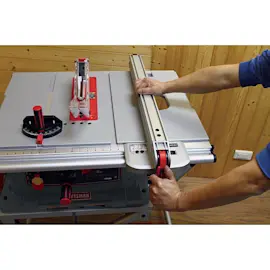
Common table saw mistakes on a Craftsman 11329903 10-inch tilting arbor bench saw include skipping basic safety steps, using the wrong cutting setup, and forcing the workpiece. These errors increase kickback risk, reduce cut accuracy, and can damage the blade, fence, or motor.
Most common mistakes to avoid
- Cutting without a splitter or riving knife (when your setup supports it)
- Standing directly behind the board (puts you in the kickback line)
- Using the rip fence and miter gauge together for the same cut (can pinch and bind)
- Cutting freehand instead of using the fence, miter gauge, or a sled
- Setting the blade too high above the workpiece
- Using a dull, dirty, or wrong-type blade for the material
- Not using push sticks or push blocks for narrow rips
Safer setup checklist (quick pre-cut routine)
- Blade height: Set gullets just above the top surface of the wood (typically about 1/8 to 1/4 inch above).
- Fence and miter gauge: Use one primary guide at a time (fence for ripping, miter gauge/sled for crosscuts).
- Work support: Use outfeed support for long boards so the piece does not lift or twist.
- Body position: Stand slightly to the side of the blade, not directly behind the cut.
- Feed rate: Let the blade cut; steady pressure only, no forcing.
Quick guide: ripping vs. crosscutting
| Cut type | Primary guide | Common mistake | Better practice |
|---|---|---|---|
| Ripping (with the grain) | Rip fence | Freehand ripping | Use fence plus push stick/push block |
| Crosscutting (across grain) | Miter gauge or sled | Fence + miter gauge together | Use miter gauge/sled; add a stop block on a fence-mounted auxiliary if needed |
Why it matters
Most table saw injuries and “scary moments” come from binding and kickback. Avoiding pinch points, keeping the workpiece controlled, and using the right guide for the cut protects you and helps your Craftsman saw cut straighter with less strain on the arbor and motor.
Related DIY help
For general DIY safety habits that apply to power tools, review are diy appliance repairs safe.
Last updated: February 2026
How do I find the model number on my 11329903?
The model number for your Craftsman 10" tilting arbor bench saw is found on the saw’s model/serial tag; on most bench table saws like model 11329903, it’s attached to the base, frame, or underside of the table near the motor. Use the full model number exactly as shown when looking up parts.
Where to look on a Craftsman bench table saw
Check these common tag locations (use a flashlight and wipe off dust):
- On the rear of the saw base or stand (near the power cord entry)
- On the side of the base, close to the motor mount
- Under the table top, along the front rail or inside the cabinet area
- Near the switch box or on the switch mounting bracket
- On the underside of the extension wing (if equipped)
What to write down (and what not to use)
Record the information exactly as it appears on the tag.
- Full model number (for example, 11329903)
- Serial number (helps confirm production run)
- Electrical rating (volts and amps), if listed
- Any prefix/suffix characters printed with the model number
| Label item | Used for | Example |
|---|---|---|
| Model number | Correct diagrams and parts lookup | 11329903 |
| Serial number | Verifying the exact build | Varies |
| Electrical rating | Matching switches, cords, motors | 120V, amps vary |
If the tag is missing or unreadable
You can still narrow it down using physical identifiers, then confirm with the closest match.
- Measure blade size (this model is a 10-inch class saw)
- Note arbor style (tilting arbor) and fence/rail style
- Check motor plate details (HP, amps, RPM)
- Compare the switch style and guard/splitter assembly
Why it matters
Craftsman table saw parts and diagrams are model-specific; using the exact model number prevents ordering the wrong arbor parts, belts, switches, or blade guard components.
For more tips on locating and using model information, use [how to find your appliance model number (and what it means for parts)].
Last updated: March 2026