 Error Codes




What is the most common problem with a GE dishwasher?
For the GE GDF650SYV1FS dishwasher, the most common customer-reported issue is the dishwasher not starting or not running a cycle. In most cases, the cause is a door not fully latching, a power supply interruption, or a control-related fault that stops the cycle from beginning.
Quick checks we recommend first
- Confirm the dishwasher door closes firmly and clicks into the latch.
- Verify the breaker is on and the dishwasher has power.
- Cancel and restart the cycle (some control glitches clear with a reset).
- Check for standing water in the tub (a drain issue can prevent normal operation).
- Listen for a fill sound in the first minute; no fill often points to a water supply or valve issue.
Most common causes and the parts that match them
If the unit has power but will not start, we focus on the latch and controls first. If it starts but stops early, we look at fill, drain, and sensing.
| Symptom | What it usually means | Common part to inspect on this model |
|---|---|---|
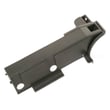
| No start, lights on | Door not recognized as closed | Dishwasher door latch lock WD01X29878 |
| Dead, no lights | Power supply issue | Breaker, junction box wiring (not a part) |
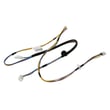
| Starts then stops, odd behavior | Control fault or sensing issue | Configured machine control board WD21X35479 or GE dishwasher pressure sensor WD21X25468 |
| Won’t drain, water left in tub | Drain restriction or failed pump | Dishwasher drain pump WD19X25461 or dishwasher drain hose WD24X10062 |
Error codes can speed up the diagnosis
If your GE dishwasher is beeping, flashing, or showing a code, match it to the symptom before replacing parts. Use our GE electronic dishwasher error codes reference to narrow the failure to the door circuit, drain system, fill system, or control.
Why it matters
A dishwasher that will not start is often a simple door-latch or power issue; fixing that first prevents unnecessary part replacement. When the problem is drain, fill, or control-related, identifying the symptom (and any error code) helps you choose the right repair path.
Last updated: February 2026
Where do I find the model number on a GE dishwasher?
On your GE dishwasher model GDF650SYV1FS, the model number is printed on the rating label located on the inside edge of the door. Open the door fully and look along the inner door frame, most often on the left side near the tub opening.
Quick steps to locate the rating label
- Open the dishwasher door and hold it steady.
- Look along the inner door frame (the vertical edges around the tub opening).
- Check the left side first; that is the most common location.
- Wipe the area with a damp cloth if the label is hard to read.
- Record both the model number and serial number for parts lookup and service.
What the label looks like and what you need from it
The rating label is a small sticker or metal-look label with several lines of text.
| Item on label | What it’s used for | Example (what you’ll see) |
|---|---|---|
| Model number | Matching parts and diagrams | GDF650SYV1FS |
| Serial number | Identifying production run | A mix of letters and numbers |
| Electrical info | Confirming power requirements | Volts/amps ratings |
Why it matters
Using the exact model number helps us match the correct GE dishwasher parts for your unit, such as a spray arm WD22X33499 or dishwasher door latch lock WD01X29878. Even small model variations can use different racks, pumps, or control boards.
Last updated: February 2026
What is the average life expectancy of a GE dishwasher?
A GE dishwasher typically lasts about 10 years on average with normal household use. For your GE GDF650SYV1FS, consistent cleaning, correct loading, and fixing small issues early (drain, fill, heat, or wash problems) are the biggest factors in reaching or beating that lifespan.
Typical lifespan and what changes it
Most dishwashers fall into a similar range, but usage and maintenance can move the number up or down.
- Typical range: 8 to 12 years
- Heavy use (multiple loads daily): often closer to 7 to 9 years
- Light use and good maintenance: often 11 to 13 years
- Hard water: can shorten life if mineral buildup is not managed
- Overloading or poor loading: increases wear on the wash system and racks
Quick maintenance that helps you reach 10+ years
These steps reduce strain on the pump, spray arms, heater, and seals.
- Clean the filter area and sump regularly; remove glass, labels, and food debris.
- Run a monthly cleaning cycle; follow the guidance in how to clean and maintain your dishwasher.
- Keep spray arm holes clear; replace a damaged arm such as spray arm WD22X33499 if it is cracked or not spinning freely.
- Use the right detergent amount; too much can cause residue, too little can reduce cleaning.
- Check for slow draining; a weak or noisy pump can point to dishwasher drain pump WD19X25461.
- Inspect the door seal for leaks; replace a flattened or torn seal like dishwasher tub gasket WD08X23477.
“Repair or replace?” a simple rule of thumb
Use this as a practical decision guide for a GE dishwasher like the GDF650SYV1FS.
| Dishwasher age | If it has a problem | Typical best move |
|---|---|---|
| 0 to 5 years | Most issues | Repair is usually worth it |
| 6 to 9 years | One major failure | Compare repair cost vs. replacement |
| 10+ years | Multiple issues or leaks | Replacement often makes more sense |
Why it matters
Knowing the average life expectancy helps us plan maintenance and avoid surprise breakdowns. It also helps us decide when a repair (like a drain pump, spray arm, or tub gasket) is a smart investment versus when the dishwasher is nearing end-of-life.
Last updated: February 2026
Where is my GE dishwasher filter located?
On the GE GDF650SYV1FS dishwasher, the filter is typically located on the bottom of the tub, under the lower rack, around the sump area. In most setups, you remove the lower rack, then twist the cylindrical filter counterclockwise and lift it out for cleaning.
How to find and remove the filter
- Turn the dishwasher off; let it cool if it just ran.
- Pull out the lower rack to expose the tub floor.
- Look for a round, twist-lock filter assembly near the center or back-center of the tub bottom.
- Twist the filter counterclockwise, then lift it straight up.
- Rinse the filter under warm water; use a soft brush to remove debris from the mesh.
- Reinstall by seating it fully and twisting clockwise until it locks.
What you should check while you are there
A dirty filter often goes along with restricted wash flow or poor draining. Check these common trouble spots:
- Food debris around the sump inlet (tub floor opening)
- Clogged spray arm holes (upper and lower)
- Standing water that suggests a drain restriction
- Suds buildup from non-dishwasher detergent
- Hard-water scale on the filter screen
Quick symptom-to-cause guide
| Symptom | Most common cause | What to do next |
|---|---|---|
| Grit on dishes | Filter clogged | Clean filter and run a hot cycle |
| Poor spray / weak cleaning | Spray arm holes blocked | Clean spray arms; verify they spin freely |
| Water left in tub | Drain path restricted | Check drain hose routing and air gap (if used) |
| Detergent not dissolving | Low water flow or cool water | Run hot water at sink before starting |
Why it matters
The filter protects the wash pump and helps keep wash water moving correctly. Keeping it clean improves cleaning performance, reduces odors, and can help prevent drain and circulation problems.
For step-by-step cleaning and maintenance habits that prevent repeat clogs, use our how to clean and maintain your dishwasher guide.
Last updated: February 2026
Is GE profile considered high-end?
Yes. GE Profile is widely considered GE’s higher-end line; it typically sits above standard GE models with more premium design, features, and performance options. If you’re comparing it to your GE dishwasher model GDF650SYV1FS, Profile models usually add more convenience and cycle or drying upgrades.
What “high-end” usually means with GE Profile
GE Profile appliances commonly focus on upgrades you notice day to day:
- More advanced wash and dry features (cycle options, sensors, targeted cleaning)
- Quieter operation compared with many base models
- More premium finishes and control layouts
- More flexible loading features (rack adjustability, third-rack designs on some models)
- More tech-forward options on some models (status indicators, enhanced controls)
Quick comparison: GE vs GE Profile (typical positioning)
| Line | Typical positioning | What you usually get |
|---|---|---|
| GE (standard) | Mainstream | Solid core performance, fewer premium extras |
| GE Profile | Higher-end within GE | More features, quieter builds, upgraded design |
Why it matters when shopping parts or troubleshooting
Knowing the product line helps set expectations for features and repair approach. For example, higher-feature models may rely more on sensors and electronic controls, while standard models often have simpler feature sets.
If your dishwasher is having performance issues (not cleaning, not draining, error beeps), start with the basics first, then move to the most likely components:
- Check spray arms for clogs or binding (consider spray arm WD22X33499)
- If it won’t drain, inspect the drain path and pump (consider dishwasher drain pump WD19X25461)
- If it won’t fill, confirm water supply and inlet valve operation (consider water valve assembly WD15X27703)
- If it’s showing an error, use GE electronic dishwasher error codes to narrow the cause
Common “premium feature” parts you may see on higher-feature dishwashers
| Part type | What it affects | Example part for GDF650SYV1FS |
|---|---|---|
| Sensor | Fill level or wash performance feedback | GE Dishwasher Pressure Sensor (WD21X25468) |
| Control board | Cycle logic and operation | Configured Machine Control Board (WD21X33682) |
Last updated: February 2026
Is it worth fixing a GE dishwasher?
Yes, it’s usually worth fixing a GE dishwasher like model GDF650SYV1FS when the problem is a single failed part (drain, fill, heat, or wash) and the tub and door are in good shape. Repairs often cost less than replacement and avoid the time and disruption of installing a new dishwasher.
Quick way to decide (repair vs. replace)
Use these checkpoints to make a clear call:
- Repair when it’s one symptom and one likely part (not draining, not filling, not heating, not cleaning).
- Repair when the dishwasher is under ~8 years old and has been reliable.
- Replace when you have multiple recurring failures (leaks plus poor cleaning plus electrical issues).
- Replace when the tub is damaged or the door area is badly warped or rusted.
- Repair when you can confirm a straightforward fix using error codes or a simple inspection.
Common “worth fixing” repairs on GDF650SYV1FS
These are frequent, targeted fixes that can restore normal operation:
- Not draining: check the dishwasher drain pump WD19X25461 and the dishwasher drain hose WD24X10062.
- Not filling: check the water valve assembly WD15X27703.
- Poor cleaning: inspect the spray arm WD22X33499 and clear spray holes.
- Not drying or water not heating: test the heating element WD05X35098.
- Door won’t start cycle: inspect the dishwasher door latch lock WD01X29878.
Cost and effort comparison
| Situation | Typical outcome | Usually worth fixing? |
|---|---|---|
| One clear failure (drain, fill, heat, latch) | Part replacement restores function | Yes |
| Intermittent stopping with an error code | Diagnose with codes, then repair | Often |
| Multiple symptoms across systems | Higher total cost, more downtime | Often no |
Why it matters
A dishwasher repair is most cost-effective when it solves the root cause in one visit. Using GE error codes helps you avoid replacing “guess parts” and focuses the repair on the right system.
Helpful next step
If your dishwasher is showing a code or beeping pattern, use GE electronic dishwasher error codes to narrow the failure to the wash, drain, fill, or heating circuit before ordering parts.
Last updated: February 2026
Can I replace dishwasher parts myself?
Yes, for the GE GDF650SYV1FS dishwasher, we replace many common parts at home with basic tools, especially mechanical items like spray arms, racks, and some seals. For electrical diagnostics or leak-related repairs, we still recommend careful troubleshooting and safe shutoffs before replacing parts.
What you can usually DIY (and what to be cautious with)
Good DIY candidates (typical):
- Spray arms and related wash components (clogs, cracks, poor cleaning)
- Rack hardware and baskets (rollers, brackets, silverware basket)
- Door closing issues (latch symptoms)
- Some draining issues (hose routing, simple blockages)
Use extra caution (more involved):
- Control boards and wiring (requires correct diagnosis)
- Water fill components (leaks, flooding risk)
- Pump and sump repairs (multiple seals, tight spaces)
Safe prep checklist (do this first)
- Turn off power at the breaker (dishwashers are hardwired in many homes)
- Shut off the water supply valve under the sink
- Protect the floor with towels; keep a shallow pan ready
- Take photos of wire and hose routing before removal
- Use the model number GDF650SYV1FS when matching parts
Parts we commonly see replaced on this model
| Symptom | Common part to check | Example from available parts |
|---|---|---|
| Not cleaning well | Clogged or damaged spray arm | Spray arm WD22X33499 |
| Won’t drain or drains slowly | Drain pump or drain path restriction | Dishwasher drain pump WD19X25461 |
| Door won’t latch or starts then stops | Door latch/lock alignment or failure | Dishwasher door latch lock WD01X29878 |
| Not drying well | Heater circuit or heating element issue | Heating element WD05X35098 |
Why it matters
Replacing the right part the first time saves money and prevents repeat problems. For example, poor cleaning can be a loading or spray-arm issue, while a no-drain complaint can be a blockage, hose problem, or a failing pump.
Helpful troubleshooting resources
- If you’re seeing a code or blinking pattern, use GE electronic dishwasher error codes.
- For wash performance issues, follow dishwasher not cleaning dishes video.
Last updated: February 2026
How to remove the filter and spinner on GE dishwasher?
On the GE GDF650SYV1FS dishwasher, you typically remove the lower rack first, then lift out the lower spray arm (spinner) and twist or lift the filter assembly out of the sump area. This gives you access to clean debris that can cause poor washing or draining.
Before you start (safety and prep)
- Turn off power at the breaker; do not rely only on the control panel.
- Let the heater cool if the dishwasher ran recently.
- Pull the lower rack out and set it aside.
- Have a towel ready; a little water in the sump is normal.
- Use gloves if you expect broken glass or sharp debris.
How to remove the spinner (lower spray arm)
Most GE dishwashers use a simple lift-off or twist-lock spray arm.
- Remove the lower rack.
- Grab the spray arm at the center hub.
- Try lifting straight up first.
- If it does not lift off, look for a center locking nut or cap and turn it counterclockwise to release.
If your spray arm is cracked, warped, or the jets are clogged and will not clear, replacement is often the fastest fix; see spray arm WD22X33499.
How to remove the filter (coarse and fine filters)
Filter styles vary by GE platform, but the removal pattern is consistent.
- Locate the filter assembly on the tub floor, usually around the sump.
- Rotate the cylindrical or round filter section counterclockwise (about a quarter turn) and lift it out.
- Lift out the flat coarse screen (if present) after the main filter is removed.
- Rinse filters under hot water; use a soft brush to clear mesh.
- Reinstall by seating the filter fully, then turning clockwise until it locks.
Quick troubleshooting guide (what you find vs what it means)
| What you notice | What it usually points to | What to check next |
|---|---|---|
| Grit, seeds, labels in sump | Filter not seated or overdue cleaning | Reinstall filter, run a rinse cycle |
| Standing water after cycle | Drain restriction or weak drain pump | Hose routing, air gap/disposal inlet |
| Poor cleaning on bottom rack | Spray arm not spinning or clogged | Clean jets, inspect spray arm |
Why it matters
A clogged filter or blocked spray arm reduces water flow and recirculation. That can cause cloudy dishes, gritty residue, odors, and can contribute to “not draining” symptoms over time.
For deeper diagnostics (especially if you see a code), use GE dishwasher error codes.
Last updated: February 2026





