Owner’s manual
 Error Codes



How many years does a LG washing machine last?
An LG washing machine like model WM2050CW typically lasts 10 to 15 years with normal household use. Consistent cleaning, correct detergent use (HE), and fixing small problems early are the biggest factors in reaching the high end of that range; see the WM2050CW user manual.
What affects lifespan the most
- Detergent choice: Use HE (High-Efficiency) detergent to prevent oversudsing and residue buildup.
- Routine cleaning: Run the washer’s tub-clean routine regularly and wipe the door seal area dry.
- Load habits: Avoid chronic overloading; it strains the motor, bearings, and suspension.
- Water quality: Hard water can accelerate scale buildup in valves and internal passages.
- Drain care: Keeping the drain path clear helps prevent pump strain and slow-drain issues.
Quick maintenance schedule (simple and realistic)
| Task | How often | Why it helps |
|---|---|---|
| Wipe door glass and door seal area | Weekly | Reduces mildew and seal wear |
| Clean dispenser drawer/compartments | Monthly | Prevents clogs and detergent buildup |
| Run tub clean cycle | Monthly | Controls odor and residue |
| Check/clean drain pump filter area | Every 2–3 months | Helps prevent drain problems |
When a “repair” can extend life
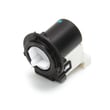
If your WM2050CW starts draining slowly, making a humming/gurgling sound at the end of the cycle, or leaving water behind, the drain system is a common place to start. Depending on what you find, a compatible replacement such as the laundry appliance drain pump 4681EA2001T may be needed.
Why it matters
A washer that is kept clean and not overloaded usually avoids the most common early failures (odor buildup, drain restrictions, vibration wear). That is how many owners get closer to 15 years instead of replacing at 10.
Last updated: January 2026
Can I fix an oe error myself?
Yes, in many cases you can fix an OE (drain error) on your LG WM2050CW by safely draining the washer, cleaning the drain pump filter, and checking the drain hose for kinks or clogs. If it still won’t drain, the drain pump or drain hose may need replacement.
What OE means on WM2050CW
OE typically indicates the washer isn’t draining fast enough. On this model, the most common DIY fix is cleaning the drain pump filter behind the lower front access panel. For the exact access and safety notes, use the WM2050CW manual.
DIY steps to clear an OE error
- Unplug the washer (important for safety).
- Put towels down and use a shallow pan; water will come out.
- Open the lower front access panel.
- Pull out the small drain tube, remove the plug, and drain the water completely.
- Unscrew the drain pump filter (counterclockwise), remove lint and debris, then reinstall it snugly.
- Check the standpipe or laundry tub drain for a clog and confirm the drain hose isn’t kinked.
Parts that commonly solve repeat OE errors
If cleaning the filter doesn’t help, these parts are often involved:
| Symptom after cleaning | Most likely area | Example compatible part |
|---|---|---|
| Hums but won’t drain | Drain pump | Laundry appliance drain pump 4681EA2001T |
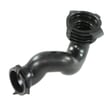
| Drains slowly, hose damaged/kinked | Drain path | Washer drain hose 5215ER2002G |
Why it matters
A washer that can’t drain can stop mid-cycle, leave clothes soaking wet, and strain the drain pump. Clearing the filter and drain path early helps prevent repeat OE errors and reduces the chance of a no-drain situation.
Last updated: January 2026
What is the capacity of the wm2050cw?
The LG WM2050CW washer has a 4.0 cu. ft. capacity. This is the approximate drum volume and helps you estimate load size, detergent amount (HE), and whether bulky items like comforters will fit comfortably (without overpacking). See the WM2050CW manual for load and use guidelines.
What “4.0 cu. ft.” means for everyday loads
A 4.0 cu. ft. front-load washer like the WM2050CW is typically considered large capacity.
- Handles most family-size mixed loads in one cycle
- Works well for towels, jeans, and bedding (depending on thickness)
- Needs HE (high-efficiency) detergent to prevent oversudsing
- Cleans best when the drum is not tightly packed
- Load size sensing may adjust cycle time based on weight
Quick load guidance (practical, not exact)
Use this as a simple starting point for the WM2050CW:
| Load type | Typical fit in 4.0 cu. ft. | Tip |
|---|---|---|
| Everyday mixed load | Yes | Leave space at the top for tumbling |
| Towels | Yes | Avoid packing tightly to reduce vibration |
| Queen comforter (varies by fill) | Often | If it strains the door to close, reduce the load |
| Small rugs | Sometimes | Wash rugs only if labeled machine-washable |
Why it matters
Capacity affects cleaning and reliability. Overloading can lead to poor rinsing, excess vibration, longer cycle times, and draining issues. If the washer struggles to drain after heavy loads, checking the drain path and pump components can help, including the laundry appliance drain pump 4681EA2001T if a replacement is needed.
Last updated: January 2026
What are the common errors on an LG washing machine?
On the LG WM2050CW washer, common error codes typically point to a few problem areas: draining, filling, door lock, load balance, or motor/control protection. Use the exact code shown on the display and follow the steps in the WM2050CW manual before replacing any parts.
Common LG washer error categories (what they usually indicate)
- Drain related: water drains slowly or not at all; often a clogged drain pump filter, kinked drain hose, or a weak drain pump.
- Fill related: washer fills slowly or not at all; often closed water taps, kinked inlet hoses, or clogged inlet screens.
- Door lock related: door won’t lock or unlock; the washer may still have a high water level or the lock mechanism may be failing.
- Out-of-balance related: load is too small or uneven; the washer may pause and try to rebalance.
- Motor/control protection: the washer may stop to protect the motor after overheating or a detected fault.
Quick checks we recommend first
- Unplug the washer for 1 minute, then restore power and retry.
- Confirm both water supply valves are fully open.
- Check hoses for kinks or pinches (inlet and drain).
- Use HE detergent and reduce the amount if you see oversudsing.
- Redistribute the load; avoid washing one heavy item by itself.
Parts that often relate to these error types on WM2050CW
If troubleshooting points to a failed component, these model-compatible parts are commonly involved:
| Error type | What to inspect first | Example compatible part |
|---|---|---|
| Drain problem | Drain pump filter, drain hose routing | Laundry appliance drain pump 4681EA2001T |
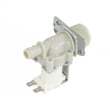
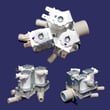
| Fill problem | Water taps, inlet hose screens | Washer water inlet valve 5221ER1003A |
| Door lock problem | Door latch alignment, lock mechanism | Washer door lock switch EBF49827801 |
Why it matters
Matching the exact error code to the right checks helps prevent unnecessary part replacement. Many WM2050CW error conditions are caused by clogs, hose routing, oversudsing, or load balance issues rather than a failed control.
Last updated: January 2026