Owner’s manual



What is the most common problem with LG dryers?
For LG dryers like model DLG7301WE, the most common customer complaint is long dry times or “not drying” caused by restricted airflow (lint buildup or a clogged vent). The next most common issue is noise (rumbling, thumping, squealing) from normal wear in drum support parts.
Most common issues we see (and what to check first)
- Long dry times / weak heat: Clean the lint screen every load and confirm strong airflow at the outside vent.
- Flow Sense indicator or duct restriction symptoms: Run the installation duct check described in the DLG7301WE manual.
- Rumbling or thumping: Inspect drum support rollers for flat spots or wear.
- Squealing: Check the idler pulley for a worn bearing.
- Sensor dry shuts off too soon or leaves damp spots: Clean the moisture sensor bars and check the sensor circuit.
Parts that commonly solve these problems on DLG7301WE
If airflow is good and the dryer still performs poorly or makes noise, these model-compatible parts are common suspects:
| Symptom | Likely area | Example model-compatible part |
|---|---|---|
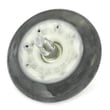
| Rumbling/thumping | Drum support | Dryer drum support roller 4581EL2002L |
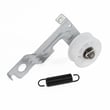
| Squealing | Belt tension system | LG dryer idler pulley 4561EL3002A |
| Poor sensor drying | Moisture sensing | Dryer moisture sensor 6500EL3001A |
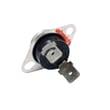
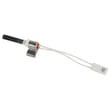
| Overheating or temp errors | Temperature sensing | Dryer thermistor AGM30045804 |
Why it matters
Restricted venting and lint buildup can make an LG dryer run longer, waste energy, and overheat. Catching airflow problems early also helps protect key components like the blower wheel, thermostats, and sensors.
Helpful next step
For display messages and troubleshooting paths that match LG dryers, use our LG dryer error codes guide.
Last updated: January 2026
Why does an LG sensor dry dryer take so long to dry?
On the LG DLG7301WE, long Sensor Dry times almost always happen when airflow is restricted (lint screen or venting) or when the moisture-sensing system cannot “read” the load correctly. The dryer will keep extending the cycle to protect fabrics and reach the selected dryness level; see the airflow and Sensor Dry details in the DLG7301WE manual.
Quick checks that fix most long dry times
- Clean the lint screen before every load; if it is coated with fabric softener residue, wash and fully dry it.
- Check the outside vent hood while the dryer runs; you should feel strong, steady airflow.
- Inspect the vent run behind the dryer for kinks, crushing, or excessive length and elbows.
- Avoid overloading; clothes need room to tumble so sensors and airflow work correctly.
- Do not mix very heavy items (towels) with lightweight items; the sensor can be “fooled.”
- Turn off Energy Saver (if enabled) when you need faster drying on Normal.
When it is likely a part or sensor issue
If airflow is good and loads are sorted correctly, the Sensor Dry system may be getting inaccurate moisture readings or the dryer may be cycling heat incorrectly.
Common model-relevant suspects include:
- Moisture sensor bars or wiring issues: consider the dryer moisture sensor 6500EL3001A and the dryer moisture sensor wire harness 6631EL3003B.
- Temperature sensing problems that affect cycle logic: the dryer thermistor AGM30045804.
- Weak airflow inside the cabinet (even with a clear vent): a damaged blower wheel such as the dryer blower wheel 5835EL1002A.
Symptoms and what they usually point to
| What you notice | Most common cause | What to do first |
|---|---|---|
| Cycle time keeps increasing | Restricted venting or sensor not detecting dryness | Check vent airflow, then clean sensor bars |
| Clothes are warm but still damp | Poor airflow or overloaded drum | Reduce load size, inspect vent run |
| Dryer runs a long time with low heat early in cycle | Energy Saver enabled | Disable Energy Saver for that load |
Why it matters
Sensor Dry depends on proper exhaust airflow and accurate moisture/temperature feedback. When either is off, the LG DLG7301WE will extend run time, waste energy, and can leave bulky loads (towels, bedding) unevenly dried.
For deeper troubleshooting steps and error-code guidance, we recommend LG dryer error codes along with the dryer takes a long time to dry guide.
Last updated: January 2026
How to reset an LG sensor dry dryer?
To reset Sensor Dry behavior on your LG DLG7301WE dryer, we recommend a simple power reset (turn it off, unplug for 60 seconds, then restore power) and cleaning the moisture sensor bars. If drying is still off, run the built-in duct check and look for error codes.
Quick reset steps (DLG7301WE)
- Press POWER to turn the dryer off.
- Unplug the dryer (or switch the breaker off) for 60 seconds.
- Restore power and start a Sensor Dry cycle.
- Watch the time remaining; Sensor Dry time can change as the dryer recalculates.
For control panel functions and Sensor Dry details, use the DLG7301WE owner's manual.
Clean the moisture sensor (most common Sensor Dry fix)
Residue from dryer sheets or fabric softener can coat the sensor bars and cause early shutoff or poor drying.
- Turn the dryer off and let the drum cool.
- Find the two metal sensor bars inside the drum near the lint filter housing.
- Wipe the bars with rubbing alcohol on a soft cloth.
- Run a small test load on Sensor Dry.
If the sensor is damaged or readings are erratic, the compatible replacement is the dryer moisture sensor 6500EL3001A.
Run the Flow Sense duct check
Restricted venting is a top cause of long dry times on Sensor Dry cycles.
- Empty the drum.
- Press and hold POWER + Temp. + Signal until the display changes.
- Press START/PAUSE; the test runs about 2 minutes.
Common results
| What you see | What it usually means | Next step |
|---|---|---|
| No bars | Venting OK | Re-test Sensor Dry |
| Multiple bars | Vent restriction | Clean/repair venting |
| HS code | Humidity sensing problem | Check sensor and wiring |
Why it matters
Sensor Dry depends on accurate moisture sensing and strong airflow. A dirty sensor or restricted exhaust can cause underdrying, longer cycles, and extra wear on components.
Last updated: January 2026
Why is my LG sensor dry dryer not drying?
If your LG DLG7301WE dryer is not drying well on Sensor Dry, the most common causes are restricted airflow (lint screen or venting), a load that confuses the moisture-sensing system, or a failed moisture-sensing component. Start with airflow and sensor cleaning first.
Quick checks for Sensor Dry on DLG7301WE
- Clean the lint screen before every load; residue from dryer sheets can block airflow.
- Confirm strong airflow at the outside vent hood while the dryer is running.
- Avoid overloading; tightly packed loads dry slowly and can end early.
- Avoid underloading on Sensor Dry; very small loads can shut off too soon.
- Wipe the moisture sensor bars inside the drum with rubbing alcohol to remove waxy buildup.
Airflow is the #1 reason Sensor Dry under-dries
DLG7301WE relies on steady exhaust airflow to remove moisture. If the exhaust duct is crushed, too long, or clogged with lint, drying time increases and Sensor Dry can stop before clothes are actually dry.
| What you notice | Likely cause | What to do next |
|---|---|---|
| Clothes still damp, cycle ends “normally” | Vent restriction or small/mixed load | Clear venting; try Time Dry for small loads |
| Drying takes much longer than usual | Lint buildup in duct or vent hood | Inspect and clean the full vent run |
| Dryer runs but heat feels weak | Airflow restriction or temperature control issue | Check venting first; then check heat controls |
For the built-in duct check (Flow Sense) and venting guidance that applies to this LG dryer platform, use the procedures in the DLG7301WE use and care manual.
When a part is likely involved
If airflow is good and Sensor Dry still ends early, the moisture sensing circuit may not be reading correctly.
Parts that commonly affect Sensor Dry performance on this model include:
- Dryer moisture sensor 6500EL3001A (senses remaining moisture to control Sensor Dry)
- Dryer moisture sensor wire harness 6631EL3003B (connects the sensor to the control)
- Dryer thermistor AGM30045804 (helps the control monitor temperature)
Why it matters
Sensor Dry depends on accurate moisture readings and steady airflow. When either one is off, the dryer can stop too soon, waste energy with repeat cycles, and increase wear on fabrics.
Last updated: January 2026