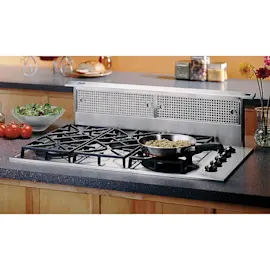
Installation guide
 Owner’s manual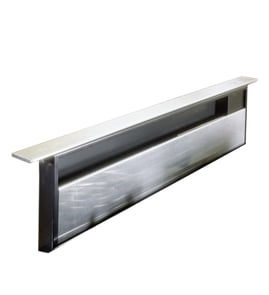

What are the cons of a downdraft range?
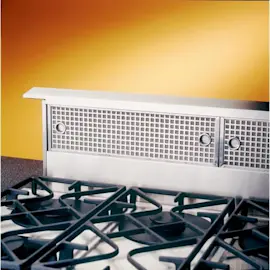
Downdraft ventilation (like the Dacor ERV3015 raised vent system) trades a clean sightline for performance and space. The biggest downsides are weaker capture of smoke and steam from tall pots and high-heat cooking, plus more complicated ducting and reduced cabinet access below the cooktop.
Common downsides you will notice
- Less effective at capturing rising heat and smoke than an overhead hood, especially with tall cookware.
- More installation complexity; duct routing and blower selection matter for performance.
- Cabinet space and access limits; you often need removable drawers or shelves for service access.
- Potential interference issues; the vent cap must not catch on the back edge of the cooktop/range when lowering.
- More parts to maintain (blower, wiring, duct joints) compared with a simple hood.
Installation and ducting drawbacks (ERV3015-SPECIFIC)
The ERV3015 system is designed to be used with a single approved Dacor blower (cabinet, remote, or in-line). Ductwork layout and materials are critical; the installation guidance calls for metal ductwork and securely taped joints to reduce leakage and improve efficiency. For exact clearances, cutout planning, and duct layout examples, use the installation guide.
Quick comparison
| Topic | Downdraft vent (ERV3015 style) | Overhead hood |
|---|---|---|
| Smoke capture | Best for light to moderate cooking | Best for heavy smoke and high heat |
| Space impact | Uses cabinet space below | Uses space above the cooktop |
| Install complexity | Higher (duct run, blower wiring) | Often simpler (varies by kitchen) |
| Service access | Requires access panels/removable storage | Usually accessible from above |
Why it matters
Ventilation performance affects indoor air quality, lingering odors, and grease buildup. With downdraft systems, the duct run length, elbows, and blower setup can make the difference between “works fine” and “always smoky.”
Last updated: February 2026
Which is better, downdraft or updraft?
For kitchen ventilation, an updraft (overhead hood) is usually better at capturing smoke and heat because it pulls rising air naturally; a downdraft like the Dacor ERV3015 is best when you cannot install an overhead hood or want a clear sightline. The “better” choice depends on your cooktop setup, ducting options, and capture needs.
Quick comparison for kitchens
| Feature | Updraft (overhead hood) | Downdraft (like ERV3015) |
|---|---|---|
| Capture of heat and smoke | Strong (works with natural rise) | More sensitive to cross drafts and tall pots |
| Best use case | Most kitchens | Island or design constraints, no hood option |
| Ducting | Often straightforward | Can be more complex; elbows and transitions matter |
| Visual impact | Visible hood | Hidden until raised |
What matters most for the ERV3015 downdraft
The ERV3015 is a raised vent system that must be paired with an approved Dacor blower and ducted correctly to perform well. Installation details like duct material, turns, and transitions have a big impact on how well a downdraft captures cooking effluent.
Key performance factors we focus on:
- Ducting to the outdoors (do not exhaust into walls, ceilings, attics, crawl spaces, or garages).
- Use only metal ductwork for fire safety.
- Minimize elbows and transitions; fewer sharp turns improves airflow.
- Avoid flexible metal duct; it restricts airflow.
- Do not add multiple blowers to “boost” performance; mismatched airflow can reduce draw.
For the exact approved blower configurations and duct routing guidance for ERV3015, use the installation guide.
When a downdraft is the better choice
A downdraft is the better fit when:
- You cannot vent an overhead hood (cabinet, window, or ceiling limitations).
- You want an unobstructed view across an island cooktop.
- You are using an approved cooktop and blower combination designed for the raised vent.
Why it matters
Ventilation is about capture, not just airflow. Updraft systems capture rising heat and smoke more naturally; downdrafts rely heavily on correct duct design and proper installation to pull contaminants down and out efficiently.
Last updated: February 2026
How does a downdraft ventilation system work?
A downdraft ventilation system like the Dacor ERV3015 pulls cooking smoke, steam, and odors downward across the cooktop surface into an intake, then moves that air through ductwork to an approved exhaust path (or through a configured system) using a compatible blower. See the installation guide for approved configurations.
What’s happening inside the system
Downdraft vents work by creating airflow at the cooking surface, then directing it into a duct path. On the ERV3015 raised vent, you typically:
- Press the power switch to raise the vent to the operating position
- The vent begins drawing air once it is up
- Adjust airflow using the variable speed control
- Lower the vent when finished
Ducting and blower basics (what makes it actually move air)
Air movement depends on correct ducting and using the right blower setup.
- The raised vent can be configured to exhaust through the back or bottom with certain blower series
- Use only metal ductwork to reduce fire risk
- Tape all duct joints securely to prevent smoke or odors from leaking back into the home
- Do not install more than one blower to extend duct length; mismatched airflow can reduce draw
- Cross-drafts (open windows, HVAC outlets, ceiling fans) can reduce capture efficiency
Quick comparison: downdraft vs. overhead hood
| Feature | Downdraft vent (ERV3015 style) | Overhead hood |
|---|---|---|
| Airflow direction | Pulls air downward | Pulls air upward |
| Best at capturing | Light to moderate smoke near intake | Smoke and heat that naturally rises |
| Sensitive to drafts | More sensitive | Less sensitive |
Why it matters
Downdraft systems rely on airflow at the surface, so installation choices (blower selection, duct routing, sealed joints, and avoiding drafts) directly affect how well smoke and odors are captured during cooking.
Last updated: February 2026
Are downdraft hoods any good?
Yes; a downdraft system like the Dacor ERV3015 is a solid choice when you cannot use an overhead hood (especially on island cooktops). It captures steam and odors close to the cooking surface, but it is typically less effective than an overhead hood for heavy smoke or high-heat searing because heat naturally rises.
What “good performance” looks like on a downdraft
Downdraft performance depends more on installation and ducting than most people expect. For the ERV3015, the installation guide emphasizes using an approved blower and proper ductwork to prevent backdrafting and poor venting.
- Use a Dacor approved cabinet, remote, or in-line blower for the vent system
- Keep duct runs as short and straight as possible
- Reduce sharp turns; two 45° elbows beat one 90° elbow
- Use round duct when possible (especially if elbows are needed)
- Avoid flexible metal duct
- Plan for cross-drafts (open windows, HVAC vents, ceiling fans) that can reduce capture
Installation choices that make the biggest difference
The ERV3015 is designed to be installed with service access in mind, and the duct layout directly affects how well it pulls smoke and odors.
| Factor | Better choice | Why it helps |
|---|---|---|
| Duct shape | Round duct | Less resistance, better airflow |
| Elbows/turns | Fewer turns; prefer 45° | Less pressure loss |
| Duct length | Shorter equivalent length | Maintains suction at the intake |
| Drafts in kitchen | Minimize cross-drafts | Keeps smoke moving toward the vent |
When a downdraft is a great fit (and when it is not)
- Great fit: light to moderate everyday cooking, simmering, boiling, low smoke grilling
- Not ideal: frequent wok cooking, high-heat searing, heavy smoke, lots of grease-laden vapor
Why it matters
A downdraft can work very well in the right kitchen, but it is less forgiving than an overhead hood. If the blower is not approved or the ductwork is restrictive, you can get backdrafting and noticeably weaker smoke and fume removal.
For model-specific layout, clearances, and duct planning details, follow the installation guide.
Last updated: February 2026