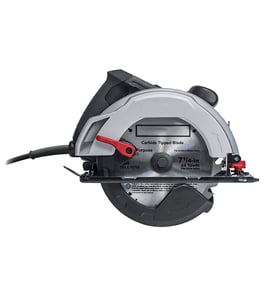

Is a 5 1/2 circular saw worth it?
Yes, a 5 1/2-inch circular saw is worth it when you want a lighter, easier-to-handle saw for common DIY cuts. For a Skil 5510 heavy-duty circular saw, the “worth it” decision comes down to whether you prioritize portability and quick cuts over maximum depth and all-day ripping power.
What a 5 1/2-inch saw does best
- Crosscuts in 1x lumber and trim
- Breaking down thin sheet goods (with a straightedge guide)
- Quick punch-list work where a full-size saw feels bulky
- Overhead or awkward-position cuts where weight matters
Where it can feel limiting
A smaller blade means less cutting depth and less margin for thick material.
| Task | 5 1/2-inch saw | 7 1/4-inch saw |
|---|---|---|
| Portability | Excellent | Moderate |
| Max cut depth | Lower | Higher |
| Best for | Light to medium DIY | Framing, thicker stock |
| Blade availability | Good | Best |
How we recommend deciding
- If you mostly cut 1x and 2x material: a 5 1/2-inch saw is a practical choice.
- If you regularly cut thicker stock or need deeper bevel cuts: a larger blade size is the better long-term fit.
- If you already own a bigger saw: a 5 1/2-inch model can be a great “grab-and-go” second saw.
Why it matters
Choosing the right blade size helps you avoid stalled cuts, excessive motor strain, and repeated passes. That means cleaner results, safer control, and less wear on key components like the motor, switch, and cord.
For model identification and matching the right replacement parts to your exact saw version, use how to find your appliance model number (and what it means for parts).
Last updated: February 2026
Is a 5510 a circular saw?
Yes. The Skil model 5510 is a heavy-duty circular saw, so it is a circular saw. People also commonly say “Skil saw” when they mean a handheld circular saw in general, but for parts and repairs, matching the exact model number matters.
How to confirm you have the right model
Use the model number on the saw’s data label to match parts correctly.
- Look for 5510 on the nameplate or label on the saw housing
- Check near the motor housing, handle, or base/shoe area
- Match the full model exactly (for this page, it is Skil 5510)
- If your label includes a “type” (example: TYPE 1), match that too
Helpful reference: how to find your appliance model number (and what it means for parts)
Why “Skil saw” and “circular saw” get mixed up
“Skil saw” is often used as a generic term for a portable circular saw, similar to how some people say “Shop-Vac” for any wet/dry vacuum. The tool type is still a circular saw; “Skil” is the brand.
What this affects when you’re buying parts
Even if two saws look similar, parts can differ by model and type (guard parts, base/shoe, arbor hardware, brushes, switches).
| What you know | What it tells us | Why it matters |
|---|---|---|
| Model: 5510 | It is a Skil circular saw | Confirms the correct parts list family |
| Type: 1 | Specific version of the model | Prevents ordering mismatched components |
| Symptom (won’t start, binds, sparks) | Points to likely parts (switch, cord, brushes, bearings) | Speeds up troubleshooting |
Why it matters
Using the exact Skil 5510 TYPE 1 identification helps us match the correct power tool parts so the saw runs safely and the blade guard, base alignment, and electrical components fit as designed.
Last updated: February 2026
How to use a circular saw for beginners part 1?
To use your Skil 5510 heavy-duty circular saw as a beginner, start with safe setup: mark the cut, clamp the work, install the right blade, then set blade depth so only about one tooth length extends below the material. Confirm bevel and cord routing before cutting.
Step-by-step setup (before you cut)
- Measure and mark the cut line; use a straightedge for long rip cuts.
- Support the board on sawhorses or a bench so the cut-off piece can fall away without pinching.
- Clamp the workpiece so it cannot shift.
- Install the correct blade for the material (wood, plywood, framing lumber); tighten the arbor nut securely.
- Set blade depth to the minimum needed: about one tooth length below the material.
- Set bevel angle to 0° for straight cuts; lock the bevel adjustment.
Making the first cut (basic technique)
- Start the saw with the blade clear of the material, then let it reach full speed.
- Keep the shoe flat on the work and guide steadily along the line.
- Maintain a firm two-hand grip; do not force the saw.
- Let the blade stop completely before setting the saw down.
Blade depth guide (quick reference)
| Material thickness | Depth setting target | Why it matters |
|---|---|---|
| 1/2 in. sheet goods | One tooth length below | Cleaner cut, less exposed blade |
| 3/4 in. plywood | One tooth length below | Reduces splintering and binding |
| 2x lumber | One tooth length below | Helps control and reduces kickback risk |
Why it matters
Most beginner issues (kickback, burning, rough edges) come from poor support or too much blade exposed. Setting depth to about one tooth length improves control and cut quality on the Skil 5510.
For general DIY safety habits that also apply to power tools, review are diy appliance repairs safe.
Last updated: February 2026
