Owner’s manual
 View engine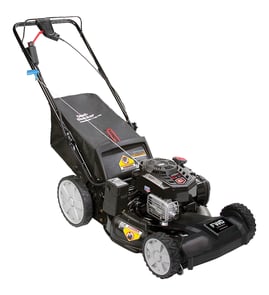

Should I use 87 or 89 gas for lawn mower?
For the Craftsman 917388620 gas walk-behind lawn mower, we use fresh, clean, regular unleaded gasoline with a minimum of 87 octane. Using 89 octane does not improve performance in this mower; the key is clean fuel and proper storage (see the 917388620 owner's manual).
What to use (and what to avoid)
- Use regular unleaded gasoline, 87 octane minimum.
- Do not mix oil with gasoline.
- Buy only what you can use within 30 days to keep fuel fresh.
- Avoid long storage with ethanol-blended fuel sitting in the tank; moisture can cause fuel separation and fuel-system damage.
- Never use fuel-tank additives marketed as “carburetor cleaner” as a substitute for proper draining and storage.
Quick comparison: 87 vs 89 for this mower
| Fuel choice | Works in Craftsman 917388620? | What you gain | Best use case |
|---|---|---|---|
| 87 octane (regular) | Yes (recommended) | Correct combustion for this engine | Everyday mowing |
| 89 octane (mid-grade) | Yes | No measurable benefit | Only if 87 is unavailable |
Fuel freshness and storage checklist
- If the mower will sit 30 days or longer, drain the gas tank.
- Start the engine and let it run until the fuel lines and carburetor are empty.
- Store the mower in a dry area; let the engine cool before storing.
- Keep gasoline containers clean and rust-free to prevent dirt or rust from entering the tank.
Why it matters
Using the correct octane (87 minimum) prevents hard starting and poor running, but fuel condition matters more than octane. Fresh gasoline and proper off-season storage help protect the carburetor and fuel system, which are common causes of “won’t start” problems.
You can also stock common hardware used during maintenance and repairs, such as the lock nut 532409149, and search additional parts by model number on Sears PartsDirect.
Last updated: February 2026
How much does it cost to repair a hydrostatic transmission on a lawn mower?
Hydrostatic transmission repairs are typically a riding-mower cost; your Craftsman 917388620 gas walk-behind mower normally uses a belt-driven self-propel system instead of a hydrostatic transmission. For hydrostatic riding mowers, repair costs commonly range from a few hundred dollars for diagnosis and minor fixes to $1,300 to $2,500 for a full transmission replacement.
What this means for Craftsman 917388620
On this model, “won’t move” or weak drive symptoms are usually caused by the belt, cable, or drive hardware, not a hydrostatic unit. Start with the drive system checks and adjustments in the owner's manual.
- Inspect the drive belt for glazing, cracking, or stretching
- Check the self-propel control cable for slack, kinks, or binding
- Look for debris packed under the drive cover and around pulleys
- Verify fasteners are tight and brackets are not bent
- Confirm the wheels spin freely and the height adjusters are even
Common parts that affect drive on this mower
If your mower is slipping, surging forward, or not pulling consistently, these model-matched parts are common suspects:
| Symptom | Most likely area | Example part for this model |
|---|---|---|
| Mower won’t move | Drive belt worn or off pulleys | Belt, 21-in 532406712 |
| Drive engages late or not at all | Cable out of adjustment or stretched | Control cable 532168552 |
| Handle control feels loose | Control linkage/handle hardware | Lawn mower control bar 532131696 |
Why it matters
Hydrostatic transmission replacement pricing can sound alarming, but it usually does not apply to walk-behind mowers like the Craftsman 917388620. Focusing on the belt-and-cable drive system saves time and helps you buy only the parts you need.
If you need to order parts, use the parts list for model 917388620 or search by model number on Sears PartsDirect.
Last updated: February 2026
What are the common problems with Craftsman lawn mowers?
Common problems on the Craftsman 917388620 gas walk-behind lawn mower include no-start conditions (stale fuel, dirty air filter, disconnected spark plug wire, bad spark plug), loss of power from grass buildup under the deck, and excessive vibration from a worn or loose blade or a damaged blade adapter. See the 917388620 owner's manual for the troubleshooting chart and safety notes.
Most common symptoms and what usually causes them
- Engine will not start: dirty air filter, out of fuel, stale fuel, water in fuel, spark plug wire disconnected, bad spark plug, or the control bar not held in the run position
- Starts then runs poorly or loses power: heavy grass load, cutting too much at once, dirty air filter, or grass and debris packed under the mower housing
- Poor cut or uneven cut: uneven wheel height settings, dull or bent blade, or deck packed with clippings
- Excessive vibration: worn, bent, or loose blade; loose or broken blade adapter
- Self-propelled drive issues (won’t move or slips): stretched or worn drive belt, misadjusted or damaged drive cable
Quick checks we recommend (fast, safe, and high-impact)
- Fresh fuel first: drain old gas and refill with fresh fuel; do not store gasoline from one season to the next.
- Inspect and clean the deck underside: remove packed grass and leaves (disconnect the spark plug wire first).
- Check the blade and blade mounting: tighten hardware and replace damaged parts.
- Check the control bar and cable action: the engine must be allowed to run only when the control bar is held.
- Look for drive wear (self-propelled models): inspect the drive belt and cable routing.
Parts that commonly solve these problems
| Symptom | Part that often fixes it | What it affects |
|---|---|---|
| Excessive vibration, blade won’t stay tight | Lawn mower blade adapter 581547901 | Keeps the blade centered and secured |
| Self-propelled won’t move or slips | Belt, 21-in 532406712 | Transfers power to the drive system |
| Drive engagement feels wrong | Control cable 532168552 | Controls drive or operator control linkage |
Why it matters
These issues are more than convenience problems. A loose blade or damaged adapter can cause severe vibration and unsafe operation, and grass buildup under the deck can drag the blade, reduce cut quality, and overload the engine.
For replacement parts for model 917388620, use the parts list for this model or search by model number on Sears PartsDirect.
Last updated: February 2026
Is it cheaper to repair or replace a lawn mower?
For a Craftsman gas walk-behind mower like model 917388620, it’s cheaper to repair when the problem is a normal wear item (blade, belt, cable) or a simple tune-up. Replacement makes more sense when the engine or drive system has major damage and repair costs approach about half the price of a comparable new mower.
A practical repair vs. replace checklist
We use these quick checks to decide:
- Repair if the mower starts and runs, but has a performance issue (poor cut, slipping self-propel, hard pull, minor vibration).
- Repair if the fix is a common wear part (belt, control cable, blade adapter, fasteners).
- Replace if the engine has severe internal damage (knock, seized, heavy smoke) or the deck is badly rusted/cracked.
- Replace if multiple big-ticket issues stack up at once (engine + drive + deck).
- Repair if you can do the work yourself and parts are readily available.
Typical costs and what they usually mean
These ranges help set expectations for walk-behind mowers.
| Issue type | Common examples | Usual decision |
|---|---|---|
| Basic maintenance | Spark plug, air filter, oil change, blade service | Repair |
| Wear parts | Belt, control cable, blade adapter, hardware | Repair |
| Major mechanical | Engine internal failure, crankshaft damage, extensive deck damage | Replace |
Model-specific details that affect the decision
Your 917388620 owner information calls out several expendable items that wear during normal use (blades, blade adapters, belts, air cleaners, spark plug). Those are usually the most cost-effective repairs because they restore performance without major teardown. For specs like blade bolt torque (35 to 40 ft. lbs.) and fuel and oil capacities, follow the 917388620 owner's manual.
Parts that commonly make repair worthwhile
If the mower won’t propel or control feel is off, these are examples of repairable items we often see replaced:
- Self-propel drive belt: belt, 21-in 532406712
- Operator control cable: control cable 532168552
- Blade mounting interface: lawn mower blade adapter 581547901
Why it matters
Repairing a mower that only needs maintenance parts keeps your cutting height, handling, and familiar controls, and it avoids the cost of replacing a full machine. Replacing a mower with major engine or deck damage prevents repeat breakdowns and ongoing parts and labor costs.
If you’re pricing out parts for your 917388620, start with the parts list for this model, or search by model number on Sears PartsDirect.
Last updated: February 2026
Why is my self-propelled lawn mower pulling to one side?
Your Craftsman 917388620 self-propelled mower pulls to one side when one wheel has more drag or less traction than the other, or when the drive system engages unevenly. Start with wheel height and wheel drag checks, then inspect the drive belt and cable per the 917388620 owner's manual.
Quick checks (fastest fixes first)
- Set both height adjusters to the same notch (front and rear).
- With the engine off, spin each rear wheel; one should not feel tighter.
- Remove packed grass and debris around wheels, axles, and under the deck.
- Check tire condition and inflation; uneven tires steer the mower.
- Test on a flat surface; slopes and ruts naturally make a mower drift.
Drive system items that cause veering
If it only pulls when self-propel is engaged, focus on the drive components.
| What you notice | Most likely area to check | What to do next |
|---|---|---|
| Pulls only under power | Drive belt slipping or uneven engagement | Inspect belt for glazing, cracks, looseness; replace if worn |
| Pulls even when pushed | Wheel alignment or dragging wheel | Check wheel bracket, axle, and wheel for binding |
| Drive feels grabby or inconsistent | Control cable out of adjustment or sticking | Inspect cable routing and movement; adjust per manual |
Model-related parts to consider
- Belt, 21-in 532406712 (worn belt can slip and surge)
- Control cable 532168552 (sticking or misadjusted cable affects engagement)
- Wheel bracket 532407494 (bent bracket can make a wheel track crooked)
Why it matters
A mower that veers increases fatigue and can lead to uneven cutting and extra wear on the drive belt, wheels, and brackets.
Safety basics before inspecting
- Shut the engine off and wait for moving parts to stop.
- Disconnect the spark plug wire before working near the blade or belt.
- If you tip the mower, keep the air filter and carburetor facing up.
You can order replacement parts from the parts list for model 917388620, or search by model number on Sears PartsDirect.
Last updated: February 2026