Owner’s manual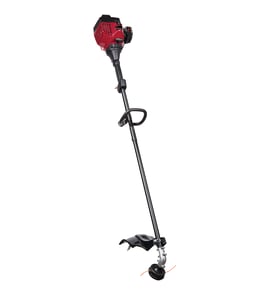




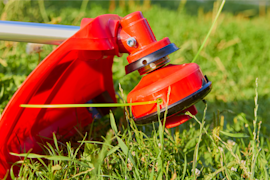
Which is better, .080 or .095 trimmer line?
For your Craftsman 358796160 gas line trimmer, neither .080 nor .095 is automatically “better”; the best choice is the thickest line your cutting head is designed to feed reliably. Thicker line (.095) lasts longer in heavy weeds and light brush, while thinner line (.080) spins easier and is better for grass and edging (with less load on the engine). See the line selection and line-glide-plate guidance in the 358796160 owner's manual.
- Choose .080 for light trimming, edging, and routine grass.
- Choose .095 for thicker weeds, fence lines, and light brush.
- If the head won’t feed smoothly or the engine bogs down, step down in diameter.
- If the line breaks constantly, step up in diameter (within what the head supports).
- Match line type to the job: many trimmer lines are sold as “grass” vs “brush” blends.
Our manual for the 358796160 calls out choosing the line size “best suited for the job at hand” and shows that the cutting head uses a line glide plate with different hole positions depending on line diameter. That means correct line diameter and correct hole selection work together for reliable feeding and less head wear.
- Use the proper holes indicated for your line diameter.
- Reinstall the line glide plate before inserting new line.
- For trimming or scalping, use less than full throttle to increase line life.
| Feature | .080 line | .095 line |
|---|---|---|
| Best for | Grass, edging | Heavy weeds, light brush |
| Engine load | Lower | Higher |
| Line life | Shorter | Longer |
| Feed reliability | Often easier | Can be harder if head is not sized for it |
Using too-thick line can reduce RPM, increase vibration, and cause poor feeding; using too-thin line can snap quickly and make you “crowd” the line into the work area, which increases wear on the trimmer head. Matching diameter to the job keeps cutting efficient and protects the head and drive components.
Last updated: February 2026
What is the lifespan of a line trimmer?
A gas line trimmer like the Craftsman 358796160 typically lasts 8 to 12 years with normal homeowner use and routine maintenance. In heavy, frequent use (hundreds of hours), lifespan is measured more by engine hours and upkeep than by calendar years; follow the maintenance schedule in the 358796160 owner's manual.
- Homeowner use: 8 to 12 years (about 5 to 10 hours per year is common)
- Heavy property use: 3 to 7 years (more run time, more wear)
- Commercial-style use: 900 to 1,200+ hours with strong maintenance habits
- Engine emissions durability labels: often reference 50, 125, or 300 hours of certified emissions compliance (not the same as total tool life)
The biggest drivers are fuel quality, air filtration, and how hard the cutting head is worked.
- Old fuel or incorrect fuel mix (varnish in carburetor, hard starting)
- Dirty or damaged air filter (dust ingestion accelerates engine wear)
- Running at full throttle constantly when light trimming would do
- Cutting around rocks, gravel, and fence wire (head and shaft wear)
- Skipping routine checks (loose fasteners, worn parts)
Use the schedule in your manual as the baseline; it calls out routine checks and periodic service items.
- Check for loose fasteners and damaged or worn parts before use
- Keep the unit clean; clear debris from cooling areas
- Service the air filter on schedule (replace if it will not clean up)
- Inspect muffler and spark arresting screen
- Replace the spark plug and fuel filter at the recommended intervals
| Maintenance task | Helps prevent | What you notice when overdue |
|---|---|---|
| Air filter service | Premature engine wear | Runs rough, lacks power |
| Fuel system upkeep | Carburetor clogging | Hard starting, stalling |
| Cutting technique (avoid crowding line) | Head and driveline wear | Excess vibration, poor cutting |
| Fastener checks | Damage from looseness | Rattling, parts shifting |
A trimmer that is maintained and used with the right cutting technique (tip of the line does the work, avoid crowding the line into hard objects) runs cooler, vibrates less, and puts less load on the driveline and engine. That directly translates into more seasons of reliable starts and consistent cutting.
Last updated: February 2026
How to replace a line trimmer head?
On the Craftsman 358796160 gas line trimmer, “replacing the head” usually means removing the trimmer attachment from the coupler (or servicing the cutting head for new line). For safety, stop the engine and disconnect the spark plug before you remove the attachment or work near the head; follow the steps in the owner's manual.
This model uses a coupler so you can remove the trimmer attachment and install optional attachments.
Steps
- Stop the unit and disconnect the spark plug.
- Set the unit on a flat surface for stability.
- Loosen the coupler knob by turning it counterclockwise.
- Press and hold the locking/release button.
- Pull the attachment straight out of the coupler (do not twist).
- To reinstall, push the attachment in until the button snaps into the primary hole, then tighten the knob clockwise.
Many “head problems” are fixed by cleaning the head and installing new line correctly.
Quick checklist
- Remove old line and the line glide plate.
- Clean the entire cutting head surface.
- Reinstall the line glide plate before inserting new line.
- Insert both ends of line through the correct holes shown on the glide plate.
- Pull line so it seats against the hub and runs through the positioning tunnels.
- Confirm both ends are the same length.
| Symptom | Most likely cause | What to do first |
|---|---|---|
| Line will not feed or breaks fast | Dirty/worn head parts, wrong routing | Clean head; reinstall glide plate; rethread line |
| Excess vibration at the head | Line lengths uneven, debris wrapped | Recut line ends equal; remove wrapped grass |
| Head stops spinning | Drive issue in shaft/gearbox | Inspect shaft and gearbox; replace worn parts |
If the head is not spinning even with the engine running, check the driveline components. On this model, a worn line trimmer flexible drive shaft 530096218 or damaged Craftsman line trimmer gearbox 530096099 is a common mechanical cause.
Correct attachment seating at the coupler and correct line routing reduce head wear, improve cutting performance, and prevent vibration that can damage the gearbox, flexible shaft, and throttle control.
Last updated: February 2026