Owner’s manual
 Error Codes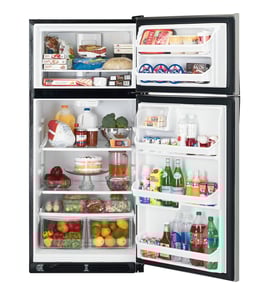



What are the disadvantages of a top mount fridge?
A top-mount (top-freezer) refrigerator like the GE GTS17DTNDRWW is usually affordable and efficient, but the main tradeoff is convenience: fresh-food items sit lower, so you bend more often, and storage features are typically simpler than on bottom-freezer or French-door designs. See the GTS17DTNDRWW owner's manual for model-specific features and setup details.
Common disadvantages (what most owners notice)
- More bending for daily use: the refrigerator section is below the freezer, so produce and drinks are lower.
- Less premium organization: fewer adjustable bins, drawers, and specialty zones compared with many bottom-mount models.
- Harder freezer access for bulky items: the top freezer can feel tighter for large pizza boxes or wide containers.
- Fewer built-in dispenser options: many top-mount models do not include external ice and water dispensing.
- Door-swing and clearance constraints: placement can be trickier in tight kitchens.
Space and installation tradeoffs
Top-mount refrigerators often fit well in smaller spaces, but you still need proper airflow clearance for performance.
| Consideration | What it means for a top-mount fridge |
|---|---|
| Fresh-food access | More bending and reaching down |
| Freezer access | Eye-level, but can be narrower |
| Kitchen fit | Often shallower and easier to place |
| Features | Typically fewer “premium” storage options |
Quick setup checks that reduce frustration
- Level the refrigerator so doors close smoothly.
- Leave recommended air gaps around the cabinet for cooling airflow.
- Avoid overpacking shelves so air can circulate.
- Keep frequently used items at mid-shelf height to reduce bending.
Why it matters
Choosing a top-mount refrigerator is mostly about balancing cost and efficiency against everyday ergonomics. If you open the fresh-food section far more than the freezer, a bottom-freezer layout can feel easier on your back and faster for meal prep.
Last updated: January 2026
Is GE Cafe considered high end?
Yes. GE Café is generally considered a high-end (premium) line within the GE brand, positioned above standard GE appliances with upgraded design, finishes, and feature sets. It’s separate from your GE GTS17DTNDRWW top-freezer refrigerator, which is part of GE’s core refrigerator lineup.
How GE lines typically compare
GE organizes products into different tiers; GE Café and GE Monogram are commonly treated as premium tiers.
- GE (core line): practical features and value-focused designs
- GE Profile: step-up features and styling compared to core GE
- GE Café: premium styling and feature packages (often design-forward)
- GE Monogram: luxury tier with higher-end materials and built-in options
What “high end” usually means in real-world terms
“High end” is mostly about design, features, and price point, not whether an appliance is more repairable.
| Line | Typical positioning | What you usually get |
|---|---|---|
| GE (core) | Standard | Essential features, value pricing |
| GE Profile | Premium step-up | More features, more finish options |
| GE Café | High end | Design-focused, upgraded features |
| GE Monogram | Luxury | Built-in/luxury styling, premium materials |
Why it matters when buying parts or planning repairs
For parts and troubleshooting, the most important detail is the exact model number, not the product line name. GE Café parts are not automatically interchangeable with other GE refrigerators.
- Use the model tag to confirm the exact model number and serial number
- Match parts by model compatibility, not by “Café” branding
- Keep the manual handy for feature and control details
For model-specific identification and support details, use the GTS17DTNDRWW owner’s manual.
Last updated: January 2026
What is the most common problem with GE profile refrigerators?
The most common GE refrigerator complaint is not cooling properly, and the same core causes apply to the GE GTS17DTNDRWW top-mount refrigerator: airflow problems (fan or frost buildup), dirty condenser area, or a control issue. Start with temperature settings and airflow checks in the GTS17DTNDRWW owner's manual.
Most common issues we see (and what they usually point to)
- Not cooling or weak cooling: evaporator fan not running, frost blocking airflow, condenser coils clogged
- Unusual noises: fan blade hitting ice, worn fan motor, loose panels
- Ice maker not working (if equipped): water supply issue, low water pressure, inlet valve problem
- Water leaking: defrost drain restriction, water line connection leak, inlet valve seepage
- Door not sealing: gasket not sealing, door alignment, debris on gasket folds
Quick checks you can do in 10 minutes
- Confirm controls are set correctly and vents are not blocked by food.
- Listen for the evaporator fan in the freezer; if it is silent with the door closed, suspect the fan circuit.
- Check for heavy frost on the freezer back wall (often indicates a defrost problem).
- Inspect the door gasket for gaps, tears, or sticky spots; clean with warm soapy water and dry fully.
- If you have an ice maker, verify the house water supply is on and cold-water pressure is adequate.
Parts that commonly solve “not cooling” and “noise” symptoms
| Symptom | Common area | Example part for GTS17DTNDRWW |
|---|---|---|
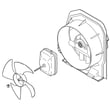
| Warm fridge, freezer OK or noisy airflow | Freezer airflow | GE refrigerator evaporator fan motor WR60X31522 |
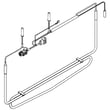
| Frost buildup, warm temps | Defrost system | Refrigerator defrost heater assembly WR55X31113 |
| Temps erratic or dead unit | Controls | Main control board (model-specific selection) |
Why it matters
A GE top-mount like the GTS17DTNDRWW depends on steady airflow from the freezer to the fresh-food section. When airflow is reduced (fan issue, frost, blocked vents), temperatures rise fast and food safety becomes a concern.
Related DIY help
Last updated: January 2026