Owner’s manual


What is the average lifespan of a Kenmore washer?
Most Kenmore residential washers, including model 11031312022, last 10 to 15 years with normal use and basic maintenance. Consistent cleaning, correct detergent use, and fixing small issues early are what most often push a washer toward the high end of that range.
A washer’s life is mainly affected by load size, how often it runs, water quality, and whether it is kept clean and level.
- Overloading strains the drive system and suspension
- Too much detergent leaves residue that can cause odors and poor performance
- Mostly cold-water washing can increase buildup over time
- An unlevel washer vibrates more and wears parts faster
- Ignoring small leaks or slow draining can lead to bigger failures
Our Kenmore top-load washer care guidance focuses on preventing residue and keeping the machine dry between uses.
- Use HE detergent and never exceed the recommended amount
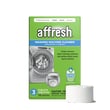
- Run a monthly cleaning routine (about every 30 cycles) using the washer’s cleaning procedure
- Use warm or hot water sometimes to help control detergent and soil buildup
- Leave the lid open between loads so the tub can dry
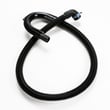
- Inspect hoses regularly; replace inlet hoses about every 5 years
For the model-specific care steps and cleaning procedure, follow the owner's manual.
These symptoms usually mean the washer is wearing out or needs a repair decision.
| Symptom | Common cause | What to check first |
|---|---|---|
| Loud banging or walking | Out of balance or not level | Leveling feet and load size |
| Won’t start or won’t lock | Lid lock or strike issue | Lid lock and lid strike alignment |
| Won’t drain or drains slowly | Drain pump restriction or failure | Drain hose, pump area, coins/debris |
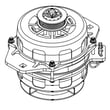
| Weak agitation/spin | Drive or shifting problem | Drive pulley, shift actuator |
A washer that is clean, dry between uses, and properly leveled runs with less vibration and less residue buildup. That reduces stress on key components (motor, pump, lid lock) and helps your Kenmore washer reach its full 10 to 15 year service life.
Last updated: February 2026
How to read Kenmore model numbers?
Kenmore model numbers are structured so the first 3 digits identify the manufacturer behind the Kenmore brand, and the remaining digits narrow down the exact product design and feature set. For your Kenmore washer model 11031312022, that 110 prefix is the key identifier when matching parts and manuals.
Most Kenmore model numbers break down like this:
- Prefix (first 3 digits): manufacturer code (most important for parts compatibility)
- Middle digits: base design or platform (the core washer family)
- Ending digits: engineering revisions, color, or feature variations
| Model number | Prefix | What it’s used for | Why it matters |
|---|---|---|---|
| 11031312022 | 110 | Identifies the manufacturer family | Helps ensure the right parts list and service info |
When you’re ordering parts for Kenmore 11031312022, we match the full model number to the correct parts diagram, then confirm the specific component.
Common examples on this model include:
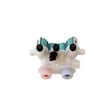
- Washer water inlet valve W11165546 for fill problems or slow/no water
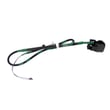
- Lid lock-sol W11700916 for lid lock or won’t start issues
- Pump assembly, drain W11399437 for draining problems
Kenmore numbers can look similar across different washer platforms, but small suffix changes can mean different electrical connectors, mounting points, or control logic. Using the full model number (not just “Kenmore 110 washer”) prevents wrong-part returns and repeat repairs.
- Match the full model number exactly: 11031312022
- Use the parts list that matches your model, not a “close” number
- Cross-check the repair procedure and diagrams in the owner's manual
Last updated: February 2026
How to hard reset kenmore washer?
To hard reset your Kenmore washer model 11031312022, unplug it (or turn off the breaker) for 1 minute, then restore power and start a cycle. This clears many temporary control glitches; it does not change cycle settings permanently.
- Press POWER/CANCEL to stop the current cycle.
- Unplug the washer (or switch the laundry circuit breaker OFF).
- Wait 60 seconds.
- Plug back in (or switch breaker ON).
- Select a normal cycle and press START/PAUSE.
If the control will not respond, do a full stop and drain attempt:
- Press POWER/CANCEL once.
- Wait 30 seconds.
- Select DRAIN & SPIN (add EXTRA RINSE if available) and press START/PAUSE.
- If the lid is locked, allow a few minutes after stopping for the lock to release.
| Symptom | Reset often helps | Usually needs troubleshooting/parts |
|---|---|---|
| Random beeping, frozen buttons | Yes | Sometimes |
| Cycle won’t start after a power flicker | Yes | Sometimes |
| Won’t drain or leaves water in tub | Sometimes | Often |
| Lid won’t lock/unlock | Sometimes | Often |
A hard reset is the fastest safe first step for control-board “glitches.” If the problem returns right away, the washer is usually reacting to a real condition (lid lock issue, drain problem, or drive system fault) that needs diagnosis.
- Lid lock-sol W11700916 (lid must lock for spin on many cycles)
- Washer water inlet valve W11165546 (fill problems can stop a cycle)
- Pump assembly, drain W11399437 (drain failures can halt or extend cycles)
For model-specific button sequences, cycle behavior, and safety notes, follow the owner's manual.
Last updated: February 2026
Is Kenmore 11031312022 high end?
Kenmore model 11031312022 is a capable residential washer, but it is not automatically “high end” just because it is Kenmore. “High end” depends on the exact feature set (cycle options, capacity, noise control, and controls) listed for your specific washer in the owner's manual.
We judge this model the same way we judge any washer: by features and build, not the badge.
- More cycle and option choices (including a dedicated cleaning cycle)
- Better vibration and noise control (less “washer walk”)
- Higher-quality controls and lid-lock system
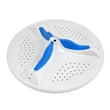
- Stronger wash action components (washplate/impeller design)
- Better long-term maintenance support (common parts readily available)
Your manual shows this washer is built for modern installation requirements and routine maintenance, including a Clean Washer cycle intended to reduce odor and residue buildup.
| What to check | What it suggests | Where to confirm |
|---|---|---|
| Clean Washer cycle | More premium maintenance feature | Owner's manual |
| Installation requirements (level floor, spacing, water pressure) | Designed for stable performance | Owner's manual |
| Lid lock operation | Safety and cycle control sophistication | Owner's manual |
If you are deciding whether to repair or replace, “high end” usually means the washer is worth maintaining longer. For common performance issues, replacing a few key parts often restores operation at a much lower cost than replacement.
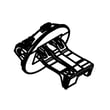
- Actuator, shift W11481722 (spin/agitate shifting issues)
- Lid lock-sol W11700916 (won’t start, won’t spin, lid won’t lock)
- Pump assembly, drain W11399437 (won’t drain, long drain symptoms)
- Washer water inlet valve W11165546 (slow fill, no fill)
Last updated: February 2026
Is it worth repairing a Kenmore washing machine?
Repairing a Kenmore washer is worth it when the problem is a common, replaceable part and the machine is otherwise in good shape. For Kenmore model 11031312022, issues like draining, filling, or lid locking are typically repairable with targeted parts and basic troubleshooting in the owner's manual.
Repair usually makes sense when you see symptoms tied to serviceable components:
- Won’t drain or leaves water in the tub: often points to the drain system (pump or hose)
- Won’t fill or fills slowly: commonly related to the inlet valve or restricted hoses/screens
- Won’t start or won’t spin because the lid won’t lock: lid lock or lid strike problems are common
- Off-balance shaking: leveling and load distribution issues are frequent and low-cost to address
- Grinding or slipping during agitation/spin: can involve the drive pulley or related drive parts
These steps help confirm the failure and prevent repeat problems:
- Unplug the washer; then restore power and retry the cycle (rules out a simple control reset)
- Verify the washer is level and all feet contact the floor; the manual shows how to adjust leveling feet
- Check for kinked drain hose routing and proper standpipe height
- Inspect inlet hoses for bulges, cracks, or leaks; replace inlet hoses every 5 years as part of normal care
- Run a cleaning cycle monthly (or every 30 cycles) to reduce residue and odor buildup
If your symptoms match, these model-compatible parts are often the fix:
| Symptom | Likely part to check | Example part on this model page |
|---|---|---|
| Won’t drain / drains poorly | Drain pump, drain hose | Pump assembly, drain W11399437, hose asm - d W11244231 |
| Won’t fill / fill errors | Water inlet valve | Washer water inlet valve W11165546 |
| Won’t start / lid won’t lock | Lid lock, lid strike | Lid lock-sol W11700916, washer lid strike W11457841 |
| No/weak agitation or spin issues | Drive system components | Whirlpool washer drive pulley W10721967 |
A focused repair restores performance without the cost and hassle of replacing the entire washer. It also helps prevent secondary damage, such as running a washer that cannot drain (pump strain) or that is out of level (excess vibration and wear).
Last updated: February 2026