 Owner’s manual


What is the most common problem with a Maytag washer?
On the Maytag MAV5000AWW washer, the most common problems we see are drain and spin failures. These usually trace back to a blocked or leaking drain path, a lid switch that is not being actuated, or a worn drive belt that slips under load.
Most common symptoms (and what they usually mean)
- Won’t drain or drains slowly: kinked/clogged drain hose, restriction at the tub outlet, or a failing pump
- Won’t spin: lid switch not closing, belt slipping, or drive system wear
- Stops mid-cycle: lid switch issue, timer/control issue, or overheating motor protection
- Excessive vibration: unbalanced load, leveling issue, or worn suspension components
- Poor wash/agitation: belt slip, drive motor issues, or agitator wear
Quick checks you can do first
- Unplug the washer; confirm the tub is not overfilled and the load is balanced.
- Inspect the drain hose for kinks and make sure it is not shoved too far down the standpipe.
- If filling or temperature seems off, shut off water, remove inlet hoses, and clean the inlet screens (the manual notes hose filter screens can plug). See the MAV5000AWW owner's manual.
- If it won’t spin, check that the lid closes firmly and the lid strike/plunger is intact.
Common parts involved on this model
| Problem area | What fails | Example part for MAV5000AWW |
|---|---|---|
| Spin won’t start | Lid switch not being actuated | Washer lid switch plunger WP22002754 |
| Spin is weak/slips | Belt worn or stretched | Drive belt WP22003483 |
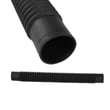
| Draining issues | Hose split/clogged or loose connection | Washer drain hose WP22003410 |
Why it matters
Drain and spin problems can leave clothes soaking wet and can strain the drive motor and belt. Catching a restriction, loose hose clamp, or lid switch issue early helps prevent bigger repairs and repeat cycle failures.
Last updated: February 2026
Where can I order Maytag washing machine parts?
For your Maytag MAV5000AWW washer, we recommend ordering replacement parts by matching your model number to the correct parts list, then confirming the part number and description before you buy. The fastest way to avoid wrong-part returns is to verify the model and serial information first using the MAV5000AWW owner's manual.
How to order the right part (fast and accurate)
- Confirm the model number MAV5000AWW and your washer’s serial number (typically found on the data plate on the control panel area).
- Use the parts list for Maytag MAV5000AWW washer parts to locate the exact component you need.
- Match by part description and part number, not just by appearance.
- If multiple versions are listed, compare your washer’s configuration and any notes in the listing.
- Order common wear items proactively if you are already doing a teardown (for example, clamps and hoses).
Common Maytag MAV5000AWW parts customers order
If you are troubleshooting a leak, no-drain, or no-spin issue, these are frequently replaced items for this model:
- Washer drain hose WP22003410 (drain and siphoning issues, cracks, pinholes)
- Drive belt WP22003483 (no-agitate or no-spin symptoms)
- Lid switch 12001908 (won’t spin or won’t start when the lid is closed)
Quick “what to check” before you buy
| Symptom | What to inspect first | Parts often involved |
|---|---|---|
| Won’t drain | Kinked hose, clogs, standpipe height | Drain hose, pump, hose clamps |
| Won’t spin | Lid switch operation, belt condition | Lid switch, drive belt |
| Leaking | Hose connections, cracks, loose clamps | Drain hose, hose clamp |
Why it matters
Ordering by model number and verifying with the manual prevents mismatched parts, repeat repairs, and downtime. It also helps you identify related hardware (like hose clamps) that can cause leaks if reused.
Last updated: February 2026
What's the average lifespan of a Maytag washer?
Most Maytag washers average 10 to 13 years in normal home use. For the Maytag MAV5000AWW, lifespan depends most on load size, leveling, and routine care; the MAV5000AWW owner's manual also outlines maintenance and “Before You Call” checks that help prevent early failures.
Typical lifespan and what affects it
A washer’s service life is mainly driven by mechanical wear (drive system, transmission, motor) and how hard it’s worked.
- Load size and frequency: fewer overloads and fewer back-to-back loads extend life
- Leveling and vibration: an unlevel cabinet accelerates wear on suspension and drive parts
- Water quality: sediment can restrict inlet screens and affect fill performance
- Detergent use: too much detergent increases residue and stress on drain performance
- Moisture control: leaving the lid open between loads reduces odor and corrosion risk
What “normal home use” looks like
Use this as a practical benchmark for planning repairs vs. replacement.
| Usage pattern | What to expect | Tip |
|---|---|---|
| Light (1 to 3 loads/week) | Often reaches or exceeds the average | Avoid overfilling the tub |
| Moderate (4 to 7 loads/week) | Typical 10 to 13 years | Keep the washer level |
| Heavy (8+ loads/week) | Shorter lifespan is common | Split bulky loads into smaller loads |
Signs your washer is nearing end of life
These symptoms often point to higher-wear components.
- Loud squealing or burning rubber smell (belt or pulley wear)
- Weak or no spin, wet clothes at end of cycle
- Oil or water leaks under the washer
- Intermittent start or stop during agitation/spin
- Repeated draining problems or slow drain
If you’re seeing belt-related symptoms, the drive belt WP22003483 is a common wear item on this platform.
Why it matters
Knowing the typical lifespan helps us decide whether a repair (belt, lid switch, drain hose) is a smart investment, or whether multiple major-drive symptoms suggest planning for replacement.
Last updated: February 2026
Is it worth fixing a Maytag washer?
Yes, it’s often worth fixing a Maytag washer when the problem is a common wear item and the total repair cost stays well below the price of a comparable replacement. For the Maytag MAV5000AWW, we typically recommend repair for belt, lid-switch, hose, or drain issues; major leaks or transmission problems can shift the value toward replacement. See the MAV5000AWW owner's manual for the “Before You Call” checks and operating guidance.
Quick decision checklist
- If the washer is cleaning well and the tub and cabinet are solid, repairs usually make sense.
- If the washer won’t spin or drain, check simple causes first (lid switch, belt, drain hose restrictions).
- If you see oil, loud grinding, or repeated major leaks, expect a higher-cost repair.
- If you’ve had multiple repairs in the last 12 months, replacement is usually the better value.
- If the issue is a safety concern (burning smell, tripping breaker), stop using the washer until it’s inspected.
Common “worth fixing” repairs on MAV5000AWW
These are frequent, straightforward fixes that often restore normal operation:
- Worn belt: replace the drive belt WP22003483
- No spin or intermittent operation: inspect the lid switch 12001908 and lid strike/plunger alignment
- Slow or no drain: check for kinks or clogs; replace the washer drain hose WP22003410 if damaged
- Small leaks at hose connections: replace clamps such as hose clamp WP285655
Cost-to-value guide (practical rule)
| Repair type | Typical value outcome | Why |
|---|---|---|
| Belt, lid switch, hose/clamp | Usually worth fixing | Lower parts cost, fast repair |
| Pump or motor-related issues | Depends on total estimate | Labor can be significant |
| Transmission seal or transmission symptoms | Often not worth it | Higher parts and labor, risk of follow-on failures |
Why it matters
A targeted repair can extend the life of a dependable top-load washer and avoid the cost and hassle of replacement. The key is separating simple wear-item failures (belt, lid switch, drain path) from major drivetrain or leak issues that can cascade into bigger repairs.
Last updated: February 2026


