
Where can I buy Craftsman replacement parts?
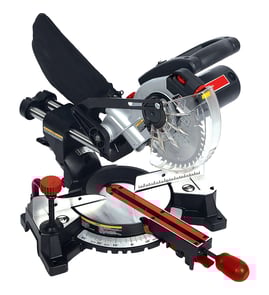
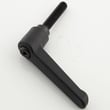
You can buy replacement parts for your Craftsman 113235230 10" miter saw by using the model number to match the exact diagrams and parts list, then ordering through Sears PartsDirect. This is the most reliable way to avoid fit issues on older Craftsman tools.
Best way to get the right part for model 113235230
- Confirm the model number on the saw’s ID plate is 113235230.
- Use the parts diagrams to identify the exact part name and reference number.
- Match any stamped numbers on the old part (when present) to the listing.
- Order the part and compare it to the original before installing.
- Keep fasteners and spacers in order during disassembly so alignment stays correct.
Common miter saw parts people replace
Even without a manual listed for this model, these are the most frequently needed items on a 10" miter saw:
| Part type | What it affects | Common symptom |
|---|---|---|
| Carbon brushes | Motor power delivery | Intermittent running, heavy sparking |
| Switch/trigger | Start/stop control | Won’t start, cuts out |
| Drive belt/gears (if equipped) | Blade drive | Slipping, unusual noise |
| Blade guard components | Safety and visibility | Guard sticks or won’t return |
| Arbor hardware | Blade mounting | Blade wobble, loosening |
Why it matters
Craftsman miter saw parts are not universally interchangeable. Using the exact model number (113235230) helps ensure the replacement part matches the saw’s arbor setup, guard style, and motor configuration.
Helpful tip for ordering
If you are unsure whether you have the correct model number, use our guide: how to find your appliance model number (and what it means for parts).
Last updated: February 2026
Why is 31.6 on a miter saw?
The 31.6° mark on a miter saw is there to make common crown molding cuts faster and repeatable. On a Craftsman 113235230 10-inch miter saw, 31.6° is a standard miter setting used with a matching bevel setting (often 33.9°) to create the compound angle for typical 90° corners.
What 31.6° is used for
Most miter saws include this angle because it matches a very common crown molding “spring angle” setup when you cut crown laid flat (instead of nested against the fence).
Common uses include:
- Cutting crown molding for inside corners and outside corners
- Speeding up setup with a known, repeatable angle
- Reducing measuring and math when doing compound cuts
- Helping keep left and right corner cuts consistent
Typical angle pairings (quick reference)
These are the common “shortcut” settings you see on many compound miter saws:
| Crown molding spring angle | Miter setting | Bevel setting |
|---|---|---|
| 38° (very common) | 31.6° | 33.9° |
| 45° (also common) | 35.3° | 30.0° |
How to use it correctly
Even with the 31.6° mark, accuracy depends on how the molding is installed and how consistent the spring angle is.
We recommend:
- Confirm the crown’s spring angle (often listed on the molding packaging)
- Make test cuts on scrap and label them (inside left, inside right, outside left, outside right)
- Keep the molding orientation consistent for every cut
- Use a stop block for repeatable lengths when doing multiple pieces
- Verify the saw’s detents are accurate if cuts are slightly open or tight
Why it matters
Crown molding is unforgiving; a small angle error can open up a visible gap at the ceiling or wall. The 31.6° mark is a built-in “standard solution” that saves time and helps you get cleaner corners with fewer trial-and-error adjustments.
For more general DIY help finding the right model details when ordering or matching parts, use how to find your appliance model number (and what it means for parts).
Last updated: February 2026
What should you never cut with a miter saw?
You should never cut anything you cannot hold and control safely on your Craftsman 113235230 10" miter saw. Avoid tiny offcuts, freehand cuts, and any material that is not firmly supported against the fence and table because binding and kickback can launch the workpiece or pull it into the blade.
Never cut these materials or setups
- Small pieces that cannot be clamped or held with a safe distance from the blade
- Round stock (dowel, pipe, conduit) unless it is secured in a V-block or jig so it cannot roll
- Warped, bowed, or twisted lumber that will not sit flat on the table and tight to the fence
- Loose stacks (cutting multiple boards at once) unless they are clamped as a single bundle
- Freehand cuts where the work is not registered to the fence and table
- Metal, masonry, or tile unless you are using the correct saw, blade, and guarding designed for that material
Safe alternatives that work better
Use a method that keeps the work supported and your hands away from the cut line.
| If you need to cut… | Use this instead | Why it’s safer |
|---|---|---|
| Very short pieces | Clamp the work; use a stop block | Prevents the piece from shifting or launching |
| Round material | V-block or cradle jig plus clamp | Stops rolling and grabbing |
| Thin trim that chatters | Fine-tooth blade; clamp; slow feed | Reduces vibration and tear-out |
| Metal | Proper metal-cutting saw and blade | Avoids tooth breakage and kickback |
Quick safety checks before every cut
- Keep the work flat on the table and tight to the fence.
- Clamp whenever the piece is short, narrow, or wants to move.
- Let the blade reach full speed before entering the cut; keep a steady, controlled feed.
- Wait for the blade to stop completely before lifting it or reaching for offcuts.
- Keep guards in place and wear eye and hearing protection.
Why it matters
Most miter saw injuries come from the workpiece moving unexpectedly. When a board is not supported or cannot be controlled, the blade can bind and kick back, turning a small offcut into a fast projectile.
For more DIY safety guidance before you start, review are diy appliance repairs safe.
Last updated: February 2026
What are the parts of a miter saw?
A Craftsman 113235230 10-inch miter saw is built from a cutting head (motor and blade), a pivoting arm, and an angle-setting base so you can make accurate miter and bevel cuts. Common user-touch parts include the miter lock knob and bevel lock lever, plus safety and support pieces like the blade guard and work clamp.
Main parts you will see on most miter saws
- Motor and arbor: spins the blade; the arbor holds the blade and flange hardware
- Saw blade: does the cutting (size and tooth count vary by material)
- Blade guard: covers the blade when the saw is raised
- Handle and trigger switch: starts and controls the cut
- Pivot/hinge and return spring: lets the head lower smoothly and return up
- Fence and table: supports the workpiece and helps keep cuts square
- Miter scale and miter lock knob: sets and locks left-right angle cuts
- Bevel scale and bevel lock lever: sets and locks tilt cuts
- Workpiece clamp: holds material steady for safer, more accurate cuts
Quick “what it does” guide
| Part | What it does | Common symptom if it’s loose/worn |
|---|---|---|
| Miter lock knob | Locks the miter angle | Angle drifts during the cut |
| Bevel lock lever | Locks the bevel tilt | Bevel changes mid-cut |
| Fence | Registers the board straight | Cuts are not square |
| Clamp | Stabilizes the workpiece | Chatter, kickback risk increases |
Why it matters
Knowing the names of the miter saw parts helps you troubleshoot faster (for example, separating an alignment issue at the fence from a locking issue at the miter or bevel mechanism) and order the correct replacement components for your Craftsman 113235230.
Helpful checks when something feels “off”
- Unplug the saw; confirm the blade is tight on the arbor
- Verify the fence is secure and not bent
- Lock miter and bevel; confirm there is no play in the settings
- Check the guard moves freely and returns fully
- Use the clamp for short or narrow stock
For help identifying the correct model tag details before ordering, use how to find your appliance model number (and what it means for parts).
Last updated: February 2026
Can a 10inch miter saw cut a 4x4?
Yes, a 10-inch miter saw like the Craftsman 113235230 can cut a 4x4 (actual size about 3-1/2 in. x 3-1/2 in.), but whether it’s a true one-pass cut depends on the saw’s max cut capacity and whether it’s a sliding design. Many non-sliding 10-inch saws need a second pass or a flip.
What determines if it’s a one-pass cut
A 4x4 cut at 90 degrees is mainly limited by vertical cut capacity (how tall a board the blade can cut against the fence).
- Sliding vs. non-sliding: sliding rails usually increase crosscut capacity; they do not always increase vertical capacity.
- Fence and guard clearance: tall stock can hit the blade guard or fence before the blade reaches full depth.
- Blade diameter and arbor setup: a true 10-inch blade at full height gives the best chance of clearing 3-1/2 inches.
- Miter angle: cutting at 45 degrees reduces effective capacity.
- Crown/trim orientation: “nested” cuts (against the fence) often reduce usable height.
Practical ways to cut a 4x4 if it doesn’t clear
If your Craftsman 113235230 does not fully sever the 4x4 in one pass, these methods work well.
- Flip cut: cut as deep as possible, rotate the 4x4 180 degrees, then finish the cut.
- Mark a cut line on all faces: helps keep the flip cut aligned.
- Use a sharp framing blade (24T to 40T): reduces burning and wandering in thick stock.
- Support the workpiece: keep the 4x4 flat to the table and tight to the fence.
- Let the blade reach full speed: then lower smoothly without forcing.
Quick capacity guide (typical)
These are common ranges for 10-inch miter saws; use them to set expectations.
| Saw type | Typical one-pass 4x4 at 90 degrees? | Common workaround |
|---|---|---|
| 10-inch non-sliding compound | Sometimes | Flip cut |
| 10-inch sliding compound | Often | Flip cut if guard/fence limits |
| 12-inch sliding compound | Usually | Rarely needed |
Why it matters
A clean, square 4x4 cut affects post bases, deck framing, and pergola joints. If you force a cut beyond the saw’s capacity, you can get binding, tear-out, or an out-of-square end.
For safe electrical troubleshooting if the saw won’t start or bogs down under load, use our how to use a multimeter to test electrical parts video.
Last updated: February 2026