Error Codes





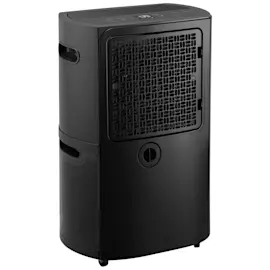
Does the GE ADHL25LDW1 dehumidifier have a drain hose?
Yes. The GE ADHL25LDW1 dehumidifier is designed with a continuous drain option that lets you connect a standard drain hose to run without emptying the bucket as often (as long as the hose is routed downhill to a suitable drain).
How the continuous drain setup works
A dehumidifier like the ADHL25LDW1 typically collects water in the bucket, but the drain port lets gravity carry water out through a hose.
- Turn the unit off and unplug it before connecting anything
- Locate the drain outlet/connection on the rear or side of the cabinet
- Attach a hose snugly and route it downhill to a floor drain or sump
- Avoid kinks, sharp bends, or running the hose upward
- Keep the unit level so water flows correctly
Bucket vs. hose draining: what to expect
| Drain method | Best for | What you will maintain |
|---|---|---|
| Bucket (standard) | Occasional use, smaller spaces | Empty and rinse the bucket; confirm it seats correctly |
| Continuous drain (hose) | Long runtimes, basements, damp rooms | Check hose routing; keep the drain path clear |
If it still fills the bucket or leaks
These issues are usually caused by a loose connection, a blocked drain path, or a bucket that is not seated.
- Reseat the bucket and confirm the full-bucket shutoff is not being triggered early
- Clean the air filter to improve airflow and reduce icing or overflow risk
- Inspect the hose connection for drips and tighten the fit
- Make sure the hose end is not submerged in standing water
Helpful resources:
Why it matters
Using continuous drain helps prevent frequent shutoffs from a full bucket and keeps humidity control more consistent during long, damp-weather runs.
Last updated: February 2026
How many hours a day should you run a dehumidifier?
For your GE ADHL25LDW1 dehumidifier, we recommend running it as long as needed to hold indoor humidity around 30% to 50%; in many homes that works out to 8 to 12 hours per day, but in very damp spaces it can run much longer (even most of the day) until conditions stabilize.
Best daily runtime targets (what we use in the field)
- Normal living areas: 6 to 12 hours/day is common.
- Basements in humid weather: 10 to 20 hours/day is common.
- Crawlspaces or persistent moisture: near-continuous operation is normal.
- After a leak or water event: continuous operation until humidity returns to target.
- If the unit short-cycles (on/off frequently): check airflow and filter cleanliness.
What changes how long it needs to run
- Room size and layout (open vs. closed doors)
- Outdoor humidity and season
- Moisture sources (showers, laundry, seepage, wet concrete)
- Airflow restrictions (dirty filter, blocked grille)
- Drain method (bucket vs. hose) and how often the bucket fills
Quick guide: runtime vs. what you should do
| What you notice | Typical meaning | What we recommend |
|---|---|---|
| Runs most of the day | High moisture load or low setpoint | Keep it running; improve ventilation and seal moisture sources |
| Bucket fills fast | Unit is removing moisture effectively | Empty more often or switch to continuous drain |
| Runs but little water collected | Low humidity, cold room, or airflow issue | Clean filter, raise setpoint slightly, warm the space |
| Stops early with humidity still high | Bucket not seated, float issue, or sensor/control issue | Reseat bucket, check float movement, clean intake |
Maintenance that helps it run fewer hours
- Clean and reinstall the filter WK85X22282 regularly to keep airflow strong.
- Make sure the water bucket asm WK01X28014 is fully seated so the float switch reads correctly.
- Keep at least 12 inches of clearance around the air intake and exhaust.
- Clean the cabinet and air path; follow our steps in how to clean a dehumidifier.
Why it matters
Long runtimes are normal in damp conditions, but restricted airflow or a mis-seated bucket can make the dehumidifier run longer than necessary, reduce moisture removal, and increase energy use.
Last updated: February 2026
How much does it cost to run a dehumidifier 24 hours a day?
Running your GE ADHL25LDW1 dehumidifier 24 hours a day typically costs about $1 to $4+ per day (roughly $30 to $120+ per month), based on common dehumidifier power use (about 300 to 700 watts) and typical electricity rates.
Quick cost calculator (use your numbers)
Use this formula:
- Daily cost = (Watts ÷ 1000) × 24 × (your $/kWh)
- Monthly cost = Daily cost × 30
Typical examples:
- 300W unit at $0.15/kWh: about $0.11/day (about $32/month)
- 500W unit at $0.20/kWh: about $2.40/day (about $72/month)
- 700W unit at $0.25/kWh: about $4.20/day (about $126/month)
What changes the cost the most
These factors usually make a bigger difference than the brand:
- Wattage while running (higher capacity models usually draw more)
- Duty cycle (how often the compressor actually runs vs. idles)
- Room conditions (warmer, more humid air makes it run longer)
- Airflow restrictions (a dirty filter can increase run time)
- Drain method (bucket fills and stops vs. continuous drain)
Typical cost ranges (at-a-glance)
| Power draw | Cost per day at $0.15/kWh | Cost per day at $0.25/kWh |
|---|---|---|
| 300W | $1.08 | $1.80 |
| 500W | $1.80 | $3.00 |
| 700W | $2.52 | $4.20 |
Why it matters
A dehumidifier can be one of the larger plug-in loads in a damp basement or laundry area. Keeping airflow strong and using the right humidity setting helps the unit reach the target humidity faster, so it runs fewer hours.
Ways to lower the running cost
- Clean the air filter regularly; replace it if it is damaged (see filter WK85X22282).
- Set humidity to a practical target (many homes do well around 45% to 55%).
- Keep doors and windows closed in the area you are drying.
- Make sure the bucket seats fully so the unit does not shut off early (see water bucket asm WK01X28014).
- If the unit is leaking or not collecting water, follow the steps in dehumidifier doesn't remove moisture or dehumidifier leaks water.
Last updated: February 2026
What is the average life expectancy of a dehumidifier?
Most portable dehumidifiers, including the GE ADHL25LDW1, typically last 5 to 10 years with normal home use. Regular cleaning, good airflow, and routine filter care help you stay closer to the high end of that range.
Typical lifespan by type
Lifespan depends heavily on run time, humidity load, and maintenance.
- Portable room dehumidifier: 5 to 10 years
- Heavy-duty/commercial portable: 8 to 15 years
- Whole-home (ducted) dehumidifier: 8 to 12 years
- Shortened lifespan is common when the unit runs 24/7 in hot, dusty, or very damp spaces
| Dehumidifier type | Typical use | Typical life expectancy |
|---|---|---|
| Portable (like ADHL25LDW1) | Basements, bedrooms, garages | 5 to 10 years |
| Heavy-duty portable | Crawlspaces, restoration | 8 to 15 years |
| Whole-home | Integrated humidity control | 8 to 12 years |
What extends (or shortens) dehumidifier life
These are the biggest real-world factors we see.
- Clean the air filter regularly; a clogged filter restricts airflow and stresses the compressor
- Keep coils and intake/exhaust grilles clean to prevent overheating and icing
- Empty and seat the bucket correctly; spills and mis-seating can trigger shutoffs and corrosion
- Use a steady setpoint (for example, 45% to 55% RH) instead of constantly changing settings
- Maintain clearance around the unit so it can breathe
- Store it dry in the off-season (drain, wipe, and let it air out before storage)
If your bucket is cracked, warped, or no longer trips the “bucket full” shutoff reliably, replacing it can prevent leaks and nuisance shutoffs; see water bucket asm WK01X28014.
Signs it is nearing end of life
Aging units often show performance and noise changes first.
- Runs constantly but does not remove moisture
- Frost on the coil in normal room temperatures
- Water leaks around the base or bucket area
- Louder fan or compressor noise than normal
- Frequent shutoffs not related to a full bucket
For symptom-based troubleshooting, use dehumidifier doesn't remove moisture and dehumidifier leaks water.
Why it matters
A dehumidifier that is past its prime can use more electricity while removing less moisture. Keeping the filter and airflow path clean protects the sealed system (compressor and coils), which is the most expensive part of the appliance.
Last updated: February 2026