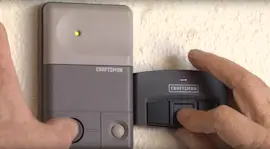
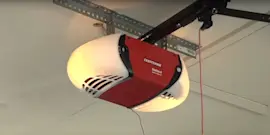
Owner’s manual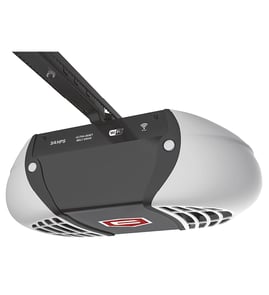


Can you get a universal remote for an old garage door opener?
Yes. For a Craftsman garage door opener model 1395399211, you can typically use a compatible “universal” remote, or add an external receiver kit if you cannot match the original remote style. The key is choosing a remote that can be programmed to the opener’s LEARN button.
What to check first (compatibility)
Before buying anything, we recommend confirming what your opener supports in the owner's manual. Most compatibility issues come down to the radio system and whether the opener uses rolling-code security.
- Locate the LEARN button on the motor unit (usually near the light lens).
- Confirm the opener is a Security+ style unit (the manual describes Security+ remotes and programming).
- Decide whether you want a remote-only solution or a receiver + remote add-on.
- If you have multiple doors, plan for a remote with enough buttons (1-, 2-, or 3-function).
- If you want keypad entry, choose a compatible keyless entry and program it the same way.
How programming works on this model
This Craftsman 1395399211 opener is designed to learn additional remotes through the LEARN button process.
| Task | What you do | What you should see/hear |
|---|---|---|
| Add a remote | Press and release LEARN, then press and hold the remote button | Motor lights blink (or you hear clicks) |
| Remove lost remotes | Press and hold LEARN about 6 seconds to erase memory | Learn indicator goes out |
| Add keypad PIN (if equipped) | Press LEARN, enter a 4-digit PIN, press ENTER | Confirmation via lights/clicks |
When an external receiver makes sense
An add-on receiver is the right fix when you cannot find a remote that matches your opener’s built-in receiver, or when you want to standardize remotes across different openers.
- Receiver mounts near the opener and wires into the control terminals
- New remotes pair to the receiver (not the opener’s original radio)
- Often improves reliability if the original receiver is weak
Why it matters
A correctly matched remote keeps your opener’s security features working as intended and prevents nuisance problems like intermittent operation, short range, or programming failures. For model-specific programming steps and safety notes, use the owner's manual.
Last updated: February 2026
Is it cheaper to repair or replace a garage door opener?
For a Craftsman garage door opener model 1395399211, it’s cheaper to repair when the problem is limited to adjustments or common wear items (safety sensors, wall control, remote programming, travel/force settings). Replace the opener when repairs are frequent, the motor/drive system is failing, or the door safety system cannot be set to pass the monthly reverse test.
Quick decision guide
- Repair when the opener runs but needs limit/force adjustment, sensor alignment, or remote reprogramming.
- Repair when the door reverses incorrectly due to settings and you can correct it and pass the safety test.
- Replace when the opener has repeated breakdowns, loud grinding, or intermittent operation that returns after repairs.
- Replace when the motor or drive gear is failing and the repair cost is close to a new unit.
- Replace when you cannot consistently pass the Safety Reverse Test after proper adjustments.
Cost and value comparison (typical)
| Situation | Typical path | Why |
|---|---|---|
| Minor adjustment or sensor issue | Repair | Lowest cost; restores safe operation quickly |
| One-time part failure (control, sensor, wiring) | Repair | Usually cost-effective if the opener is otherwise reliable |
| Motor/drive system failure or repeated service calls | Replace | Better long-term value than stacking repair costs |
Safety checks that affect the decision
Your manual emphasizes that the door must reverse on contact with a 1-1/2 inch (3.8 cm) object (or a 2x4 laid flat) and that the safety reversal system must be tested every month. If you adjust travel limits or force controls, you must retest the reversal system afterward.
Use these steps as your baseline:
- Test reversal with a 1-1/2 inch board (or 2x4 laid flat)
- Run 3 to 4 full open/close cycles after adjustments
- Recheck after any door hardware or opener adjustment
(We follow the exact procedure and warnings in the owner's manual.)
Why it matters
A garage door opener decision is not only about cost; it’s about reliable, repeatable safety reversal. If the opener cannot be adjusted to reverse properly, replacement is the practical choice to protect people, pets, and property.
Last updated: February 2026
Where can I buy Craftsman garage door opener parts?
You can buy replacement parts and accessories for your Craftsman garage door opener model 1395399211 through Sears PartsDirect by using the model-based parts listing and diagrams, then matching the part to your symptom and installation needs. For part identification and compatibility details, use the owner's manual.
Best ways to find the right part
- Start with your exact model number: 1395399211
- Use the parts diagrams to confirm the part’s location and name
- Match the part to the problem (remote not working, door won’t close, sensor issues, etc.)
- Check accessory fit by door height and garage setup (for example, rail extension needs)
- Confirm any setup requirements before ordering (wiring, brackets, mounting style)
Common parts and accessories people replace
Your manual lists several common accessories that are often purchased when repairing or upgrading a Craftsman opener:
| What you need | What it helps with | Typical use case |
|---|---|---|
| Remote control | Operating the opener from the car | Lost or broken remote |
| Keyless entry keypad | Outside access without a remote | Family access, temporary codes |
| Safety reversing sensors | Door safety reversal | Door won’t close, lights blink |
| Rail extension kit | Door travel length | Doors taller than 7 ft |
| Emergency key release | Manual entry from outside | Garage with no access door |
Why it matters
Ordering by model number helps prevent compatibility problems. For example, the manual notes the safety reversal system depends on correct sensor setup and door conditions; even a floor-to-door gap over 1/4 in. (6 mm) can affect safe operation and closing behavior.
Helpful troubleshooting resources before you order
If you are buying parts because the opener is showing a diagnostic pattern or acting up, these guides help you pinpoint the failed component first:
Last updated: February 2026
How do I know what model my garage door opener is?
Your Craftsman garage door opener’s model number is printed on an ID label on the motor unit (the power head mounted to the ceiling). For model 1395399211, the owner’s manual shows the model number on the opener documentation and you can match that to the label on the unit; see the owner's manual.
Where to look on the opener
Check these common label locations on most Craftsman openers:
- On the motor unit housing, near the light lens/cover
- Under the light cover (remove the lens to view the label)
- On the side panel of the motor unit near the wiring terminals
- On the back of the motor unit near the hanging bracket area
- On the opener’s rail near the motor unit (less common)
What to write down (so you get the right parts)
Record the information exactly as shown on the label.
| Item to record | Example | Why it matters |
|---|---|---|
| Model number | 1395399211 | Ensures parts and instructions match your opener |
| Serial number | Varies | Helps identify production run details |
| Motor type/drive | Chain or belt (varies) | Affects which drive parts and adjustments apply |
Quick tips to confirm you found the right label
Use these checks before ordering parts or troubleshooting:
- The label should be on the motor unit, not on the wall control or remote
- If you see “139.” followed by more digits, copy all digits
- Compare the model number to the one shown on the manual cover
- If the opener has a safety reversing sensor system, keep the sensor alignment intact while you inspect
Why it matters
Craftsman garage door opener parts, programming steps (remote and keypad), and safety sensor behavior can vary by model. Using the correct model number helps us match the right repair instructions and troubleshooting steps the first time.
Last updated: February 2026
What are the common problems with Craftsman garage door openers?
On the Craftsman 1395399211 garage door opener, the most common problems are safety reversing sensor faults (door will not close and the opener lights blink), remote or wall control lock/programming issues, and force or travel settings that need adjustment when the door reverses unexpectedly. Use the owner's manual for the exact test and adjustment steps for this model.
Most common symptoms and what they point to
- Door will not close; opener lights blink: Safety reversing sensors are blocked, misaligned, or not wired correctly.
- Remote will not operate the door: Remote needs reprogramming, wall control lock mode is enabled, or the opener is reporting a diagnostic flash pattern.
- Door reverses during closing: Force or travel limits need adjustment; door binding can also trigger reversal.
- Door reverses after touching the floor: Down travel is set too far; reduce down travel per the adjustment procedure.
- Sensor indicator lights are dim, flickering, or off: Slight misalignment, broken/disconnected wire, shorted wire, or reversed polarity.
Quick checks we recommend first
- Clear anything in the sensor beam path and clean both sensor lenses.
- Confirm both sensor indicator lights are steady.
- Inspect sensor wires for damage (pinched by staples, loose connections).
- Test door balance by disconnecting the opener and moving the door by hand; it should move smoothly.
- If the door will not close by remote, try holding the wall control button down to close.
Diagnostic clues (symptom-to-area map)
| What you notice | Most likely area | What to check first |
|---|---|---|
| Lights blink; will not close | Safety reversing sensors | Alignment, obstructions, steady LEDs |
| Remote does nothing | Remote/wall control | Lock mode, reprogramming steps |
| Reverses mid-travel | Force/travel or door drag | Binding, force setting, travel limits |
| Sensor LEDs not steady | Sensor wiring | Open/short, reversed wires |
Why it matters
These “problems” are often the opener doing its job: refusing to close or reversing when it detects a safety risk. Keeping sensors aligned and travel/force settings correct prevents nuisance reversals and helps protect people, pets, and property.
For help interpreting flashing diagnostic patterns, use Craftsman error codes.
Last updated: February 2026