Error Codes



What does it mean when the oven says F3?
On a Whirlpool WFE535S0LS3 electric range, an F3 error usually points to an oven temperature sensing problem (most often the oven temperature sensor circuit). The range may stop heating or heat unpredictably until the sensor and its wiring are checked and repaired.
- Turn off power at the breaker for 1 minute, then restore power and see if F3 returns.
- If F3 comes back, stop using Bake/Broil until the issue is corrected.
- Check for a loose or damaged sensor connector at the back of the oven cavity (after power is off).
- Inspect the sensor harness for pinched, burned, or broken wires.
- If you have a multimeter, test the sensor resistance at room temperature (a failed sensor often reads open/short or far out of the normal range).
In many cases, replacing the oven temperature sensor resolves F3.
| Symptom with F3 | Most likely cause | Common fix |
|---|---|---|
| F3 appears soon after starting Bake | Sensor circuit open/short | Replace sensor, repair wiring |
| Oven overheats, then F3 | Sensor out of range or intermittent | Replace sensor |
| F3 after moving/cleaning range | Loose connector | Reseat connector, repair harness |
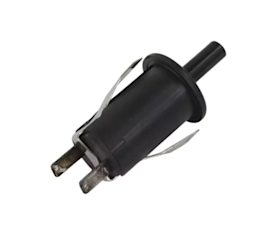
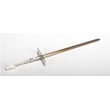
If you need the correct replacement for this model, use the range oven temperature sensor WPW10181986.
The temperature sensor tells the control how hot the oven is. When the control cannot trust that signal, it may shut down heating or allow unsafe temperature swings, which affects cooking results and can damage components.
- You smell burning insulation or see melted wiring.
- The breaker trips when the oven starts heating.
- F3 returns immediately after replacing the sensor (this points to wiring or an electronic control issue).
Helpful DIY basics for electrical testing: how to use a multimeter to test electrical parts video.
Last updated: February 2026
What is a common problem of the electric oven?
A common electric-oven problem on a Whirlpool free standing electric range like model WFE535S0LS3 is poor or no heating, often caused by a failed bake element, a bad oven temperature sensor, or a control issue. Door sealing and power supply problems are also frequent.
- Oven will not heat at all: failed bake element, failed control, or no power to the range
- Bakes unevenly or takes too long: weak bake element, temperature sensor drifting, poor door seal
- Temperature is inaccurate: oven temperature sensor out of range or control calibration needed
- Broil works but bake does not: bake element failure is most common
- Self-clean won’t start or door won’t unlock: door lock system problem
- Confirm the range has full power (electric ranges typically need 240 VAC; a tripped breaker can leave you with partial power).
- Look for visible damage on the bake element (blisters, cracks, burn spots).
- Preheat test: set to 350°F and see if it reaches temp within a typical 10 to 15 minutes.
- Check that the oven door closes firmly and the hinge is not sagging.
- If you smell burning or see arcing, stop using the oven and disconnect power.
| Symptom | Common cause | Example part for WFE535S0LS3 |
|---|---|---|
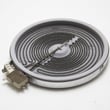
| No bake heat | Burned-out bake element | Range bake element WP9755770 |
| Inaccurate temp | Sensor reading wrong | Range oven temperature sensor WPW10181986 |
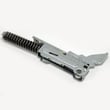
| Door won’t close well | Worn/bent hinge | Range oven door hinge WPW10299224 |
Heating problems are not just inconvenient; they can cause undercooked food, longer cook times, and overheating of wiring or controls if a failing element or connection starts arcing. Fixing the root cause protects the control system and improves cooking results.
Last updated: February 2026
What is the life expectancy of a Whirlpool electric range?
A Whirlpool electric range like model WFE535S0LS3 typically lasts 13 to 15 years. You can often reach the high end of that range by keeping the cooktop and oven clean, avoiding unnecessary self-clean cycles, and replacing wear parts promptly when performance starts to slip.
Most free standing electric ranges fall into a similar lifespan range; what changes the outcome is heat stress, cleaning habits, and how quickly small issues get fixed.
- Heavy daily cooking and frequent high-heat baking can shorten life
- Repeated self-clean cycles can stress wiring, sensors, and door-lock parts
- Spills left to bake onto elements and the oven bottom can cause hot spots
- Loose connections or heat-damaged wiring can create intermittent failures
- Replacing common failure parts early can prevent bigger damage
If your range is otherwise in good shape, these issues are often repairable.
| Symptom | Common cause | Example part for WFE535S0LS3 |
|---|---|---|
| Oven temperature swings, underbakes | Temperature sensor drifting | Range oven temperature sensor WPW10181986 |
| No bake heat or weak bake | Burned-out bake element | Range bake element WP9755770 |
| Broil not heating | Failed broil element | Range broil element W10856603 |
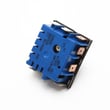
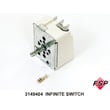
| Burner stuck on high or won’t heat | Surface element switch failure | Range dual surface element control switch WPW10434452 |
These habits reduce heat stress and prevent premature part failures.
- Wipe up sugary spills quickly (they can etch glass and smoke heavily)
- Use cookware that matches the burner size to avoid overheating the cooktop
- Keep the oven door closing tightly; address sagging early
- Run self-clean only when truly needed; use gentler cleaning between cycles
- If a burner cycles oddly or the oven bakes unevenly, test and replace the failing part before it strains other components
A range that is heating correctly and cycling normally uses less energy, cooks more evenly, and avoids secondary failures (like overheated wiring or control damage) that can turn a simple repair into a bigger one.
Last updated: February 2026
What model is my Whirlpool electric range?
Your Whirlpool electric range model number is printed on the appliance’s model and serial tag. On many Whirlpool freestanding ranges like the WFE535S0LS3, you can usually find that tag around the oven door frame area or behind the storage drawer or warming drawer.
Check these common locations on a Whirlpool freestanding electric range:
- Open the oven door and look along the left or right front frame (the rim around the oven opening)
- Pull out the storage drawer (or warming drawer, if your range has one) and look on the frame behind it
- Look on the lower side trim near the front, just behind the oven door area
- If the range is installed tight to the wall, use a flashlight and look low on the back panel (less common)
We recommend matching the entire model number exactly (letters and numbers) before ordering parts.
| What to check | What it should look like | Why it matters |
|---|---|---|
| Model number | Example: WFE535S0LS3 | Ensures correct fit and wiring for elements, sensors, and controls |
| Serial number | A longer code near the model | Helps identify production run details for some parts |
| Tag condition | Clear, readable characters | Prevents ordering the wrong revision |
Whirlpool ranges often have similar-looking versions with different cooktop elements, control boards, or wiring harnesses. Using the exact model number helps you choose the right parts the first time.
After you confirm your model number, you can cross-check common replacements for this model, such as:
- Range bake element WP9755770
- Range oven temperature sensor WPW10181986
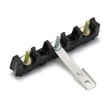
- Range dual surface element control switch WPW10434452
Last updated: February 2026