

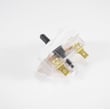

How to tell if a dryer thermal fuse is blown?
On a GE GTD33GASK1WW dryer, a blown thermal fuse is confirmed with a continuity test: unplug the dryer, access the fuse, and check it with a multimeter. If the meter shows no continuity (OL or no beep), the fuse is blown and the dryer will not run or will stop mid-cycle.
A blown thermal fuse is a safety shutoff that opens when the dryer overheats (often from restricted airflow). Common symptoms include:
- Dryer will not start even though the control panel looks normal
- Dryer starts, then stops quickly
- Motor hums briefly but drum does not turn
- No heat complaints paired with very poor airflow (varies by design)
- Lint screen area feels unusually hot
- Disconnect power (unplug the dryer).
- Remove the appropriate panel to reach the blower housing or heater duct area (common fuse locations).
- Pull at least one wire off the fuse terminal.
- Set the multimeter to continuity (or lowest ohms).
- Touch probes to the fuse terminals.
- Good fuse: meter beeps or reads near 0 ohms
- Blown fuse: meter stays OL/infinite and does not beep
| Multimeter result | What it means | What to do next |
|---|---|---|
| Beep / ~0 Ω | Fuse is good | Keep troubleshooting airflow, door switch, start switch, belt switch, timer |
| OL / no beep | Fuse is blown | Replace the fuse, then correct the overheating cause |
Replacing the fuse without fixing overheating usually leads to another failure. We recommend:
- Clean the lint screen and wash off any fabric softener film
- Inspect and clear the lint screen housing and blower inlet
- Check the vent hose for kinks, crushing, or long runs
- Clean the entire vent to the outside hood and confirm the damper opens
- Verify strong airflow at the exterior vent while running
If your dryer is overheating, related temperature safety parts can also be involved, such as the dryer high-limit thermostat WE04X26138 or dryer operating thermostat WE04X25201.
The thermal fuse is designed to prevent unsafe overheating. Restoring proper airflow helps your GE GTD33GASK1WW dry faster, run cooler, and reduce repeat shutdowns.
For replacement parts for your GTD33GASK1WW, use the parts list for this model or search by model number on Sears PartsDirect.
Last updated: February 2026
What is the life expectancy of a GE washing machine?
A GE washing machine’s typical life expectancy is 12 years. This page is for the GE dryer model GTD33GASK1WW, so we are not matching the estimate to this dryer; use the washer lifespan number for replacement planning and maintenance scheduling.
- Light use (a few loads per week): about 14 years
- Average household use: about 12 years
- Heavy use (daily loads, bulky items often): about 10 years
- Hard water and excess detergent: reduce lifespan by accelerating residue and wear
| Use pattern | Typical lifespan | What usually wears first |
|---|---|---|
| Light | 14 years | Hoses, inlet valves, lid/door switches |
| Average | 12 years | Drain pump, suspension, bearings |
| Heavy | 10 years | Bearings, motor components, shocks/springs |
- Keep loads balanced; avoid chronic out-of-balance spinning
- Use the correct detergent amount; too much causes buildup and extra strain
- Run periodic cleaning cycles (especially with warm or hot water)
- Check and replace fill and drain hoses before they leak
- Level the washer to reduce vibration and bearing wear
A clear lifespan target helps you decide when preventive maintenance is worth doing versus budgeting for replacement. Good loading habits and routine cleaning reduce stress on the motor, pump, and bearings, which are the most expensive wear areas.
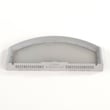
If you are also maintaining your GE GTD33GASK1WW dryer, common airflow-related wear items include the lint screen and drum support parts such as the GE dryer lint screen WE03X23881. For parts lookup by model across appliances, use Sears PartsDirect.
Last updated: February 2026
What is the most common problem with a GE electric dryer?
For a GE electric dryer like model GTD33GASK1WW, the most common problem is no heat or long dry times caused by restricted airflow (lint buildup or venting issues) or a failed temperature-safety part. The next most common issue is the drum not tumbling from a worn belt or support components.
- Runs but no heat: failed thermostat or other heat-safety component; sometimes poor airflow overheats the dryer and trips protection.
- Takes too long to dry: clogged lint screen, blocked vent, crushed flex duct, or lint buildup inside the blower housing.
- Stops mid-cycle: overheating from restricted airflow; high-limit thermostat can open.
- Drum squeaks or thumps: worn drum glides or bearing components.
- Won’t start: start switch, door switch, or timer/control issue.
- Clean the lint screen every load; confirm you have the correct screen installed (see GE dryer lint screen WE03X23881).
- Check airflow at the outside vent hood; it should be strong and steady.
- Inspect the vent path for kinks, long runs, or lint blockage.
- If the dryer overheats, stop using it until the venting is corrected.
| Symptom | Common cause | Example part on this model page |
|---|---|---|
| No heat / overheating | Operating thermostat not regulating temperature | Dryer operating thermostat WE04X25201 |
| Overheats, shuts off | High-limit thermostat opening from high temps | Dryer high-limit thermostat WE04X26138 |
| Poor drying from lint restriction | Damaged or missing lint screen | GE dryer lint screen WE03X23881 |
| Squealing, scraping | Worn drum glide/bearing surfaces | Dryer drum glide bearing WE03X37319 |
Most “no heat” and “long dry time” complaints start with airflow. Fixing venting and lint buildup first helps the dryer heat correctly, prevents repeat thermostat failures, and reduces cycle times and energy use.
You can order replacement parts for your GE GTD33GASK1WW from the parts list for this model, or search by model number on Sears PartsDirect.
Last updated: February 2026