Error Codes



Is a bottom mount or top mount fridge better?
A bottom-mount refrigerator like the GE ZWE23NSTBSS is usually better for everyday convenience because fresh-food shelves sit at eye level, while a top-mount is often better if you want the simplest layout and typically lower energy use. The best choice depends on how you shop and cook.
Quick comparison
| Feature | Bottom-mount (freezer on bottom) | Top-mount (freezer on top) |
|---|---|---|
| Most-used items | Easier access to fresh food | More bending for fresh food |
| Freezer access | Pull-out drawer, good visibility | Easy reach for freezer items |
| Organization | Often more bins and drawers | Usually simpler storage |
| Energy use | Often slightly higher | Often slightly lower |
| Price/complexity | Typically higher, more features | Typically lower, fewer features |
When a bottom-mount is the better pick
- You use the refrigerator section more than the freezer.
- You want wide shelves and better fresh-food visibility.
- You prefer a freezer drawer with baskets for sorting.
- You frequently store produce, deli items, and meal prep containers.
- You want a more “built-in” look and feature set (common on GE Profile-style designs).
When a top-mount is the better pick
- You want a straightforward, budget-friendly design.
- You want fewer moving parts and simpler storage.
- You use the freezer more often than the fresh-food section.
- You want a layout that is typically more energy-efficient.
Why it matters
Choosing the right configuration affects daily ergonomics (how often you bend), how well food stays organized, and long-term operating cost. If you already own a bottom-mount like the ZWE23NSTBSS, keeping airflow paths clear and replacing consumables on schedule helps it perform like it should.
Helpful part for common performance complaints
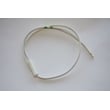
If temperatures feel inconsistent in either section, a failed sensor can be part of the cause; the model uses a dedicated temperature sensor such as the refrigerator temperature sensor WR55X10025.
Last updated: January 2026
What is the life expectancy of a bottom freezer refrigerator?
A bottom-freezer refrigerator like the GE ZWE23NSTBSS typically lasts 15 to 20 years with normal household use. Consistent cleaning, correct temperatures, and quick repairs (fans, sensors, seals) help you reach the upper end of that range.
Typical lifespan and what affects it
Most bottom-mount units run longer when the sealed system stays healthy and airflow is kept clear.
- Maintenance habits: cleaning coils, replacing water filters, keeping vents unblocked
- Room conditions: hot garages and tight built-ins shorten compressor life
- Usage: frequent door openings and overpacking increase run time
- Water quality: hard water can increase dispenser and filter issues
- Small parts wearing out: sensors, door switches, and fan motors are common service items
Quick maintenance checklist (high impact)
These steps reduce compressor run time and temperature swings.
- Set temps to about 37°F fresh food and 0°F freezer
- Keep food from blocking the air tower and return vents
- Vacuum dust from the condenser area regularly
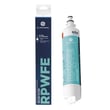
- Replace the water filter on schedule using the correct filter, such as the GE refrigerator water filter RPWFE
- Confirm doors close fully and gaskets seal all the way around
“Repair or replace?” rule of thumb
Use this as a practical decision guide when a major repair comes up.
| Refrigerator age | Typical recommendation | Why |
|---|---|---|
| 0 to 5 years | Repair | Most repairs restore full value |
| 6 to 12 years | Usually repair | Parts replacement is often cost-effective |
| 13 to 20 years | Compare costs | Efficiency and major-component risk increase |
Why it matters
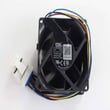
Knowing the expected 15 to 20 year lifespan helps you plan: you can budget for common repairs (like a temperature sensor or fan motor) and avoid food-loss events by addressing warming, frost buildup, or unusual noises early.
Last updated: January 2026
How do I find the model number on my ZWE23NSTBSS?
The model number for your GE bottom-mount refrigerator is printed on the appliance’s rating label; on model ZWE23NSTBSS, it’s most often found inside the fresh food compartment along the side wall or near the ceiling. Match that label exactly when ordering parts.
Where to look on the refrigerator
Check these common label locations first:
- Inside the refrigerator section on the left or right side wall (near the crisper area)
- Inside the refrigerator section near the top (ceiling area)
- On the door frame around the fresh food opening
- Behind the toe grille or near the lower front frame (less common)
- On the back exterior panel (least convenient, but possible)
What to write down (so parts fit)
Use the label to capture the full identification, not just the model family.
| Label item | What it’s used for | Example format |
|---|---|---|
| Model number | Ensures diagrams and parts match your exact build | ZWE23NSTBSS |
| Serial number | Helps confirm production run and compatible revisions | Letters and numbers |
| Electrical ratings | Useful for diagnosing power and control issues | Volts/amps |
Why it matters
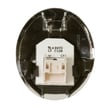
GE refrigerators can have multiple versions that look identical but use different components (controls, sensors, door parts). Using the exact model number helps you select the correct items like the GE refrigerator water filter RPWFE or the refrigerator door switch WR23X29161.
Quick tips if the label is hard to read
- Wipe the label gently with a damp cloth; avoid abrasive cleaners.
- Take a close-up photo and zoom in to confirm characters.
- Copy the model number exactly, including any letters at the end.
Last updated: March 2026