Owner’s manual
 Error Codes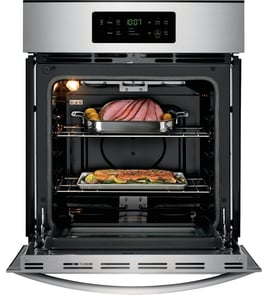


How to find wall oven model number?
On Kenmore wall oven model 91141389892, the model and serial tag is located on the front frame behind the upper oven door. Open the upper door and look along the front frame area for the rating label.
Where to look on this Kenmore wall oven
Use these quick checks in order:
- Open the upper oven door and inspect the front frame (primary location)
- Look for a sticker or metal tag labeled MODEL and SERIAL
- Wipe the frame with a damp cloth if the label is dusty or greasy
- Use a flashlight and look along the left and right sides of the frame
- Write down the full model number exactly as shown (including all digits)
For the official location description and how Sears expects you to record it, use the 91141389892 owner's manual.
What the label typically looks like
Most wall oven rating labels include:
- Model number
- Serial number
- Electrical ratings (volts/amps)
- Manufacturer information
| Item on label | Why you need it |
|---|---|
| Model number | Ensures you get the correct parts and diagrams |
| Serial number | Helps match production changes and revisions |
| Electrical rating | Helps confirm proper power supply and safe servicing |
Why it matters
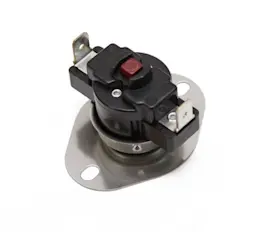
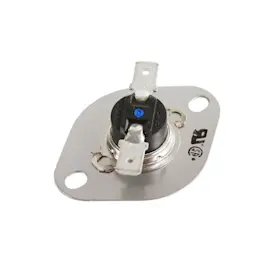
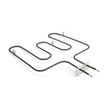
Kenmore wall ovens often have multiple versions that look similar. Using the exact model number from the frame label helps us match the correct wall oven parts (like a bake element, broil element, or thermal fuse) and avoid ordering a part that will not fit.
Last updated: January 2026
Are all 30 inch wall ovens the same size?
No. “30-inch” wall ovens are a size class, not an exact measurement; the outside width and the cabinet cutout dimensions can vary by brand, series, and whether it’s a single or double wall oven. For your Kenmore wall oven model 91141389892, use the 91141389892 owner's manual to confirm the exact cutout and overall dimensions before ordering or installing.
What “30-inch” usually means
Most wall ovens are grouped into 24-inch, 27-inch, and 30-inch categories, but manufacturers allow small differences in:
- Overall width (the oven frame)
- Cutout width (the cabinet opening)
- Height (single vs. double oven)
- Depth (including door and handle projection)
- Trim overlap (how much the front frame covers the cutout)
How to measure correctly (so the oven fits)
Measure the cabinet opening, not the old oven’s front frame.
- Cutout width: inside left-to-right of the cabinet opening
- Cutout height: inside top-to-bottom of the cabinet opening
- Cutout depth: front-to-back usable depth (watch for wiring and junction box space)
- Front clearance: door swing and handle projection
- Electrical location: confirm the junction box location and slack in the conduit
Quick comparison: “30-inch” vs. actual fit
| What you’re checking | Why it varies | What to use as the standard |
|---|---|---|
| Overall width | Trim/frame design differs | Manufacturer spec for the exact model |
| Cutout width/height | Cabinet requirements differ | Cutout dimensions in the manual |
| Depth | Handle/door design differs | Overall depth and clearance specs |
Why it matters
A wall oven that is “30-inch” wide can still be the wrong fit if the cutout is even slightly off. Getting the cutout dimensions right prevents gaps, binding doors, trim not covering the opening, and costly cabinet modifications.
Last updated: January 2026
What is the disadvantage of a wall oven?
A wall oven like the Kenmore 91141389892 costs more to buy and install than a freestanding range, and service can take longer because the oven is built into cabinetry. You also need a separate cooktop, which adds cost and space planning.
Common disadvantages to plan for
- Higher total cost: wall oven plus a cooktop, plus cabinetry and electrical work.
- More complex installation: built-in mounting and wiring typically require a qualified installer.
- Harder access for repairs: technicians may need to pull the oven from the cabinet.
- Ergonomics vary: depending on mounting height, you may bend more (or lift more) when loading heavy cookware.
- Heat and ventilation considerations: the oven vent area can get hot and should not be blocked.
What matters most for the 91141389892
Your manual calls out a few built-in realities that affect day-to-day use:
- The oven vent is under the control panel and is important for air circulation; keeping it clear helps performance.
- It is normal to notice odor on first use; ventilating the room helps.
For operating and safety details specific to this model, use the 91141389892 owner's manual.
Quick comparison: wall oven vs. freestanding range
| Feature | Wall oven | Freestanding range |
|---|---|---|
| Upfront cost | Higher (often) | Lower (often) |
| Installation | Built-in, more involved | Usually simpler |
| Repairs | Can require removal from cabinet | Easier access |
| Layout flexibility | Separate cooktop placement | All-in-one |
Why it matters
Wall ovens can be a great fit for kitchen design and accessibility, but the built-in format affects installation cost, service access, and ventilation. Planning for those tradeoffs helps you avoid surprises later.
Last updated: January 2026
What is the best brand for electric wall ovens?
For an electric wall oven like Kenmore model 91141389892, the “best” brand is the one that fits your cooking needs, cabinet cutout, and serviceability; in practice, Bosch, GE, Café, Thermador, and Kenmore are all strong choices when you compare features like convection, self-clean, and control reliability.
How we recommend choosing the best brand
Focus on the factors that affect day-to-day results and long-term ownership:
- Fit and installation: confirm the cabinet cutout and electrical requirements match your kitchen.
- Cooking performance: look for even baking, strong broil output, and stable temperature control.
- Features you will actually use: convection, probe cooking, delay start, and self-clean.
- Service and parts support: availability of common parts like bake elements, broil elements, and thermal fuses.
- Controls and usability: clear display, intuitive settings, and dependable door lock operation.
For Kenmore 91141389892, your 91141389892 owner's manual is the best reference for the features your oven already includes (for example, it covers broiling in both ovens and self-cleaning on the upper oven).
Quick brand comparison (what typically stands out)
| Brand | Typical strengths in electric wall ovens | Best for |
|---|---|---|
| Bosch | Quiet operation, refined convection, premium build | Frequent bakers who want consistency |
| GE | Broad feature set, widely available service | Value plus easy support |
| Café | Design-forward, smart features, upgraded finishes | Style plus modern controls |
| Thermador | High-end performance, premium features | Luxury kitchens and heavy use |
| Kenmore | Solid everyday performance, practical features | Straightforward cooking and repairs |
Why it matters
Wall ovens are built-in appliances; choosing a brand that fits your cabinet opening and has strong parts support helps you avoid costly rework later. Even a great oven can become frustrating if common wear items (like heating elements or a thermal fuse) are hard to source.
Common “wear parts” to consider when comparing brands
These are the parts most often involved when an oven will not heat, broil, or maintain temperature:
- Bake element
- Broil element
- Oven temperature sensor
- Thermal fuse
- Door lock components (for self-clean models)
Last updated: January 2026