

How much does it cost to run an electric dryer for 1 hour?
For a GE electric dryer like model PTD70EBPT0DG, running for 1 hour typically costs about $0.40 to $0.90, based on common dryer power use (around 3 to 5 kWh per hour) and typical U.S. electricity rates (about $0.13 to $0.18 per kWh).
Quick way to calculate your exact cost
Use this formula:
- Cost per hour = kW × hours × your $/kWh rate
- If your dryer is rated in watts, convert to kW: watts ÷ 1,000 = kW
Example:
- 4,000 watts = 4.0 kW
- Electric rate = $0.16/kWh
- 4.0 × 1 × $0.16 = $0.64 per hour
Typical hourly cost examples
| Dryer energy use (kWh/hr) | Electric rate ($/kWh) | Cost per hour |
|---|---|---|
| 3.0 | 0.13 | $0.39 |
| 4.0 | 0.16 | $0.64 |
| 5.0 | 0.18 | $0.90 |
What changes the cost the most
These are the biggest real-world factors that raise or lower your hourly cost:
- Your local electricity rate (this is usually the #1 driver)
- Cycle selection (high heat uses more energy than low heat)
- Load size and fabric type (towels and denim take longer)
- Vent restriction (poor airflow increases run time)
- Lint buildup (reduces airflow and efficiency; check the lint screen and ducting)
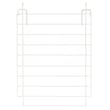
If drying is taking longer than normal, a clogged lint screen or airflow issue is common. For this model, replacing a damaged screen such as the GE dryer lint screen WE03X23881 can help restore airflow.
Why it matters
Dryers rarely run at peak heat for a full hour on every cycle, but longer dry times can quickly add up in energy cost and wear on parts like the heating system and thermostats.
Last updated: February 2026
How to replace GE dryer sensor?
On the GE PTD70EBPT0DG dryer, the “sensor” most people mean is the moisture sensor; replacing it is a straightforward wiring-and-mounting job once you safely access the front/bulkhead area. Unplug the dryer first, then swap the sensor and reconnect the harness exactly as found.
Before you start (safety and access)
- Unplug the dryer (or switch off the breaker) before removing any panels.
- If the dryer was running, let the heater area cool completely.
- Take a quick photo of wire locations so the harness goes back the same way.
- Use gloves; sheet-metal edges inside a GE dryer can be sharp.
Steps to replace the moisture sensor
- Disconnect power.
- Remove the lint screen and any screws that secure the top/front (fastener locations vary by build).
- Open the cabinet enough to reach the sensor mounting location (commonly on or near the front bulkhead by the drum opening).
- Disconnect the wire connector from the sensor.
- Remove the mounting screw(s) or release the retaining tab(s).
- Install the replacement sensor, secure it, and reconnect the harness.
- Reassemble panels, restore power, and run a timed dry cycle to confirm operation.
If your issue is actually “dryer won’t start,” a door switch can look like a “sensor” in quick videos; for this model, the correct part is the dryer door switch WE04X28977.
Quick symptom guide (what you are really replacing)
| Symptom | Most likely part area | What to check first |
|---|---|---|
| Clothes overdry or cycle ends too soon | Moisture sensor | Clean sensor bars, then replace sensor if readings stay erratic |
| Dryer won’t start when door closes | Door switch | Test switch for click/continuity, then replace |
| No heat or weak heat | Heating circuit | Venting, then heater/thermistors/hi-limit thermostat |
Why it matters
A failing moisture sensor can cause short cycling (damp loads) or over-drying (extra wear on fabrics). Replacing the correct component restores normal automatic cycle behavior and helps keep drying times efficient.
Related help
- Use the what are the main parts of a clothes dryer guide to identify the moisture sensor, blower housing, drum supports, and wiring paths.
Last updated: February 2026
What brand of dryer has the least problems?
Speed Queen dryers typically have the fewest problems over the long run because they are built for heavy-duty use; they also cost more upfront. For a strong mix of reliability, features, and price, Whirlpool, Maytag, LG, and GE are common dependable picks, including GE models like PTD70EBPT0DG.
What we recommend (reliability first)
- If you want the fewest repairs: Speed Queen
- If you want strong reliability with wider availability: Whirlpool or Maytag
- If you want modern features with good reliability: LG
- If you already own GE: keep it reliable with routine airflow maintenance and timely part replacement
What matters more than brand (biggest drivers of “problems”)
- Vent/airflow quality: long or crushed venting causes overheating, long dry times, and thermal cutoffs
- Lint control: clean the lint screen every load; replace a torn or warped screen
- Load habits: chronic overloading strains the drum support, belt, and idler system
- Heat management: repeated overheating stresses thermostats, thermistors, and heater components
- Power supply (electric dryers): a weak leg on a 240V circuit can cause “runs but won’t heat” symptoms
Common “problem” symptoms and the usual fix path
| Symptom | Most common cause | Parts often involved on GE PTD70EBPT0DG |
|---|---|---|
| Takes too long to dry | Restricted venting or lint buildup | Lint screen, ducting, blower wheel |
| No heat | Heating circuit fault or overheating protection | Heater, hi-limit thermostat, thermistor |
| Squealing/thumping | Worn drum support or belt path parts | Drum glide, upper bearing/slide, idler pulley, belt |
Parts that help keep your GE dryer running smoothly
If your GE PTD70EBPT0DG is acting up, these model-matched parts are commonly involved in reliability-related repairs:
- GE dryer lint screen WE03X23881 (airflow and lint control)
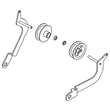
- Dryer idler pulley WE03X31620 (belt tension and noise prevention)
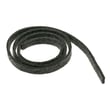
- Dryer drum belt WE03X33648 (drum turning issues)
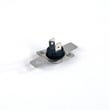
- Thermostat hi limit WE04X30381 (overheat protection)
Why it matters
Most “brand problems” are really airflow, heat, and wear-item problems. Choosing a reliable brand helps, but keeping the vent clear and replacing wear parts early prevents the failures that lead to repeat service calls.
Last updated: February 2026
What is the life expectancy of a GE dryer?
A GE dryer typically lasts about 10 to 13 years. For your GE PTD70EBPT0DG, consistent airflow maintenance and timely replacement of wear items (belt, glides, thermistors) are what most often determine whether it reaches the high end of that range.
Typical lifespan and what affects it
Most dryers fail early due to heat stress and restricted venting, not because the cabinet or drum “wears out.” The biggest lifespan drivers are:
- Venting length and how often it is cleaned
- Loads per week (heavy family use shortens life)
- Overheating from lint buildup or crushed ducting
- Wear of drum support parts (glides, bearings, felt seals)
- Electrical issues (loose connections, heat-damaged wiring)
Maintenance that adds years (high impact)
We recommend these habits for GE electric dryers like PTD70EBPT0DG:
- Clean the lint screen after every load; wash it with mild soap monthly to remove residue
- Inspect and clean the vent path regularly (dryer outlet to exterior hood)
- Avoid overloading; it strains the drum belt and idler system
- Stop using the dryer if you smell burning or notice overheating; correct airflow issues first
- Keep the area around the dryer clear so the blower can move air efficiently
Parts that commonly limit lifespan (and what they do)
| Symptom | Common wear item | What it affects |
|---|---|---|
| Long dry times, overheating | Lint screen | Airflow through the dryer |
| Squealing, thumping, scraping | Drum glide/bearing parts | Drum support and alignment |
| No heat or erratic heat | Thermistor or heater parts | Temperature control and heating |
Model-matched examples for PTD70EBPT0DG include the GE dryer lint screen WE03X23881 and the dryer heating element control thermistor WE4M398.
Why it matters
A dryer that runs hot or can’t move air takes longer to dry, stresses the heater and controls, and accelerates wear on the drum support system. Keeping airflow strong is the simplest way to hit the full expected lifespan.
Last updated: February 2026
What is the most common problem with a GE dryer?
The most common problem we see with a GE dryer like model PTD70EBPT0DG is poor drying or no heat, and the most common root cause is restricted airflow (lint buildup in the lint screen, ducting, or vent hood). After airflow, the next frequent issues are a failed heating component, a bad door switch, or a worn belt causing no-start or no-tumble.
Quick checks that fix the most calls
- Clean the lint screen before every load; wash it with warm water if you use dryer sheets (film can block airflow).
- Check the vent hood outside; make sure it opens fully and is not packed with lint.
- Inspect the vent duct for kinks, crushing, or long runs; shorten and straighten where possible.
- Run a timed dry cycle and confirm strong airflow at the outside vent.
- If the drum will not start, test the door latch and switch operation.
Common symptoms and the usual suspect parts
| Symptom | Most common cause | Parts that often solve it (when airflow is good) |
|---|---|---|
| Takes too long to dry | Vent restriction or clogged lint screen | GE dryer lint screen WE03X23881 |
| Runs but no heat | Heater circuit problem | Dryer heating element WE11M10001, thermostat hi limit WE04X30381 |
| Won’t start | Door not proving closed | Dryer door switch WE04X28977 |
| Runs but makes squealing/grinding noise | Worn drum support surfaces | Dryer drum glide bearing, upper WE03X37320 |
Why it matters
Restricted airflow makes any electric dryer work harder; it increases dry time, can trigger high-limit thermostat trips, and can shorten the life of heating and temperature-sensing parts such as thermistors.
Helpful troubleshooting references
- Use electric dryer wont heat troubleshooting video when the dryer tumbles but clothes stay damp.
- Use electric dryer wont start troubleshooting video when the control responds but the drum will not run.
Last updated: February 2026
Where to find part number on GE dryer?
On a GE dryer like model PTD70EBPT0DG, the model and serial tag is usually the fastest way to identify the correct replacement part number; it’s typically located inside the dryer door opening on the door frame or just inside the door area. Once you have the model number, we can match the exact parts list for your dryer.
Where to look on the dryer
Check these common GE dryer label locations first:
- Inside the door opening on the front frame (most common)
- On the back panel of the cabinet
- Along the side of the door opening (left or right jamb)
- Behind the lint screen housing area (less common)
- Inside the lower front access area (if your design has one)
What numbers you should write down
Use the tag to capture the identifiers that matter for parts lookup.
| What to record | Example format | Why it matters |
|---|---|---|
| Model number | PTD70EBPT0DG | Ensures the parts diagram matches your exact dryer |
| Serial number | Letters + numbers | Helps confirm production run changes |
| Component part number (if shown) | Starts with letters/numbers | Useful when replacing a specific item |
If you’re trying to identify a specific part
Many parts do not have an easy-to-read part number printed on them, so we typically identify them by model number and part description. For example, if you’re replacing a worn lint filter, the correct match for this model is the GE dryer lint screen WE03X23881.
Quick tips before ordering
- Match the model number exactly (including all letters)
- Compare the part’s shape and connector style to your original
- If the dryer isn’t heating, check airflow and heating components together (element, thermostats, thermistor)
Why it matters
GE dryers can have multiple versions that look similar, and small design changes affect fit and wiring. Using the model and serial tag prevents ordering the wrong heater assembly, door switch, belt, or control part.
Last updated: February 2026