Error Codes




How to figure out hot water heater size?
For the Ambassador 5-40-20RT8-2 electric water heater, we size a replacement by matching your household’s hot-water demand (people, showers, laundry) and confirming the tank capacity and electrical specs on the rating label. Most homes land in the 40 to 80 gallon range.
Quick sizing guide (by household)
- 1 to 2 people: typically 40 to 50 gallons
- 2 to 3 people: typically 50 to 60 gallons
- 3 to 4 people: typically 60 to 80 gallons
- 4 to 6 people: typically 80 gallons or larger
- If you have a large soaking tub or multiple back-to-back showers, size up one step.
What to check on your current water heater label
Use the data plate on the tank (often near the upper access panel) to match the most important specs:
- Tank capacity (gallons)
- Voltage (commonly 240V on many electric models)
- Wattage of the heating elements
- Recovery rate / first-hour rating (if listed)
- Physical height and diameter so the new unit fits the space
Sizing options at a glance
| Household / usage pattern | Typical tank size | Notes |
|---|---|---|
| Apartment, light use | 40 to 50 gal | Good for 1 to 2 people |
| Average family use | 50 to 60 gal | Common “safe” choice |
| High demand (multiple showers) | 60 to 80 gal | Better back-to-back recovery |
| Very high demand | 80+ gal | Consider space and electrical capacity |
Why it matters
Right-sizing prevents two common problems: running out of hot water (too small) and wasting energy and space (too large). For electric water heaters, matching voltage and wattage also helps avoid nuisance breaker trips and slow recovery.
When parts affect performance (not tank size)
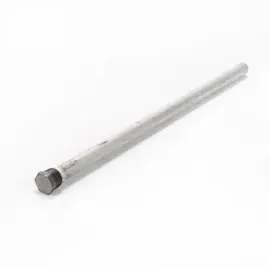
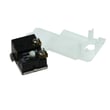
If your tank size is fine but hot water is short or inconsistent, we focus on service parts that impact heating and temperature control, such as the thermostat 100108424 or the anode rod 100109594 (maintenance that helps extend tank life).
Last updated: January 2026
Can I run a 208V water heater on 240V?
Running a 208V-rated electric water heater on 240V is not recommended because the heating elements draw more wattage at the higher voltage, which can overheat components and shorten element life. For Ambassador model 5-40-20RT8-2, confirm the nameplate voltage before energizing the unit.
What changes when you feed 240V to a 208V heater
Electric water heater elements are resistive loads; when voltage goes up, power goes up significantly.
- Higher voltage increases element wattage and operating temperature
- Elements can fail early (burnout) or trip the high-limit safety
- Wiring, thermostats, and terminal connections can run hotter
- Recovery time may improve, but reliability usually drops
Quick comparison (typical)
| Rated element voltage | Supply voltage | What happens | Practical result |
|---|---|---|---|
| 208V | 208V | Normal wattage | Normal operation |
| 208V | 240V | Higher wattage (roughly one-third more) | Hotter running, higher failure risk |
| 240V | 208V | Lower wattage | Slower recovery, but usually safe |
What we recommend for model 5-40-20RT8-2
Use the voltage shown on the water heater data plate (often near the upper access panel). If it lists 208/240V, it is designed for either supply. If it lists 208V only, keep it on 208V or use the correct elements and configuration for 240V.
- Turn off the breaker before opening access panels
- Verify supply voltage at the heater junction box with a meter
- Inspect element terminals for heat damage or loose connections
- If you suspect overheating or nuisance tripping, test and replace the thermostat if needed
- Replace leaking or disturbed element seals with the correct gasket
Helpful DIY skill: how to use a multimeter to test electrical parts video
Parts that commonly get stressed by overheating
If the heater has been run on the wrong voltage, these parts are often involved:
- Thermostat 100108424 (temperature control and safety coordination)
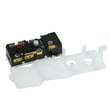
- Thermostat 100108683 (upper control on many dual-element designs)
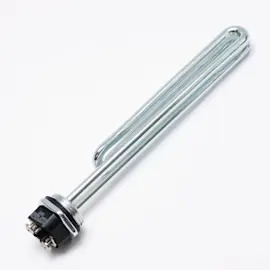
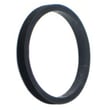
- Water heater heating element gasket 100108379 (reseal after element service)
Why it matters
Over-volting a 208V water heater can turn a simple “it heats” situation into repeated element failures, tripped limits, or damaged wiring. Matching the heater rating to the supply protects the tank, controls, and your home’s electrical circuit.
Last updated: January 2026
What is the average cost of a 40 gallon hot water heater?
A typical 40-gallon electric water heater averages about $500 to $1,200 for the tank alone, with installed cost commonly $900 to $2,500 depending on labor, permits, and any plumbing or electrical updates. For Ambassador model 5-40-20RT8-2, repair parts can be a cost-effective alternative when the tank is still sound.
What changes the price the most
- Type and efficiency: standard electric vs. heat pump (heat pump units cost more up front)
- Warranty length: longer warranties usually raise the purchase price
- Electrical work: new breaker, wiring, or disconnect can add cost
- Plumbing changes: shutoff valve, expansion tank, piping updates, or venting (if switching fuel types)
- Local requirements: permits, code upgrades, and disposal fees
Repair vs. replace: quick cost comparison
If your 40-gallon unit is heating poorly or leaking at a fitting, replacing a failed component can restore performance for far less than a full replacement.
| Situation | Typical best path | Common parts involved |
|---|---|---|
| No hot water or inconsistent temperature | Repair first | Thermostat, wiring checks |
| Slow recovery (runs out of hot water fast) | Repair first | Thermostat, element gasket |
| Water on floor from valve or drain area | Repair first | T&P relief valve, drain valve |
| Water leaking from tank body | Replace | Tank replacement |
Parts that commonly affect hot water performance
For the Ambassador 5-40-20RT8-2 electric water heater, these are common service items we see tied to heating and safety issues:
- Thermostat 100108424 (temperature control)
- Thermostat 100108683 (upper thermostat)
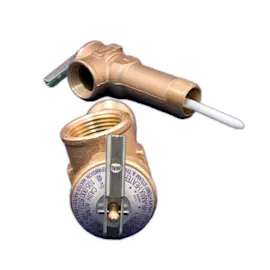
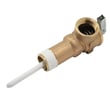
- Wheelers water heater temperature and pressure relief valve 100108455 (safety pressure relief)
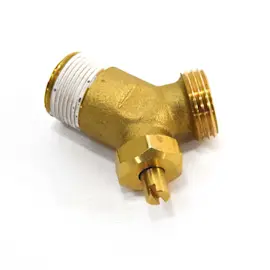
- Drain 100108269 (draining and service)
- Anode rod 100109594 (helps protect the tank from corrosion)
Why it matters
Knowing the average cost helps you decide whether to invest in a new 40-gallon water heater or extend the life of your current unit with targeted repairs like a thermostat replacement or anode rod maintenance.
Last updated: January 2026